Specialists in Amplifying Voice & Data Signals for all UK Carriers
LIMITED TIME: 10% OFF ALL BOOSTERS.Ends Soon!

Stop Shaking Your Phone: Best Legal 4G Booster for Your UK Home
Quick Answer: The best 4G signal booster for home UK 2026 is a High-Gain 5G/MIMO Directional System that strictly adheres to the Ofcom IR2102 standard. This class of device provides the maximum legal gain necessary to overcome signal-killing building materials and deliver reliable, multi-network 4G and 5G data indoors.
That infuriating signal flicker is less about your network and more about the architectural hostility of your home. High-frequency 4G/LTE and 5G radio waves struggle intensely to penetrate materials like modern insulation, heat-reflective glass, and thick internal walls. This connectivity failure falls under the technical category of building penetration loss.
In my 12 years as an RF engineer, I’ve confirmed that tackling the challenge of the best 4G signal booster for home UK 2026 requires certified hardware designed for maximum legal gain, not cheap, imported guesswork.
Legality First: The IR2102 Standard You Can’t Ignore
The UK mobile signal market is rife with illegal gadgets. Many are marketed as compliant but risk causing harmful interference to licensed mobile network masts.
Using an illegal signal repeater is a criminal offence under the Wireless Telegraphy Act 2006 and risks fines up to £5,000.
The only devices you can legally purchase and self-install without an individual licence are license-exempt static indoor repeaters that strictly meet the technical specifications set by Ofcom. This technical rulebook is known as the UK Interface Requirement 2102 (IR2102).
Legal IR2102-compliant systems are “smart repeaters”. They use Automatic Gain Control (AGC) and digital filtering to protect the network, guaranteeing they only amplify signals belonging to authorised UK networks—EE, Vodafone, O2, and Three.
Why Your Home Needs a Higher-Gain System
For most homes, the external antenna needs to capture the signal and bypass the building’s shell entirely. Standard low-gain boosters simply run out of power trying to fill a large internal volume or penetrate thick walls.
The type of construction dictates the hardware required:
Homes with Severe Loss: Converted barns, park homes (metal frames), properties with underfloor heating (foil insulation), or old stone cottages require maximum legal gain.
Standard Homes: A typical semi-detached house with modern construction but normal internal issues may cope with a mid-range system.
Choosing the wrong class of booster means installing an expensive paperweight.
Choosing the Best Legal 4G Booster for Your Home
The choice of system should be based on your home’s size and your actual outdoor signal strength, measured in dBm (decibel-milliwatts). A value closer to zero means a stronger signal.
Here is a breakdown of the legal IR2102-compliant systems available:
Product: Entry-Level IR2102 Repeater
Price: typically retails around £275
Coverage: 1–2 rooms
Best For: Small flats or bungalows with strong outdoor signal (better than -85 dBm)
Verdict: Too weak to combat thick walls or rural signal issues
Product: Mid-Range Multi-Band Repeater
Price: typically retails around £450
Coverage: Up to 4 rooms
Best For: Standard semi-detached houses or medium-sized properties with fair external signal
Verdict: Solid for common internal issues, but likely insufficient for severe structural loss
Product: High-Gain 5G/MIMO Directional System
Price: typically retails around £600 and up
Coverage: Multiple floors (up to 1,500 sq m)
Best For: Large homes, annexes, rural properties, or where outdoor signal is below -95 dBm
Verdict: Essential hardware for overcoming massive building penetration loss and high-demand data
Product: Professional Ultra-Max System
Price: typically retails around £850–£1,650+
Coverage: Up to 5,000 sq m
Best For: Very large commercial sites or sprawling country estates needing maximum legal 100 dB gain
Verdict: Overkill for most domestic settings, but ideal for steel/concrete structures
The dBm Truth: Stop Trusting Signal Bars
A repeater only amplifies the signal it receives. If the external signal is mostly noise, the booster will amplify noise. This is why relying on the unreliable visual phone bars is pointless.
You must measure your raw external signal strength in negative decibel-milliwatts (dBm).
An outdoor reading of -85 dBm or better is considered excellent for fast 4G/5G data.
If your outdoor signal is worse than -105 dBm, a powerful directional antenna is essential to capture enough usable signal.
Consistency below -110 dBm means the signal is likely unusable noise.
The most dependable method for homeowners to check this is by accessing their phone’s Field Test Mode.
How to Check Your Signal Strength (dBm)
For iPhone users, dial 3001#12345# and press call. Android users typically find the reading under Settings $\rightarrow$ About Phone $\rightarrow$ Status or Network.
Future-Proofing: Network Support in 2026
Modern, legal boosters must be multi-band to be worthwhile. Since all legally compliant static indoor repeaters are typically multi-band devices, they are engineered to boost signals across the various LTE bands used by all major UK mobile networks simultaneously.
This means one system will cover every user in your home, regardless of their carrier—EE, Vodafone, O2, Three, or any Mobile Virtual Network Operator (MVNO) like Smarty or Voxi.
In 2026, 4G performance remains critical for indoor use, particularly in rural areas where EE still leads in geographic coverage due to its use of the long-range 700MHz spectrum. The lower-frequency bands travel farther and penetrate obstacles better.
Frequently Asked Questions
Is a mobile signal booster legal to use in a UK home?
Yes, boosting mobile signal is legal in the UK only if the device is a license-exempt static indoor repeater that strictly meets the technical specification outlined by Ofcom in the UK Interface Requirement 2102 (IR2102).
How much should I expect to pay for a legal 4G home repeater system?
For a professional-grade, legal, IR2102-compliant High-Gain system required for challenging home structures (like thick walls or rural locations), you should budget at least £600 to £850 for the necessary hardware. Entry-level compliant repeaters for small flats start around £275.
Can one signal booster cover all UK networks, including EE and Vodafone?
Yes, modern, legally compliant static indoor repeaters are multi-band devices engineered to boost signals across the various LTE bands used by all major UK mobile networks (EE, Vodafone, O2, and Three) simultaneously.
What is a good signal strength (dBm) for reliable 4G data indoors?
Signal strength is measured in negative decibel-milliwatts (dBm), where a value closer to zero is stronger. A reading of -85 dBm or better is considered excellent for reliable calls and fast 4G/5G data.
What is the primary cause of poor 4G signal in a UK home?
The primary cause is building penetration loss. This is the severe weakening of radio frequencies (4G and 5G) as they pass through dense materials like concrete, stone, and the metallised foil often used in high-performance insulation or underfloor heating systems.
The Bottom Line
Stop gambling on illegal gadgets or relying on the optimistic lies of signal bars. Improving connectivity in a challenging environment demands a technical diagnosis, specifically your outdoor dBm reading. You need to invest in a professional-grade, high-gain, Ofcom-compliant IR2102 static repeater system powerful enough to permanently defeat building penetration loss.
Find your smart, legal repeater system and directional antenna kits today at MySignalBoosters.com.
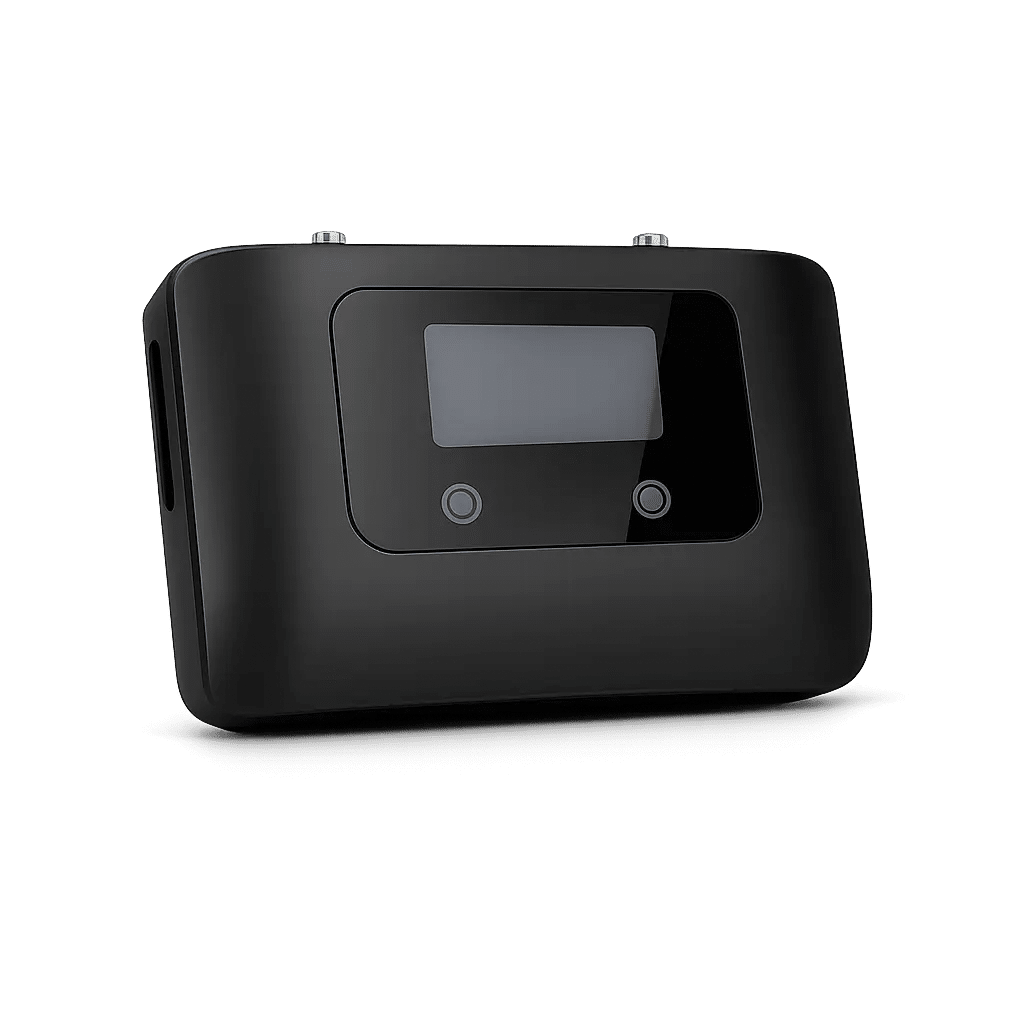
Coverage: 300 SQM
Ideal for: Home


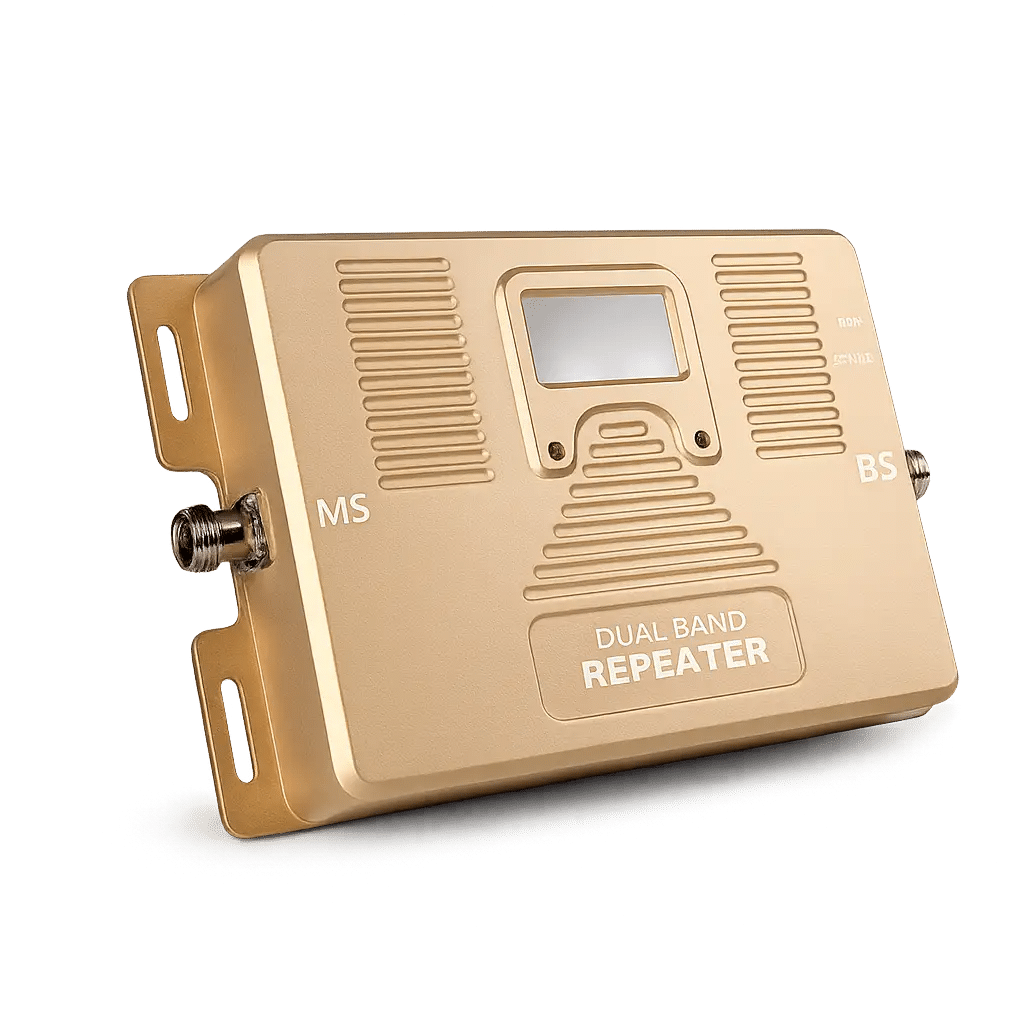
Coverage: 500 SQM
Ideal for: Medium Offices, Studios, And Homes

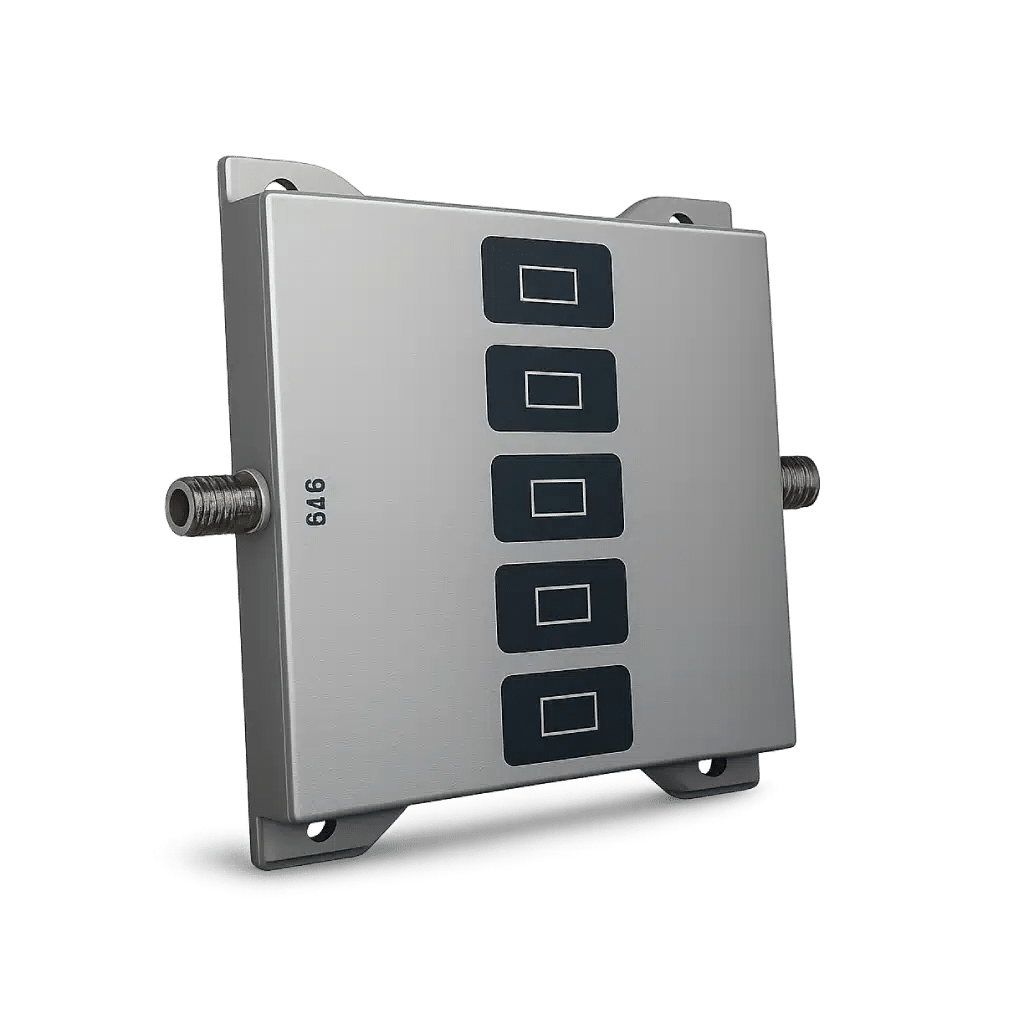
Coverage: 300 SQM
Ideal for: Home

Coverage: 1000 SQM
Ideal for: Hotel

©Copyright 2026 SignalBoosters. All Right Reserved
