LIMITED TIME: 10% OFF ALL BOOSTERS.Ends Soon!

The Definitive Guide to UK Mobile Signal Boosters (2026)
Quick Answer: The only reliable and legal solution for improving mobile signal in the UK across various scenarios (home, rural, commercial) is a license-exempt static indoor repeater that complies with Ofcom Interface Requirement 2102 (IR 2102). These professional-grade systems, typically the Cel-Fi GO G41, use maximum legal gain (up to 100 dB) to overcome severe building penetration loss and amplify essential low-frequency LTE bands (700MHz/800MHz).
You pay for a reliable network, yet your thick stone walls or modern steel cladding turn your property into a functioning Faraday cage. That connection dissolving between the front door and the stairs is severe building penetration loss, not a network fault. Finding the right signal solution demands technical clarity on legality, signal measurement, and the right hardware. In my 12 years as an RF engineer, I’ve found that almost every signal problem is solvable, provided you use the right, legal equipment built for UK spectrum.
Legality First: Why Ofcom Compliance is Non-Negotiable
The sheer volume of cheap, non-compliant repeaters sold online is enough to make any engineer sigh. But ignorance isn’t a defence here: most generic signal boosters found online are illegal in the UK. These devices are ‘dumb’ amplifiers that lack intelligent filtering, causing harmful network interference to Mobile Network Operator (MNO) masts.
Ofcom maintains a strict stance on non-compliant equipment, with fines up to £5,000 and mandatory confiscation.
The only technology legal for self-installation must be a license-exempt static indoor repeater that complies with Interface Requirement 2102 (IR 2102). These systems are Network-Safe, dynamically regulating power and only boosting authorised networks (EE, Vodafone, O2, Three).
Understanding Signal Strength (dBm) Before You Buy
A mobile signal booster is an amplifier, not a signal creator. It can only amplify the signal that is already present outside your building. Guessing based on the arbitrary bars on your phone is unreliable.
You must measure the external signal strength accurately using dBm (decibel-milliwatts). The closer the reading is to zero, the stronger the signal.
-50 dBm: Excellent (Full bars)
-95 dBm: Ideal for most mid-range boosters
-105 dBm: The bare minimum threshold for reliable function
If your external reading drops below -110 dBm, which is common in remote rural locations, you will require a specialist high-gain system designed for maximum amplification.
Selecting the Right System for Complex UK Challenges
The severity of your signal problem dictates the required gain (power) and complexity of the system. Large commercial buildings, remote farms, and detached houses all require maximum legal gain to overcome significant structural obstacles.
The best compliant systems are primarily from the Cel-Fi series, which are engineered for high-gain performance and Network-Safe operation.
| Product | Price | Coverage | Best For | Verdict |
|---|---|---|---|---|
| Cel-Fi GO G41 | typically £1,300–£1,600 | Up to 3,000 sq m | Isolated rural properties and large commercial buildings | Maximum legal gain (100 dB) to convert extremely weak external signals |
| Cel-Fi GO X | typically £850–£990 | Up to 1,500 sq m | Large detached homes or medium offices | Excellent balance of power and cost for dedicated network performance |
| Cel-Fi SOLO | typically £600–£850 | Up to 1,500 sq m (single donor) | Small office, flat, or home office (single network) | Cost-effective and legal single-carrier specialist for stable 4G/5G |
| Mid-Range Dual-Band Repeater | typically £350–£500 | Up to 500 sq m | Small homes with moderate signal loss | Best budget-friendly choice for legality and modest residential performance |
The Critical Role of Low-Frequency Bands
To improve signal in challenging environments—like isolated rural properties, basements, or metal sheds—your booster must prioritise the low-frequency coverage layers. These signals travel furthest and penetrate thick walls best.
700MHz (Band 28): Essential for modern rural 5G and wide-area 4G penetration, especially for networks like EE.
800MHz (Band 20): Primary long-range 4G frequency for Vodafone and O2, essential for wall penetration.
A device that only targets mid-band frequencies (1800MHz) will provide speed near the unit but fail to penetrate and cover the entire premises.
Installation Basics: Maximising Capture and Preventing Shutdown
The installation of an outdoor mobile signal antenna is non-negotiable for overcoming building penetration loss in challenging structures. In rural areas, you often require a professional-grade solution to convert the extremely weak outdoor signal into robust indoor coverage.
Directional Donor Antenna: For weak signals (below -105 dBm) or metal structures, you must use a high-gain directional donor antenna (often a Yagi). This must be mounted high up and aimed precisely at the nearest mobile mast to capture the cleanest signal.
Cable Quality: The coaxial cable connecting the outdoor antenna to the repeater unit must be high-quality, low-loss cable, particularly for long runs common in large commercial building installations.
Preventing Oscillation: The single most common cause of system failure is oscillation, a feedback loop where the amplified indoor signal is re-captured by the outdoor antenna. To prevent this and maintain stability, you must maintain proper physical separation—ideally 10 metres or a solid wall—between the indoor and outdoor antennae.
Frequently Asked Questions
Is it illegal to use a mobile signal booster in the UK?
Using most cheap, generic mobile signal boosters is illegal in the UK because they cause harmful network interference. However, you can legally install and use “license-exempt static indoor repeaters” that comply with Ofcom’s IR 2102 technical standards, such as the Cel-Fi series.
How much should I budget for a legal, reliable high-gain system?
For a professional-grade, high-gain system capable of covering a large detached house or isolated rural property and boosting weak signals, you should budget between £1,200 and £1,600 for the core hardware and external directional antenna. Mid-range systems for smaller properties typically retail around £600 to £850.
Which UK mobile network provides the best rural signal coverage?
EE consistently maintains the widest geographic 4G coverage and the strongest indoor signal penetration outside major cities in 2026. This is primarily due to their use of low-frequency 700MHz and 800MHz spectrum, which penetrates physical barriers better.
Can a repeater fix my signal if I have absolutely zero signal outside my property?
No. A signal booster requires an existing external signal to function; it cannot create radio waves from nothing. If your measured outdoor signal strength is worse than -110 dBm, you require a high-gain system like the Cel-Fi GO G41, but if the signal is truly non-existent (below -120 dBm), even the best booster may fail.
Which frequency band is best for deep wall penetration in a building?
The most crucial frequency bands for penetrating thick walls and achieving deep indoor coverage are the low-frequency 700MHz (Band 28) and 800MHz (Band 20) LTE bands. These long-wavelength signals travel furthest and pass through physical barriers much better than high-frequency data bands.
The Bottom Line
A weak indoor signal is a solvable physics problem. Whether you need reliable home internet or improved coverage for isolated rural properties, the answer is to stop gambling with cheap, illegal boxes. The only sensible choice is to invest once in a legal, IR 2102-compliant static repeater system that targets the essential low-frequency LTE bands and matches the gain (dB) required by your building’s challenges. Fix the problem permanently. View our full range of certified IR 2102 repeaters today at MySignalBoosters.com.
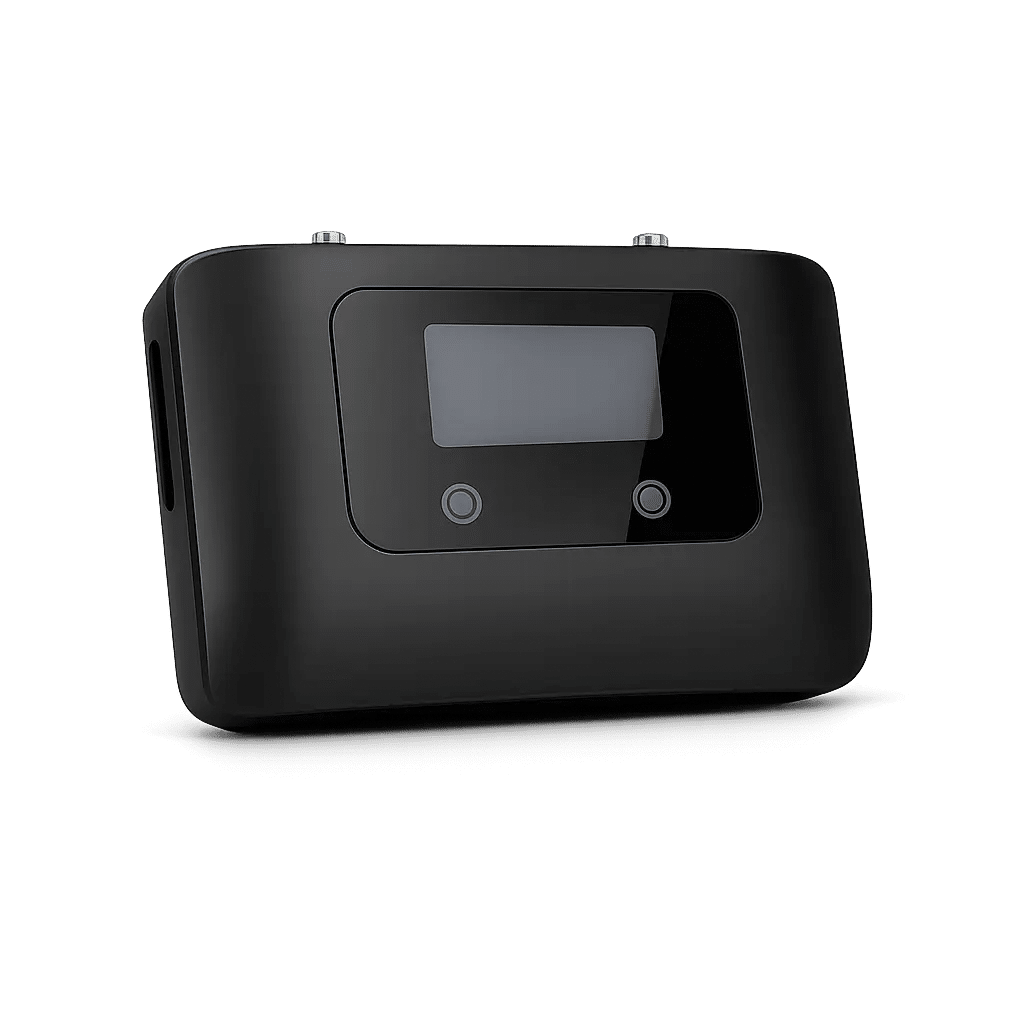
Coverage: 300 SQM
Ideal for: Home


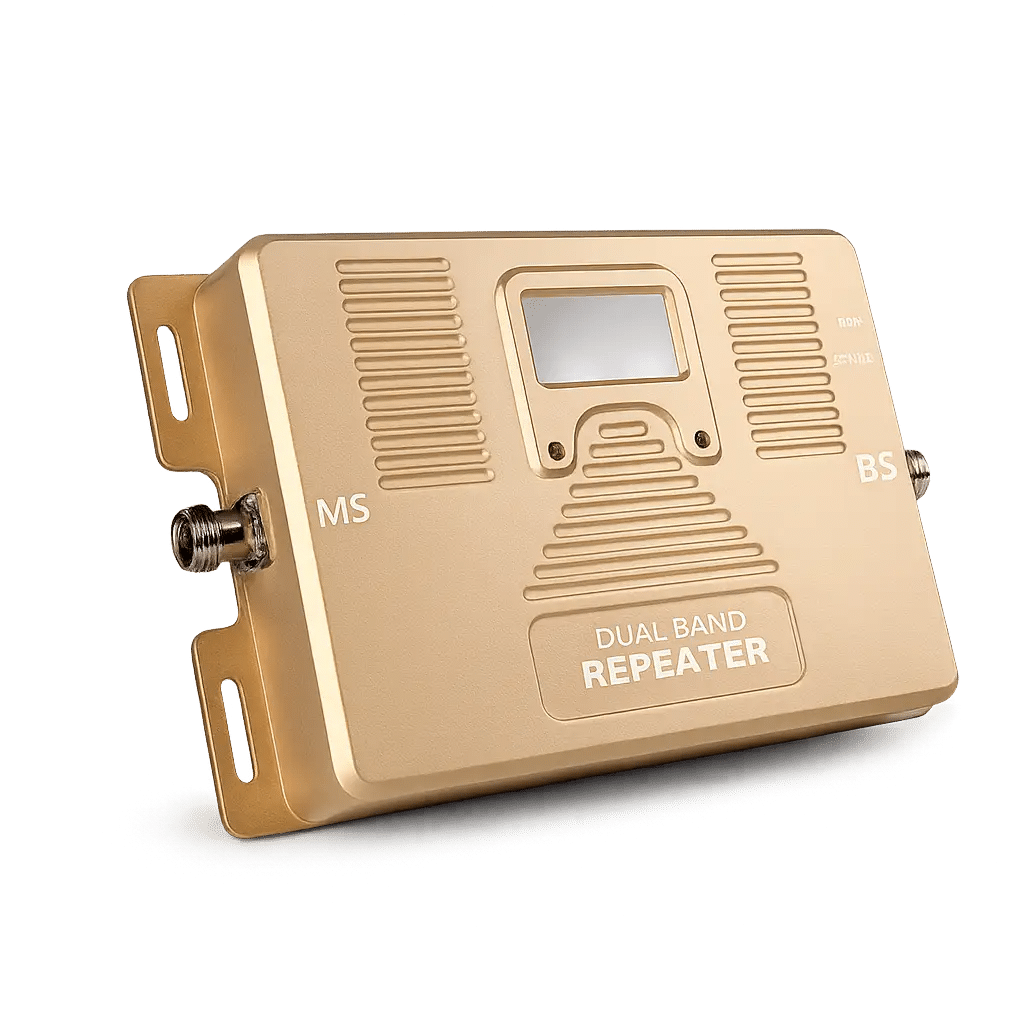
Coverage: 500 SQM
Ideal for: Medium Offices, Studios, And Homes

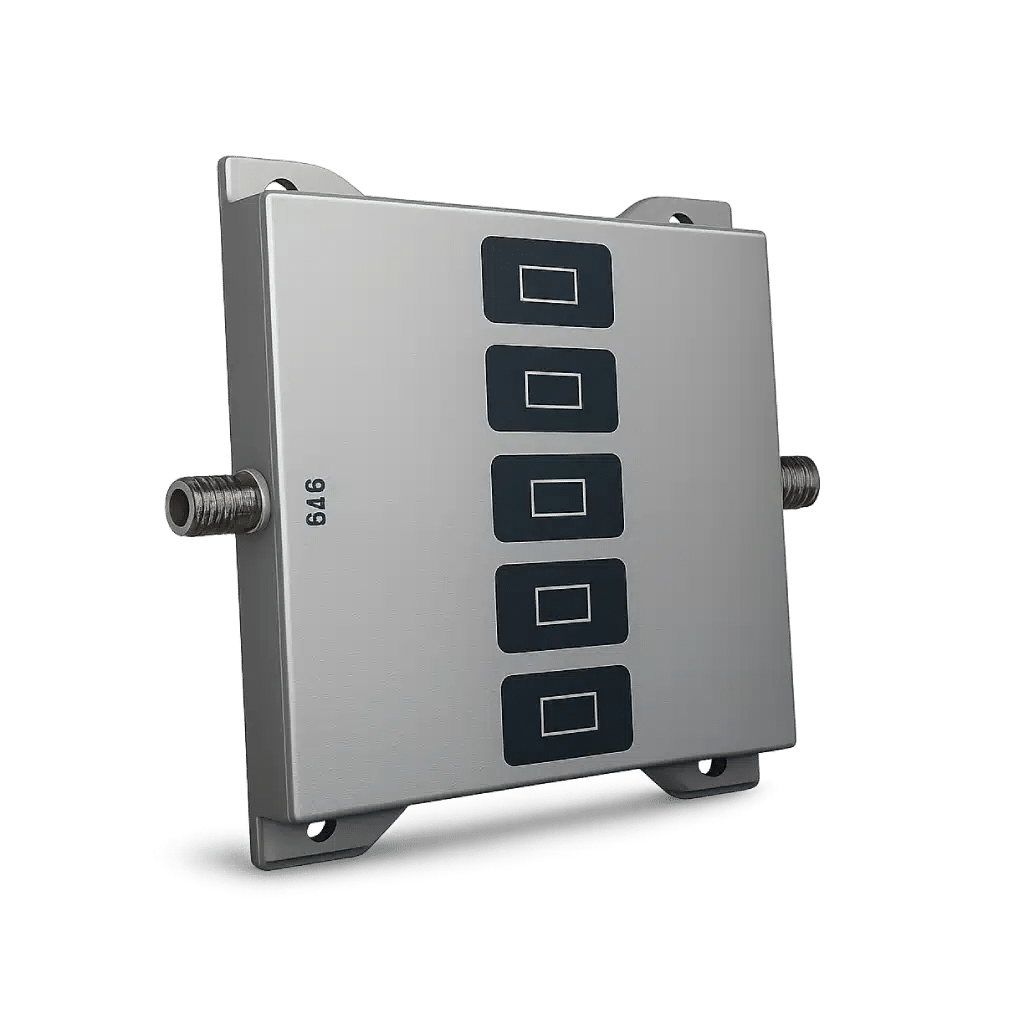
Coverage: 300 SQM
Ideal for: Home

Coverage: 1000 SQM
Ideal for: Hotel

©Copyright 2026 SignalBoosters. All Right Reserved
