Specialists in Amplifying Voice & Data Signals for all UK Carriers
LIMITED TIME: 10% OFF ALL BOOSTERS.Ends Soon!

Best Multi-Band Mobile Signal Boosters UK 2026: A Candid Review
Quick Answer: To legally boost mobile signal in the UK, you must purchase a license-exempt static indoor repeater that meets Ofcom Interface Requirement 2102 (IR2102). Avoid cheap, wideband imports sold on marketplaces, as they are illegal and risk significant fines. The best performance for multi-band, multi-operator coverage comes from high-gain CEL-FI smart systems.
The flickering signal bars on your phone are a polite fiction. They are an optimistic guess by a piece of software that does not want to admit it has lost contact with the outside world. In my 12 years as an RF engineer, I have spent countless hours trudging through cellars and lofts, chasing the ghost of a decent signal. The reality is that modern building materials act like a lead-lined fortress, turning your expensive handset into an overpriced paperweight.
Stop staring at those bars. They offer no insight into the actual data capacity or voice reliability of your connection. If you want to understand your connectivity, you need to measure your signal strength in negative decibel-milliwatts (dBm). Any reading worse than -110 dBm is unusable noise. If you are regularly hitting that figure, you are fighting a losing battle against distance or terrain, and no amount of “magic” antenna will help you.
Understanding the Legal Minefield
Before we get to the hardware, we need to address the law. The UK market is absolutely saturated with illegal “boosters” that you can buy for £30 from questionable online retailers. These devices are essentially unmanaged, high-gain radios that scream noise at the nearest mobile mast. They cause harmful interference, and Ofcom has the legal teeth to issue fines of up to £5,000 or even seize the equipment.
To stay on the right side of the Wireless Telegraphy Act 2006, you must install a static indoor repeater that complies with Ofcom’s IR2102 standard. These are “smart” repeaters. They use Automatic Gain Control (AGC) to monitor the signal constantly, ensuring they boost your reception without deafening the local network infrastructure. If a product does not carry verifiable IR2102 documentation, close the tab and move on.
Comparing the Best Multi-Band Systems
When you need to support multiple operators—say, if you have a household where one person uses EE and another is stuck with Three—you need a multi-band system. These units amplify the specific frequency bands used by all major UK networks simultaneously.
CEL-FI GO G41
This is the gold standard for residential and small-to-medium business use. It provides up to 100 dB of gain, which is frankly overkill for most homes but a godsend if you are buried behind two-foot-thick stone walls. It is fully compliant with Ofcom regulations and supports 2G, 3G, 4G, and 5G.
Price: Typically retails around £1,371.
Coverage: Up to 1,500 square metres per system.
Best For: Patchy indoor signal in homes or medium-sized offices.
Verdict: If you have the budget, this is the only kit you should consider for professional-grade stability.
CEL-FI GO G43
If the G41 is the standard, the G43 is the muscle. It is engineered for higher data capacity, making it a better fit for environments where multiple users are hammering the network at once—think large households or busy retail units. It features Nextivity’s 4th generation IntelliBoost chip, which essentially does the heavy lifting to ensure your signal is pristine even when the outdoor signal is weak.
Price: Typically retails around £1,175.
Coverage: Suitable for small-to-large building requirements.
Best For: Small businesses or large households needing high-capacity data.
Verdict: The smartest choice for future-proofing your home against increasing 5G traffic.
HiBoost 15K Smart Link Deluxe
For those who want a system that balances price with substantial coverage, the HiBoost range offers a simpler, more accessible setup. It is popular because of its “smart” app that guides you through the installation process, which can be the difference between a working system and a headache. While it lacks the sheer industrial-grade processing of the CEL-FI systems, it is perfectly adequate for most domestic scenarios.
Price: Typically retails around £850 to £1,030.
Coverage: Up to 1,300 square metres.
Best For: Standard homes with moderate penetration loss.
Verdict: A solid, user-friendly alternative if the professional-tier systems feel like overkill.
Managing Your Expectations
A signal booster is not a miracle worker. It is a repeater. If the signal outside your building is effectively non-existent—meaning you are deep in a valley where even the birds have no coverage—a booster will not invent a signal out of thin air. It needs an input.
You must mount the donor antenna as high as possible, preferably on a roof or chimney stack, with a clear line of sight to the nearest mast. The cabling between your outdoor antenna and the repeater is also critical. Use the highest quality, low-loss coaxial cable you can find. Every metre of cable between your antenna and the booster introduces signal loss, which directly reduces the effectiveness of the system.
Do not be tempted by “omni-directional” outdoor antennas just because they look easier to install. In most of the UK, where signal can be weak or cluttered, you want a directional Yagi or Log-Periodic antenna. Point it precisely at the serving mast. If you are not sure where the mast is, use [link removed] to get a rough idea of your local network environment.
Frequently Asked Questions
Is it legal to use a mobile signal booster in my UK home?
Yes, but only if you use a license-exempt static indoor repeater that meets Ofcom’s IR2102 technical standard. These devices are designed to be “network-safe,” meaning they won’t interfere with the operator’s licensed frequency bands. Using any other type of booster is unlawful and can lead to enforcement action.
Why are these systems so expensive compared to online adverts?
You are paying for the filtering technology, the Automatic Gain Control (AGC), and the R&D required to ensure the device is network-safe. Cheap, £30 boosters are often just raw amplifiers that create massive amounts of radio noise. They are not engineered to handle the modern 4G/5G landscape.
Can one booster work for my whole family if we are on different networks?
Yes, provided you buy a multi-band system. Modern compliant boosters from brands like CEL-FI and HiBoost are designed to amplify signals for EE, Vodafone, O2, and Three simultaneously. You do not need separate boosters for each family member’s carrier.
How do I troubleshoot poor performance after I install the system?
The most common issue is oscillation. This happens when the signal from your internal antenna leaks back into the external antenna, creating a feedback loop. You need to maximize the physical separation between your outdoor and indoor antennas. If they are too close, the booster will throttle its power to protect the network.
Will a signal booster improve my 5G data speeds?
If you purchase a booster that supports 5G frequency bands, yes. However, ensure the unit explicitly lists 5G support. Older 4G-only boosters will ignore the 5G carrier entirely. Most high-end units today are dual-purpose, handling both 4G and 5G signals seamlessly.
The Bottom Line
Connectivity in the UK’s tougher blackspots is a technical challenge that requires a precise solution, not a cheap gadget. If you want a system that will last, choose a compliant, multi-band repeater from a reputable brand and focus on the quality of your installation—specifically, antenna placement. Stop relying on unreliable phone bars, measure your dBm, and invest in a system that keeps you connected without risking an Ofcom visit.
Find your smart, legal repeater system and directional antenna kits today at MySignalBoosters.com.
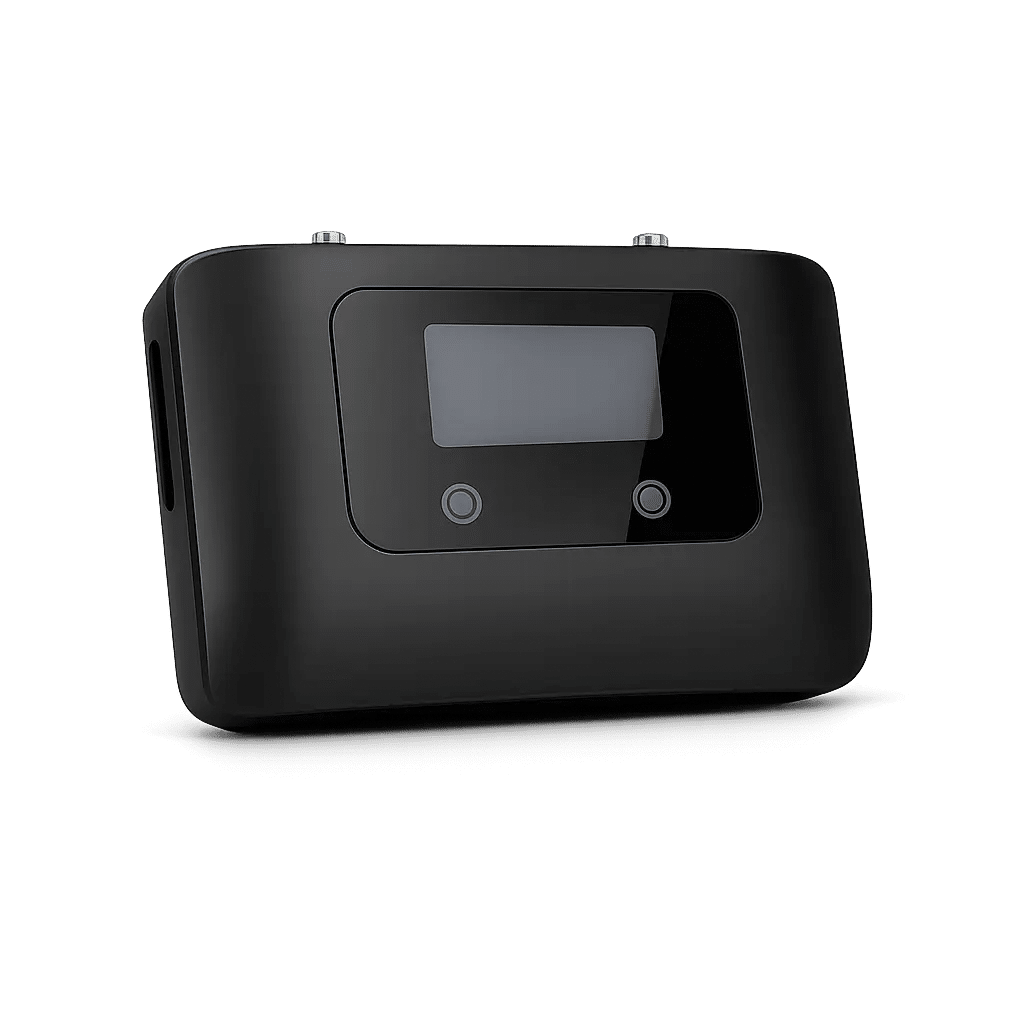
Coverage: 300 SQM
Ideal for: Home


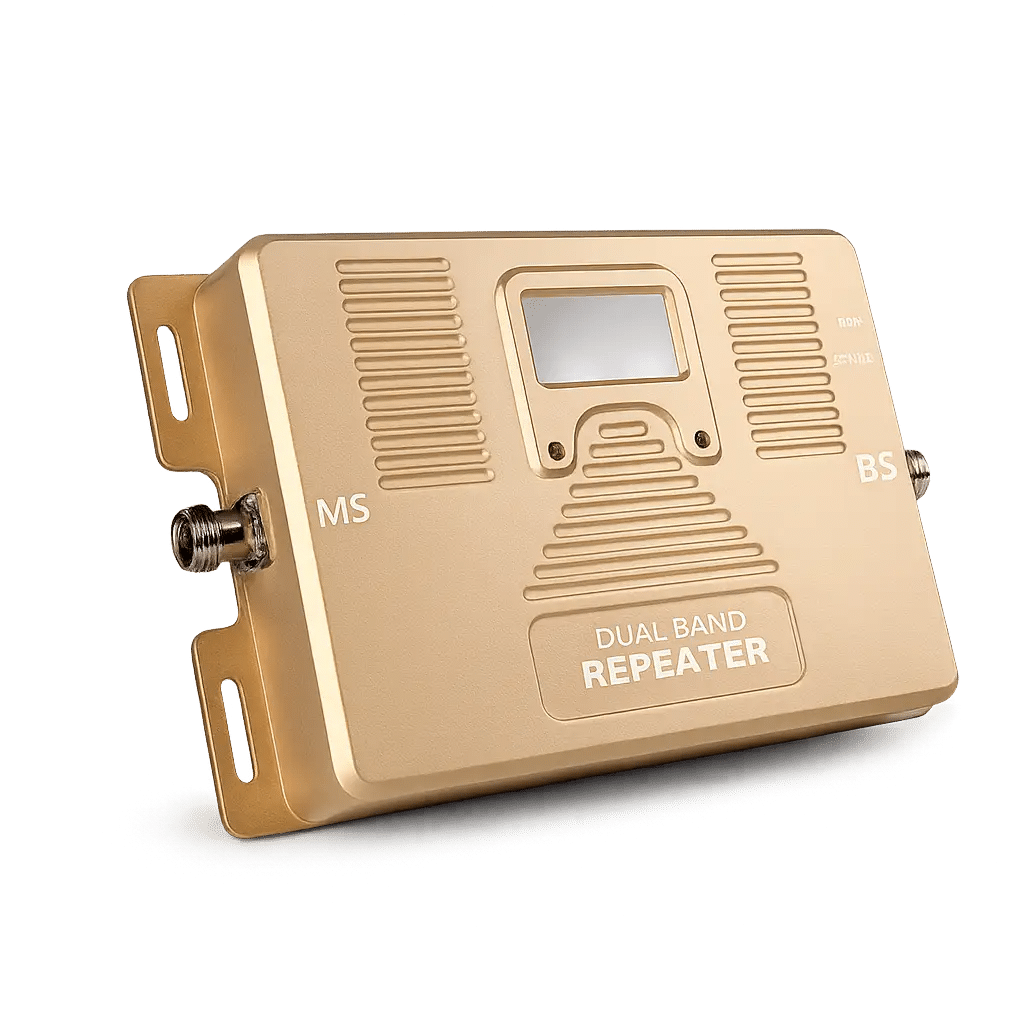
Coverage: 500 SQM
Ideal for: Medium Offices, Studios, And Homes

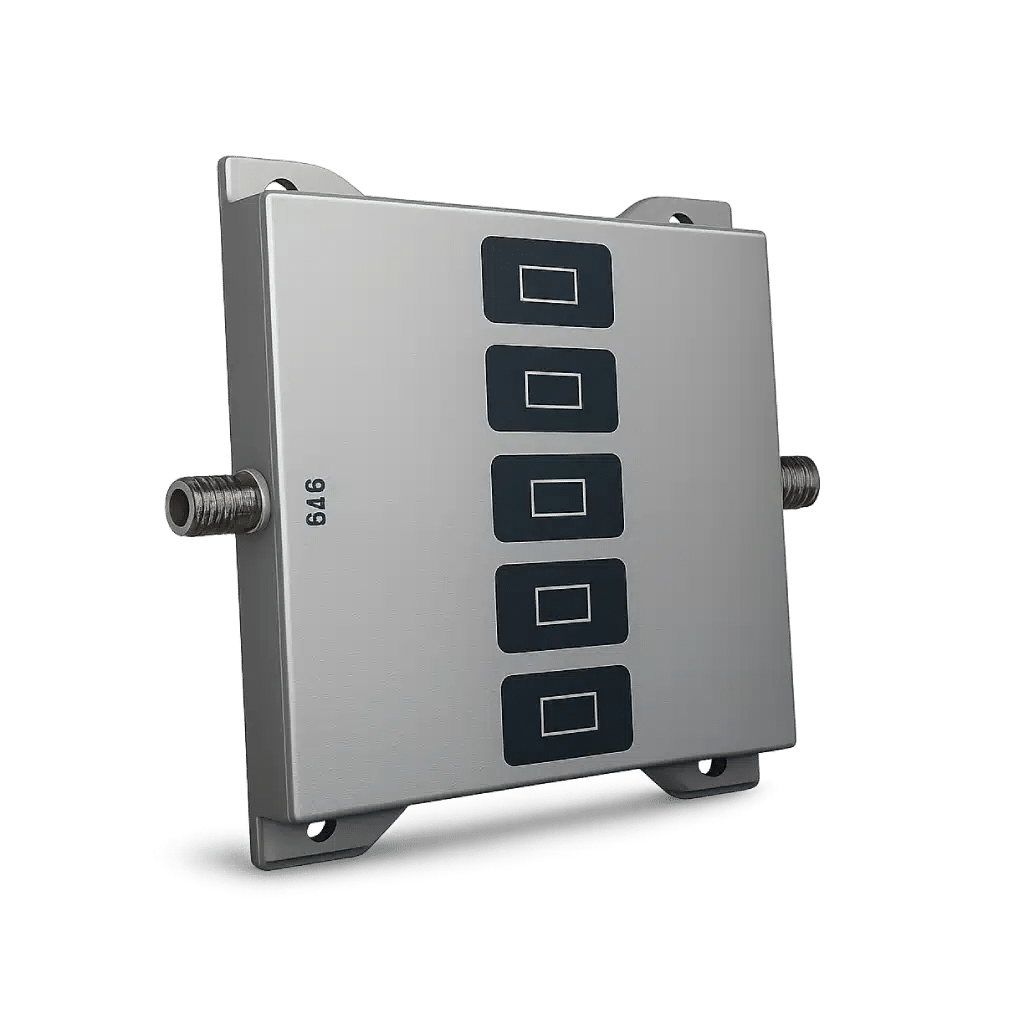
Coverage: 300 SQM
Ideal for: Home

Coverage: 1000 SQM
Ideal for: Hotel

©Copyright 2026 SignalBoosters. All Right Reserved
