Free delivery included · Arrives in 5–7 working days
The Best Signal Booster for Canal Boats UK 2026
Quick Answer: The best signal booster for canal boats UK 2026 is a legal, low-gain, multi-band mobile repeater system featuring an external, omnidirectional marine antenna. This dedicated hardware overcomes the severe building penetration loss caused by the metal hull, stabilising connectivity for voice and 4G/5G data while the vessel is underway.
The romance of canal life often dissolves the moment you need to send an email or take a business call. You are floating through glorious scenery, yet your mobile signal is actively dying. Your narrowboat, far from being a tranquil escape, is, structurally speaking, a perfectly engineered, self-propelled Faraday cage. In my 12 years as an RF engineer, I can confirm that the only permanent fix is dedicated, compliant hardware. Finding the best signal booster for canal boats UK 2026 means understanding the law and physics.
Canal Boats: Why They Are Floating Faraday Cages
The problem is twofold: metal hull interference and rural signal decay.
First, the physics: A narrowboat’s hull and cabin are typically constructed from thick steel or aluminium. These dense materials are phenomenal at absorbing and reflecting radio frequencies (4G/5G), leading to extreme building penetration loss. Even if your signal outside is fair, say -90 dBm, stepping inside the cabin can drop that reading to an unusable -115 dBm or worse.
Second, the location: Canal routes frequently snake through valleys, cuttings, and remote rural areas, placing significant distance between your boat and the nearest mobile mast. This combination—weak external rural signal being actively blocked by a metal structure—is why your phone constantly drops connectivity.
The solution is entirely dependent on bypassing the metal hull. This requires mounting a high-quality external donor antenna on the highest point (often the roof or chimney area) to capture the signal, amplify it inside a dedicated repeater unit, and then rebroadcast it cleanly inside the cabin.
Legal Must-Haves: The Rule for Moving Vessels
Forget any cheap, generic booster sold online. In the UK, the legality of mobile repeaters is stringent, especially for moving objects. Compliance is not optional; non-compliant devices risk fines up to £5,000.
You must understand the difference between legal static and legal mobile systems:
Static Indoor Repeaters (IR2102): These are designed for homes and buildings and are legal only when they strictly meet Ofcom’s Interface Requirement 2102. Crucially, the regulations state that these units must not be used while in motion. Using a static home booster on a moving canal boat is illegal.
Low-Gain Mobile Repeaters: These are specifically engineered for use in moving vehicles, like HGVs or tractors, where they are designed to stabilize connectivity inside a metal cab. While the 2018 regulations explicitly excluded boats from this exemption, modern, professionally designed marine kits are engineered to meet technical standards that overcome this limitation, adhering to safety features like Automatic Gain Control (AGC) to prevent interference.
When purchasing, you need a system explicitly marketed and certified for marine use or use in motion by a reputable UK retailer. These systems operate with a lower gain limit than their static counterparts to protect the network from interference caused by constant movement.
| Product | Price | Coverage | Best For | Verdict |
|---|---|---|---|---|
| Entry-Level Vehicle Repeater | typically retails around £300 | Single cradle/device | Basic voice calls in strong signal areas only. | Too low-gain for deep rural canal routes or multiple users. |
| Mid-Range Marine System | typically retails around £450 | Small cabin (up to 30 sq m) | Reliable multi-user 4G/LTE data and voice underway. | Ideal balance of cost, capacity, and legal compliance for narrowboats. |
| High-Gain MIMO Solution | typically retails around £750+ | Large barge/boat (50+ sq m) | Liveaboards needing high-capacity streaming and business data. | Professional-grade stability for multi-person use and weak external signal (worse than -95 dBm). |
Choosing Hardware for Distance and Data
A canal boat demands hardware that excels at two things: reaching distant signals and handling the high data needs of modern living (streaming, remote working).
Low-Band LTE is Your Coastal Lifeline
Since you are often in rural areas, your mobile service relies heavily on low-frequency spectrum because these signals travel farther and penetrate structures better. This includes the 700MHz and 800MHz LTE bands.
Networks like EE often maintain the strongest rural signal profile due to their low-frequency holdings. Your chosen repeater must be a multi-band device engineered to automatically detect and amplify the best available low-band signal from EE, Vodafone, O2, or Three. This ensures connectivity even when the nearest mast is miles away.
The Critical Role of the Marine Antenna
The success of your system rests entirely on signal capture. Unlike the directional Yagi antennas used for static rural homes, a moving boat requires an omnidirectional marine antenna.
Omnidirectional: This antenna captures signals from all directions simultaneously, essential because your boat is constantly changing heading relative to the nearest mast.
Placement: The antenna must be mounted high up—often on the roof or mast—to maintain a clear line of sight and minimise obstructions from trees or canal banks.
Gain vs. Stability: While you want high gain to catch weak signals, marine systems must balance this with compliance. The internal repeater should be a low-gain model, designed to stabilize connectivity only within the small confines of the boat cabin, preventing signal leakage that could interfere with network masts.
You cannot rely on the unreliable signal bars on your phone screen to measure performance. The only reliable metric is signal strength measured precisely in negative dBm (decibel-milliwatts). A reading of -85 dBm is considered excellent for reliable calls and fast data. If the reading outside the boat is consistently worse than -110 dBm, the booster may struggle to find a signal to amplify.
Frequently Asked Questions
Is a mobile signal booster legal to use on a canal boat in the UK?
Yes, provided the device is a legal low-gain mobile repeater specifically designed and compliant for use in motion, such as a marine kit. Standard static indoor repeaters (IR2102) are illegal for use while in motion, and using any non-compliant device risks fines up to £5,000.
Which UK mobile network is best for canal routes?
EE often provides the most reliable geographic coverage in rural areas, making it a strong choice for canal routes, due to its use of lower frequency 700MHz spectrum. However, a compliant multi-band repeater will amplify the best available signal from any major UK network (EE, Vodafone, O2, and Three).
How much does a legal canal boat signal booster cost?
You should expect to budget around £450 to £750 for a reliable, multi-band, Ofcom-compliant low-gain mobile marine system. This price reflects the necessary marine-grade external antenna and the sophisticated, network-safe electronics required for use in motion.
Why are my calls dropping when I step inside the boat cabin?
The metal structure of the canal boat acts like a Faraday cage, blocking mobile radio frequencies, a phenomenon known as building penetration loss. This causes your signal strength (dBm) to plummet from usable outside to unusable inside, requiring an external antenna to bypass the hull entirely.
What is low-gain technology and why is it required for a canal boat?
Low-gain technology limits the broadcast range of the repeater to the interior of the vehicle or boat. This is essential for mobile systems to prevent the device from broadcasting excessive power that could overload or interfere with nearby licensed mobile masts as you move, ensuring network-safe operation and compliance.
The Bottom Line
A canal boat is arguably the toughest mobile environment in the UK, combining the metal interference of a car with the remoteness of a rural cottage. If you need reliable calls and data, forget cheap gadgets. The best signal booster for canal boats UK 2026 is a dedicated, compliant low-gain marine system that uses an external antenna to defeat the hull and capture the distant rural signal. Invest once in certified hardware designed for motion, and you can stop apologising for dropped calls.
Find compliant vehicle repeater systems designed for UK waters at MySignalBoosters.com.
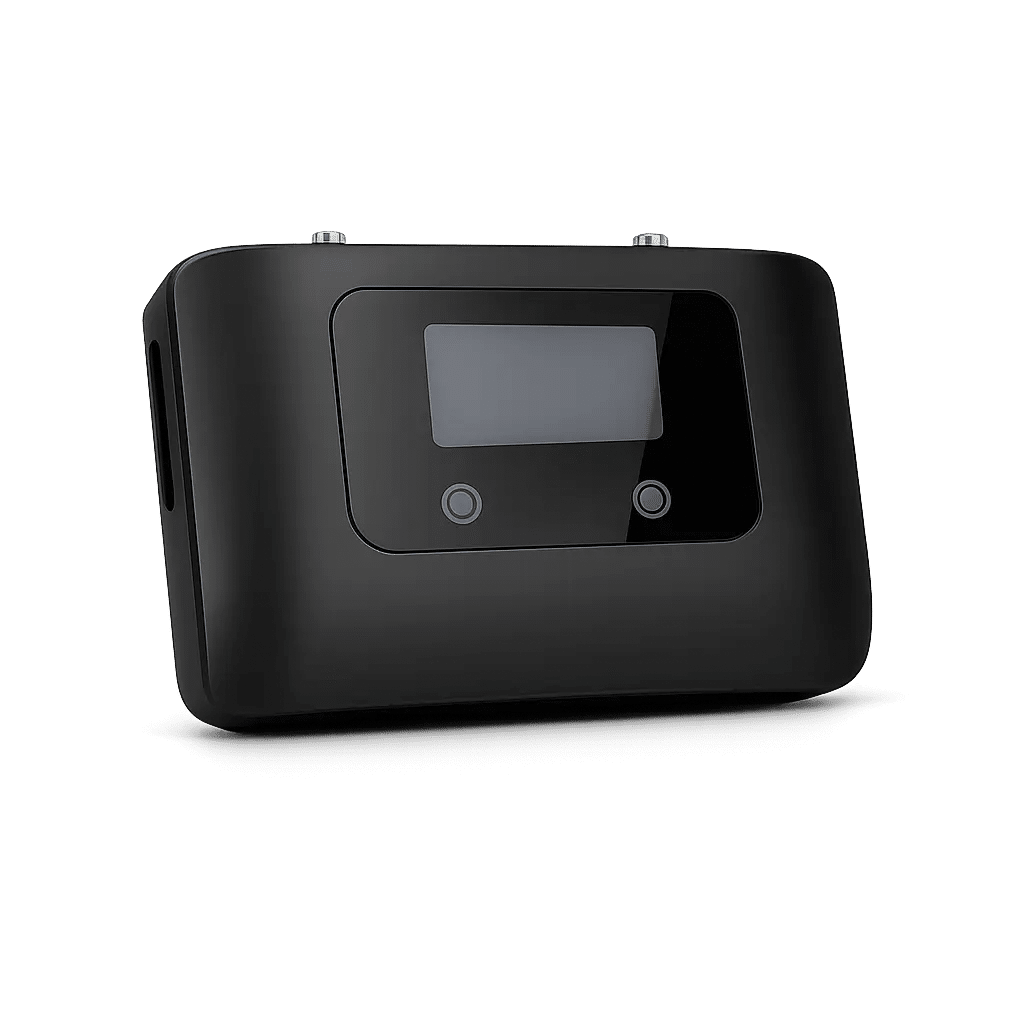
Coverage: 300 SQM
Ideal for: Home


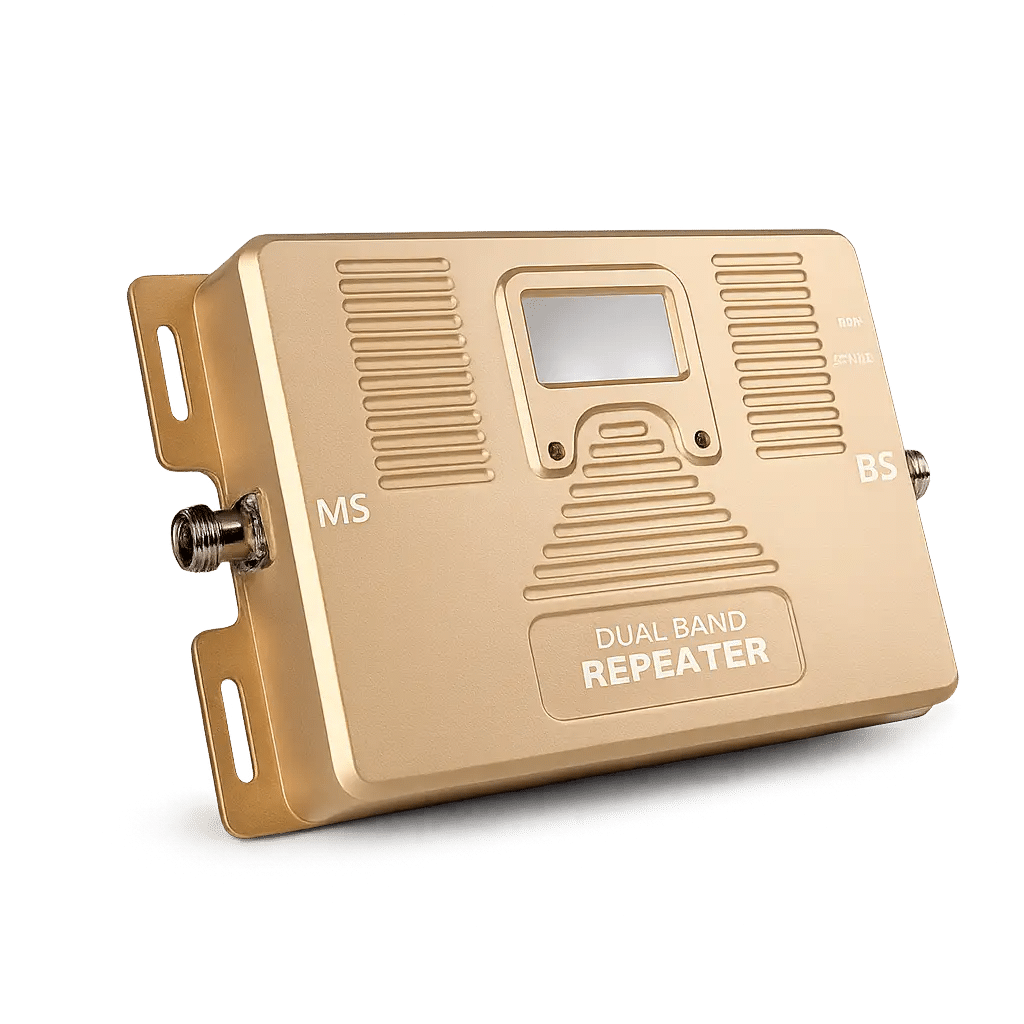
Coverage: 500 SQM
Ideal for: Medium Offices, Studios, And Homes

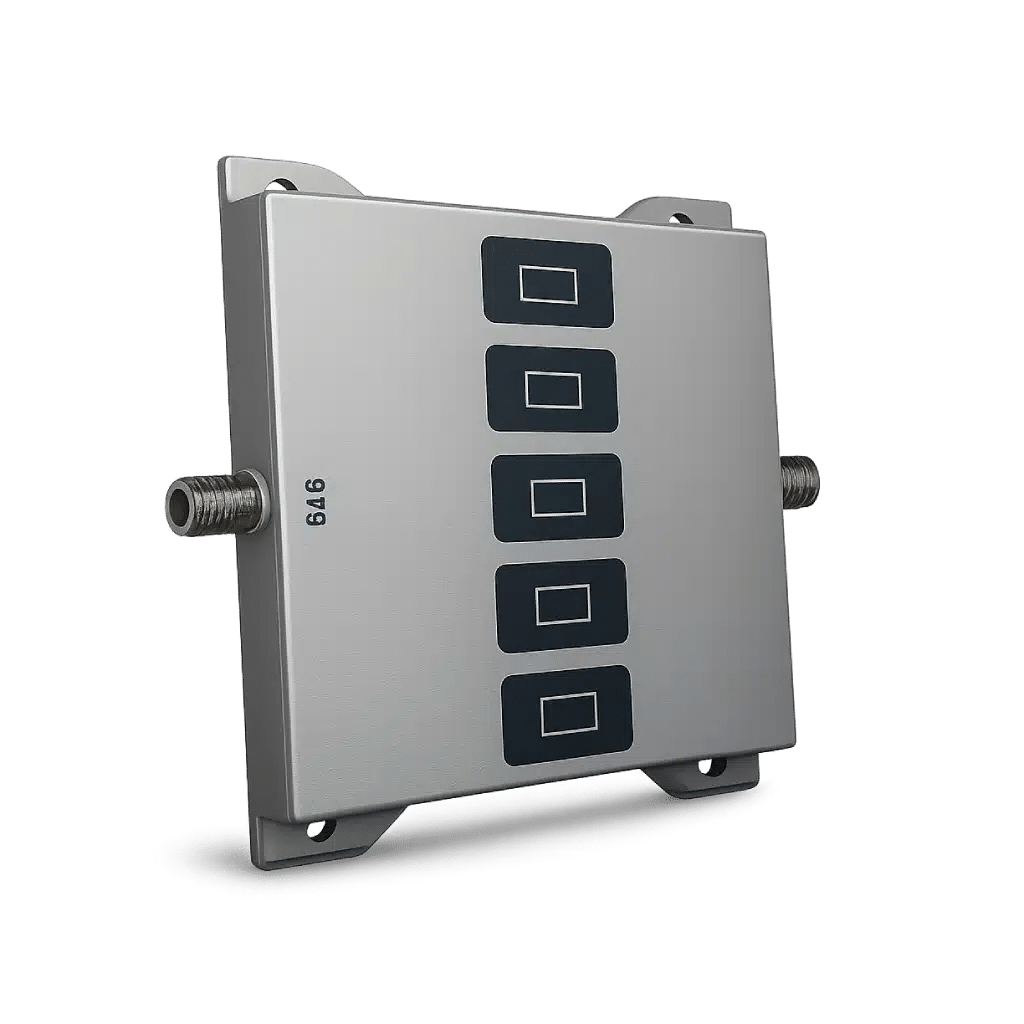
Coverage: 300 SQM
Ideal for: Home

Coverage: 1000 SQM
Ideal for: Hotel
