Free delivery included · Arrives in 5–7 working days

Shop mobile signal boosters
Get a stronger mobile signal at home or work. Delivery in 5-7 working days. 30-day returns.
The Best Signal Booster for UK Student Accommodation 2026
Quick Answer: The best signal booster for student accommodation is a professional-grade, license-exempt static indoor repeater that strictly complies with Ofcom’s technical standard, UK Interface Requirement 2102 (IR2102). You will require a High-Gain 5G/MIMO or Ultra-Max system (starting around £600) to counteract severe building penetration loss from concrete or stone and handle the demands of a high user density across all UK networks.
The modern student experience is supposed to be flexible, but that flexibility evaporates when connectivity dies inside their room or communal area. You cannot run a university, a private student block, or even a study session on a signal that requires you to lean out of a window. The constant flickering signal bar is not a minor fault; it is a structural failure in connectivity caused by the building itself. In my 12 years as an RF engineer, I can confirm that the only reliable, permanent fix for poor indoor mobile coverage in these dense environments is a legal mobile signal repeater.
Why Halls of Residence Are Mobile Signal Black Holes
University campuses and purpose-built student halls are often architectural nightmares for mobile radio frequencies. The design elements meant for durability, soundproofing, and fire safety—namely concrete, dense brick, and internal steel frames—are all highly effective at blocking 4G and 5G signals. This phenomenon is known as building penetration loss.
A school or university building’s complex layout of small rooms, long corridors, and basement common areas creates numerous deep dead zones. A strong external reading of, say, -75 dBm can plummet instantly to an unusable -115 dBm inside the walls.
The challenge is twofold for student accommodation:
Structural Hostility: The building materials are designed to keep the world out, which includes radio waves.
High User Density: Hundreds of students simultaneously streaming, video calling, and uploading data demand high capacity from the network. A weak signal coupled with high demand leads to critical failure.
The network coverage map is irrelevant if the signal cannot physically pass through the wall of a standard student block. This is why you must select hardware designed for high-capacity commercial reality, not a flimsy home solution.
Choosing the best signal booster for student accommodation means finding a system that prioritizes maximum amplification, high capacity (MIMO), and compliance.
| Product | Price | Coverage | Best For | Verdict |
|---|---|---|---|---|
| Entry-Level IR2102 Repeater | typically retails around £275 | 1–2 rooms | Single student flats with mild internal issues | Too weak for multi-room, multi-floor, or high-density use |
| Mid-Range Multi-Band Repeater | typically retails around £450 | Up to 4 rooms | Small administrative offices or annexes | Likely insufficient capacity or gain for a dense student block |
| High-Gain 5G/MIMO System | typically retails around £600–£850 | Multiple floors (up to 1,500 sq m) | Medium-sized halls or high-demand communal areas | The minimum required for robust 4G/5G data and voice across an entire wing |
| Professional Ultra-Max System | typically retails around £1,650 and up | Up to 5,000 sq m | Large campus sites, multi-building accommodation blocks | Provides maximum legal 100 dB gain needed to penetrate concrete and steel |
Compliance is Non-Negotiable: The Ofcom IR2102 Rule
Before you spend a single pound on a booster, you must verify its legality. Using any generic device sold cheaply online is very likely illegal in the UK.
The law, set out in the Wireless Telegraphy Act 2006, states that installing or using non-compliant repeaters is a criminal offence. These illegal devices can cause harmful interference with licensed Mobile Network Operator (MNO) masts, potentially disrupting public services. This is not a risk worth taking for a commercial or educational institution; fines can reach £5,000 and the equipment will be forcibly removed.
The Legal Requirement: The only system you can legally install without a special license is a static indoor repeater that strictly adheres to the technical criteria in UK Interface Requirement 2102 (IR2102).
These legal “smart repeaters” are engineered to be network-safe. They include features such as Automatic Gain Control (AGC) to prevent them from overloading nearby masts and digital filtering to ensure they only amplify signals belonging to authorised UK networks (EE, Vodafone, O2, and Three).
dBm and Capacity: Choosing Hardware for High-Density Use
The physical size of the building and the sheer number of simultaneous users require a focused approach to both signal power and capacity.
The Importance of Low-Frequency LTE Bands
To fix deep signal holes caused by concrete, stone, or thick walls, a professional booster must prioritize low-frequency LTE bands. These low-band signals (700MHz/800MHz) have longer wavelengths that travel farther and penetrate dense physical obstacles much more effectively than high-frequency 5G bands.
For student blocks, this low-band amplification ensures students can reliably make calls and send texts even in interior rooms or basement common areas. The system then uses mid- and high-bands (1800MHz/2600MHz) to provide the crucial speed and high capacity necessary for hundreds of concurrent data users.
The only reliable way to know what system you need is to measure the external signal strength in negative decibel-milliwatts (dBm), not the unreliable signal bars on your phone. A value closer to zero means a stronger signal.
Strong Signal: -50 dBm to -85 dBm (Ideal for any booster).
Weak Signal: -105 dBm or worse (You need a powerful High-Gain or Ultra-Max system).
The High-Gain 5G/MIMO system is generally the minimum viable product because it supports MIMO (Multiple Input Multiple Output) technology. This is essential for handling the high throughput required by a data-hungry student population, ensuring a stable connection even during peak usage.
Frequently Asked Questions
Is a signal booster legal in UK student accommodation?
Yes, boosting mobile signal is legal, but only if you install a license-exempt static indoor repeater that strictly meets the technical specification set by Ofcom, known as the UK Interface Requirement 2102 (IR2102). The use of all other mobile signal boosters is unlawful and risks substantial fines.
How much does a signal booster for a large student block cost?
For a large student accommodation block or campus site, you should expect to budget at least £600 for a High-Gain 5G/MIMO system, with Professional Ultra-Max systems capable of covering up to 5,000 sq m typically retailing around £1,650 or more for the hardware alone. Entry-level systems (£275) are insufficient for complex structures.
What signal strength (dBm) is needed for reliable 5G data?
Signal strength is measured in negative decibel-milliwatts (dBm), where a value closer to zero is stronger. A reading of -85 dBm or better is considered excellent for reliable voice calls and fast 4G/5G data transfer. If your indoor signal is consistently worse than -110 dBm, data speeds will be unusable.
Can one booster cover all UK networks for all students?
Yes, modern, legally compliant static indoor repeaters are typically multi-band devices engineered to boost signals across the various LTE bands used by all major UK mobile networks: EE, Vodafone, O2, and Three. This is essential in a student environment where users rely on different carriers.
Which network works best for student flats in congested cities?
A legal, multi-operator booster will amplify the best available signal from any carrier. While EE often excels in rural geographic coverage due to their low-frequency 700MHz spectrum, in dense, high-demand city centres where student blocks are often located, O2, Vodafone, and Three all now claim high levels of indoor coverage. The structural issue of building penetration loss is usually the biggest hurdle, regardless of the carrier.
The Bottom Line
Connectivity is a core service in student accommodation, not a bonus perk. Trying to fix a widespread coverage problem with cheap, illegal hardware is a false economy that risks major regulatory fines and compromises resident communication. The only sensible choice is to invest in a professionally specified, high-gain, Ofcom-compliant IR2102 static repeater system. This dedicated hardware is the legal and permanent solution to defeat severe building penetration loss and provide network-safe stability across the entire accommodation block.
Find your smart, legal repeater system designed for high-density environments today at MySignalBoosters.com.
Shop mobile signal boosters
Get a stronger mobile signal at home or work. Delivery in 5-7 working days. 30-day returns.
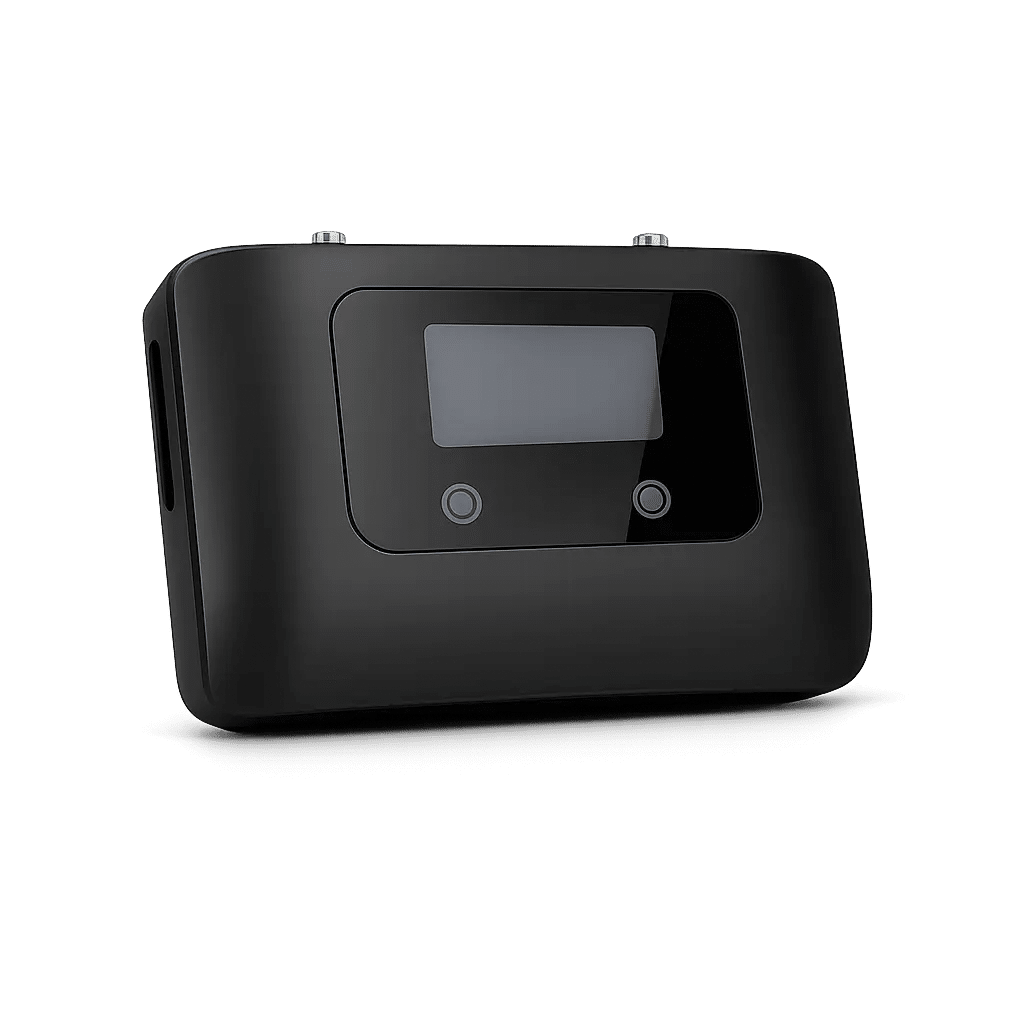
Coverage: 300 SQM
Ideal for: Home


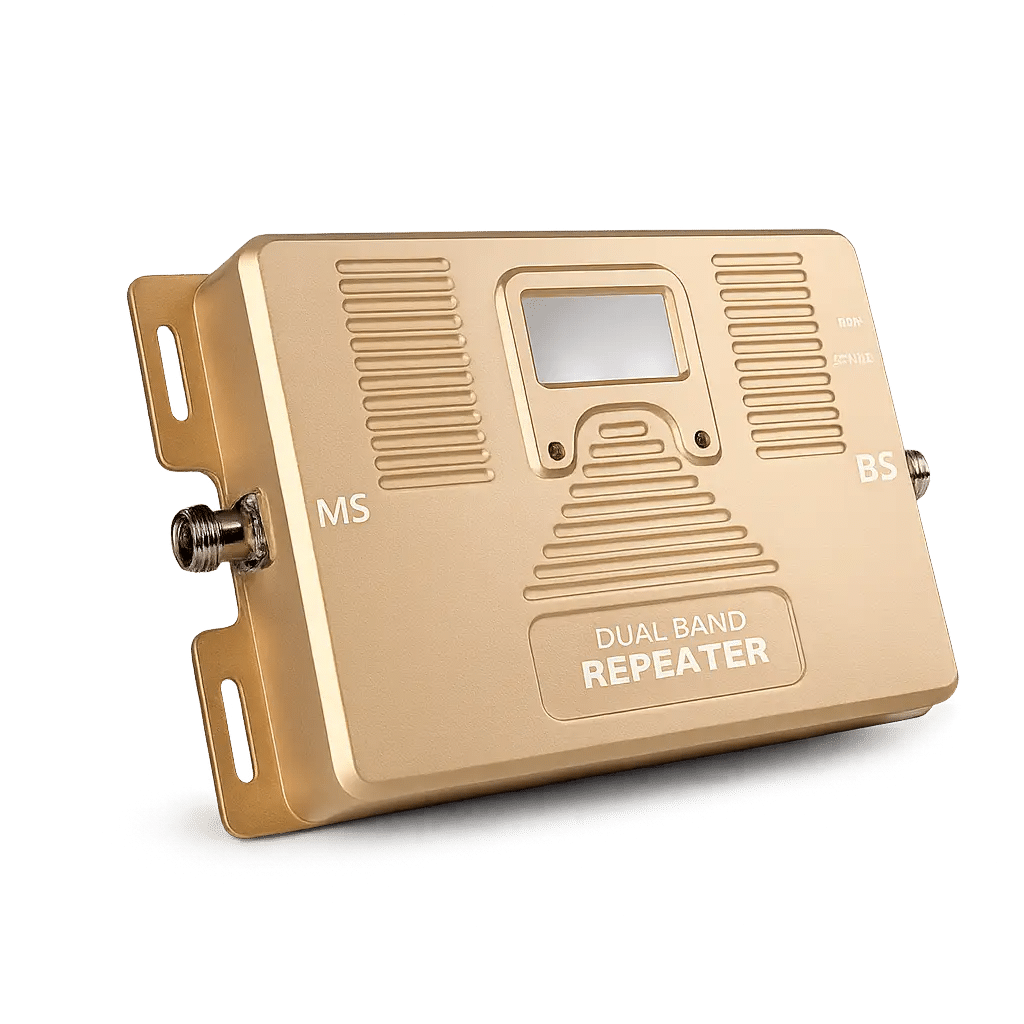
Coverage: 500 SQM
Ideal for: Medium Offices, Studios, And Homes

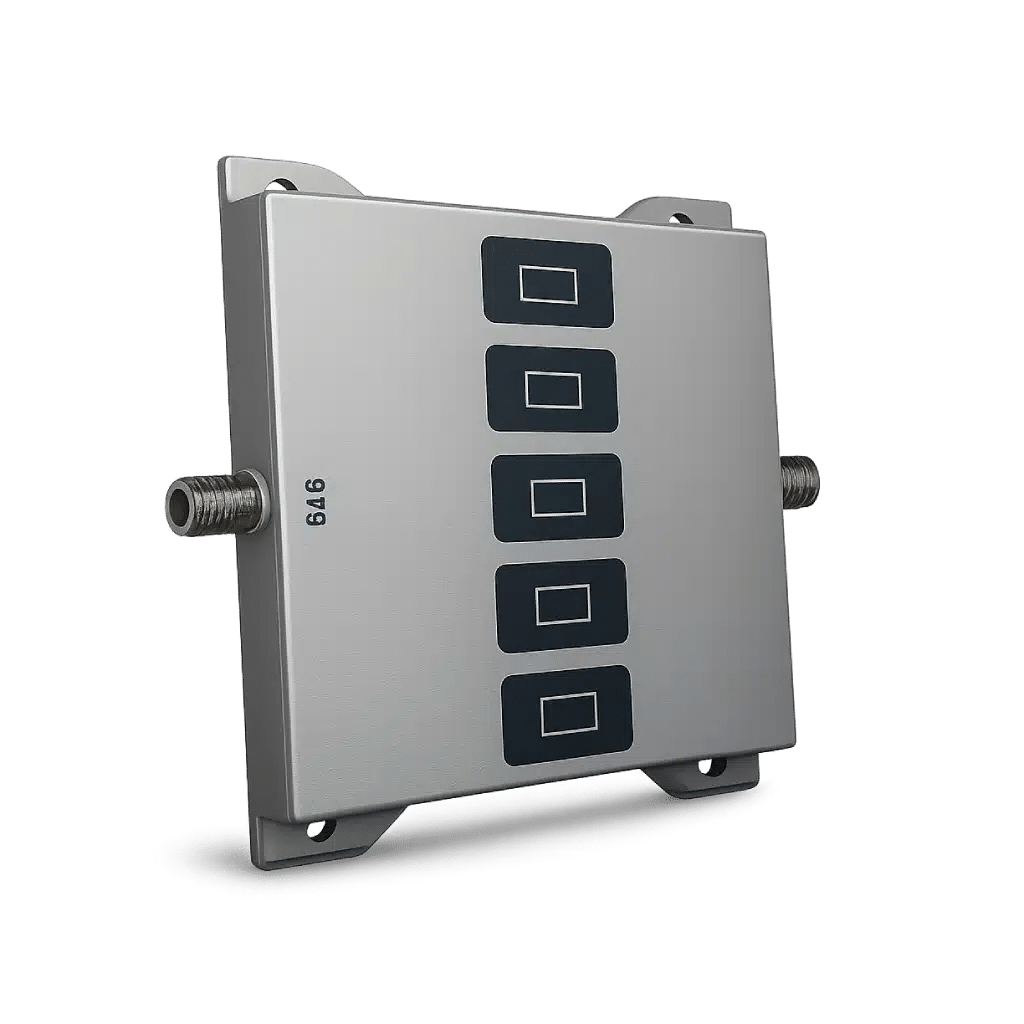
Coverage: 300 SQM
Ideal for: Home

Coverage: 1000 SQM
Ideal for: Hotel
