LIMITED TIME: 10% OFF ALL BOOSTERS.Ends Soon!

The Definitive UK Signal Booster Guide for Home, Vehicle, & Commercial 2026
Quick Answer: The only reliable and legal solution for improving indoor mobile signal is an Ofcom license-exempt static indoor repeater that complies with Interface Requirement 2102 (IR 2102). These high-gain systems, like the Cel-Fi GO G41, use maximum legal amplification to target essential low-frequency bands (700MHz/800MHz), overcoming building penetration loss in homes, basements, and commercial properties.
You are paying for 4G and 5G connectivity, yet your property is actively working to deny it. That dissolving connection—whether on a remote farm, in a pub basement, or inside a coach—is a solvable problem of physics. Finding the right legal hardware requires cutting through the noise of cheap imports and focusing on gain and compliance. In my 12 years as an RF engineer, I’ve found that almost every signal problem is solvable, provided you use the right, legal equipment built for UK spectrum.
The Legal Imperative: Compliance and the £5,000 Fine
The UK mobile signal landscape is simple but unforgiving: most generic repeaters sold online are illegal. They are ‘dumb’ amplifiers that cause harmful network interference (oscillation) to Mobile Network Operator (MNO) masts miles away. If you use a non-compliant device, Ofcom has the authority to issue fines up to £5,000 and mandate confiscation.
The only devices legal for self-installation are license-exempt static indoor repeaters. These must comply with Ofcom’s Interface Requirement 2102 (IR 2102). Certified systems, typically the Cel-Fi range, are Network-Safe and dynamically regulate their power output to prevent network pollution.
Generic imported brands, such as AnyTone or the SureCall Fusion5s, are often non-compliant wideband repeaters designed for the US market and should be avoided entirely in the UK.
Choosing the Best 5G Booster for Home and Rural Challenges
A common challenge is achieving stable 5G data inside a home or conquering the extreme distance of a rural property. Since 5G uses higher frequencies that struggle immensely with building penetration loss, a high-gain booster is essential for stability. For truly solving the connectivity issues in a thick-walled home, you need a system that offers the maximum legal power.
The required system depends entirely on the coverage area and your external signal strength, measured accurately in negative decibel milliwatts (dBm).
| Product | Price | Coverage | Best For | Verdict |
|---|---|---|---|---|
| Cel-Fi GO G41 | typically £1,300–£1,600 | Up to 3,000 sq m | Extreme signal loss, large homes, and rural dead zones | The maximum legal 100 dB gain required for deep penetration. |
| Cel-Fi SOLO | typically £600–£850 | Up to 150 sq m | Single-network small office or residential flat | Cost-effective specialist, perfect for single-network stability. |
| Mid-Range Repeater | typically £350–£500 | Up to 500 sq m | Best budget mobile signal booster for small home UK 2026 | Legal choice for small homes with only moderate signal loss. |
| Cel-Fi GO M (Vehicle) | typically £650–£800 | Vehicle cabin | Coaches, HGVs, and motorhome touring | Dedicated low gain system, legal for use in moving vehicles. |
Specialised Scenarios: Basements, Retail, and Coaches
Improving Mobile Signal on Coaches and HGVs
If you are aiming to improve mobile signal on coaches UK, you must choose a low gain in-vehicle repeater, such as the Cel-Fi GO M. Installing a high-gain static repeater in a moving vehicle is strictly illegal. This dedicated vehicle system overcomes the metal shell of the coach or HGV. Most compliant vehicle boosters are restricted to being single-network selectable to prevent harmful interference while travelling.
Boosting Signal in Pubs, Restaurants, and Basements
For best signal booster for pubs and restaurants UK 2026, the key is tackling severe building penetration loss often found in thick-walled, subterranean venues. To successfully install a signal booster in a basement UK, you must amplify the low-frequency bands: 700MHz and 800MHz. These are the only signals that reliably pass through concrete and stone. For these challenging environments, maximum legal gain from the Cel-Fi GO G41 is often necessary.
Tesco Mobile and the O2 Network
If you are searching for the best Tesco Mobile signal booster UK 2026, remember that Tesco Mobile operates on the O2 network infrastructure. Therefore, your repeater must target O2’s crucial 800MHz (LTE Band 20) low-band frequency for reliable wall penetration and stable 4G/5G coverage. Giffgaff also relies on O2’s infrastructure and requires the same 800MHz focus.
Frequently Asked Questions
Is it illegal to use most mobile signal boosters in the UK?
Yes, using most cheap, generic mobile signal boosters is illegal in the UK because they cause harmful network interference. Only specific license-exempt static indoor repeaters that comply with Ofcom’s Interface Requirement 2102 (IR 2102), such as the Cel-Fi series, are legal for self-installation.
What is the crucial frequency band for 5G penetration in a home?
The most crucial frequency bands for penetrating thick walls and achieving deep indoor coverage are the low-frequency LTE bands: 700MHz (Band 28) and 800MHz (Band 20). These low bands travel further and penetrate physical barriers much better than the high-frequency 5G capacity bands.
How much should I budget for the cheapest rural signal booster UK 2026?
For a reliable, legal system suitable for a small home with moderate signal loss, you should budget between £350 and £500 for a mid-range dual-band kit. However, for truly isolated rural properties requiring maximum legal gain (100 dB) to combat extremely weak signals, expect to budget between £1,200 and £1,600.
Why are US brands like SureCall or WilsonPro often non-compliant in the UK?
US-market boosters, often including brands like SureCall or WilsonPro, lack the required intelligent digital filtering and Automatic Gain Control (AGC) mandated by Ofcom’s IR 2102 technical standards. Using these imported wideband repeaters risks oscillation, interference, and significant fines.
What is the minimum dBm signal strength needed for a repeater to function?
A booster requires an existing external signal to function; it cannot create signal from nothing. The bare minimum signal threshold for a standard repeater to function reliably is around -105 dBm. If your reading drops below -110 dBm, a high-gain specialist system is required.
The Bottom Line
A weak indoor signal—whether it is a 5G data drop-out at home or a dropped call in a commercial basement—is a structural problem waiting for an engineering solution. You cannot fix the fundamental problems of thick UK walls, remote locations, or moving vehicles with a cheap, illegal import box. The only sensible investment is a purpose-built, high-gain, IR 2102-compliant static repeater, such as the Cel-Fi SOLO for single-network needs or the Cel-Fi GO G41 for maximum legal power. Fix your signal problem permanently and avoid that pesky £5,000 fine. View our full range of certified IR 2102 repeaters today at MySignalBoosters.com.
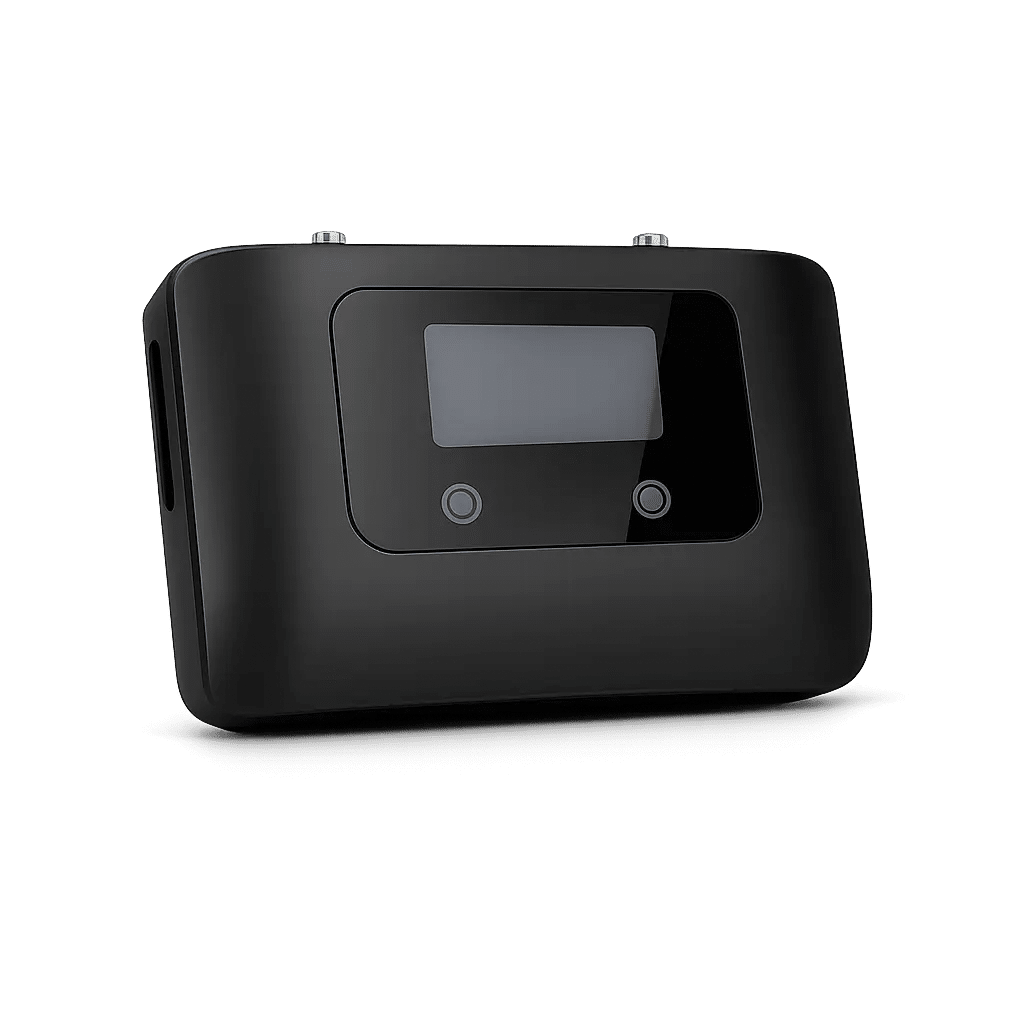
Coverage: 300 SQM
Ideal for: Home


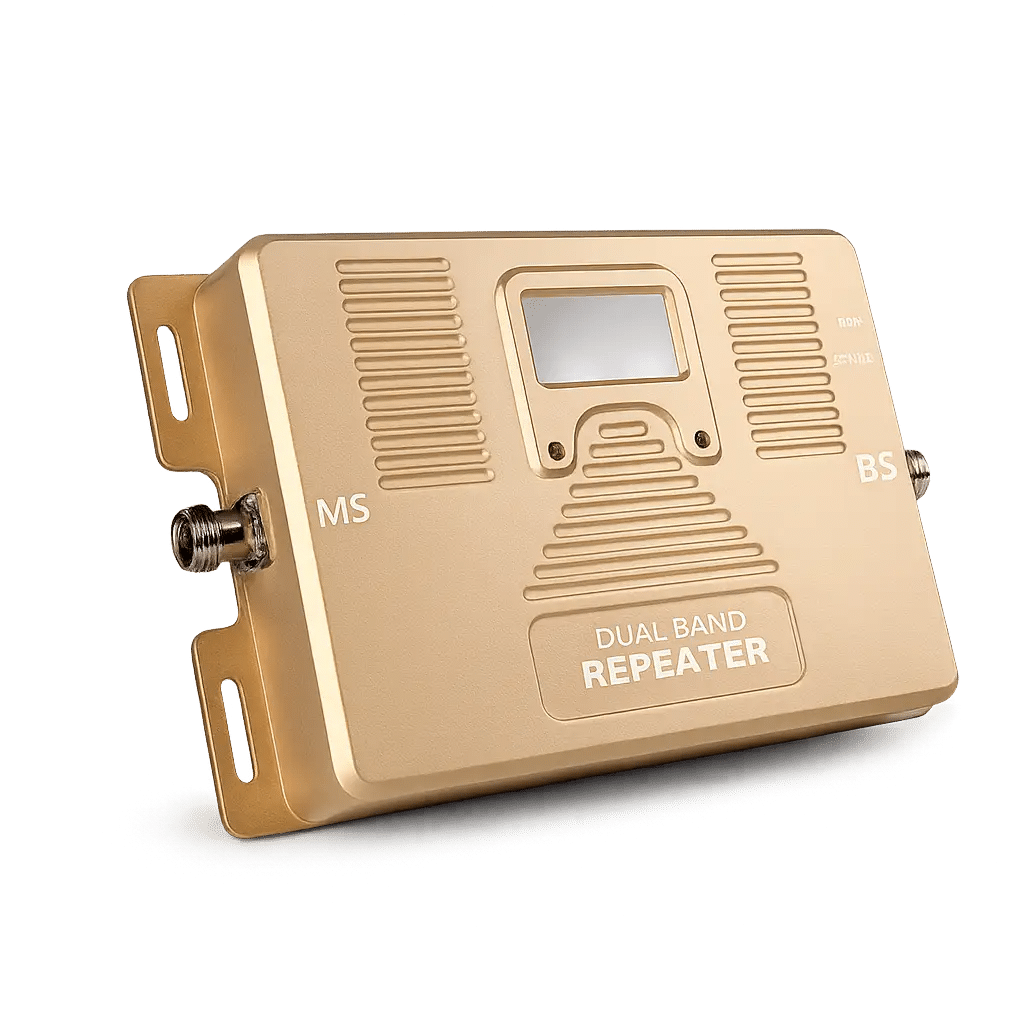
Coverage: 500 SQM
Ideal for: Medium Offices, Studios, And Homes

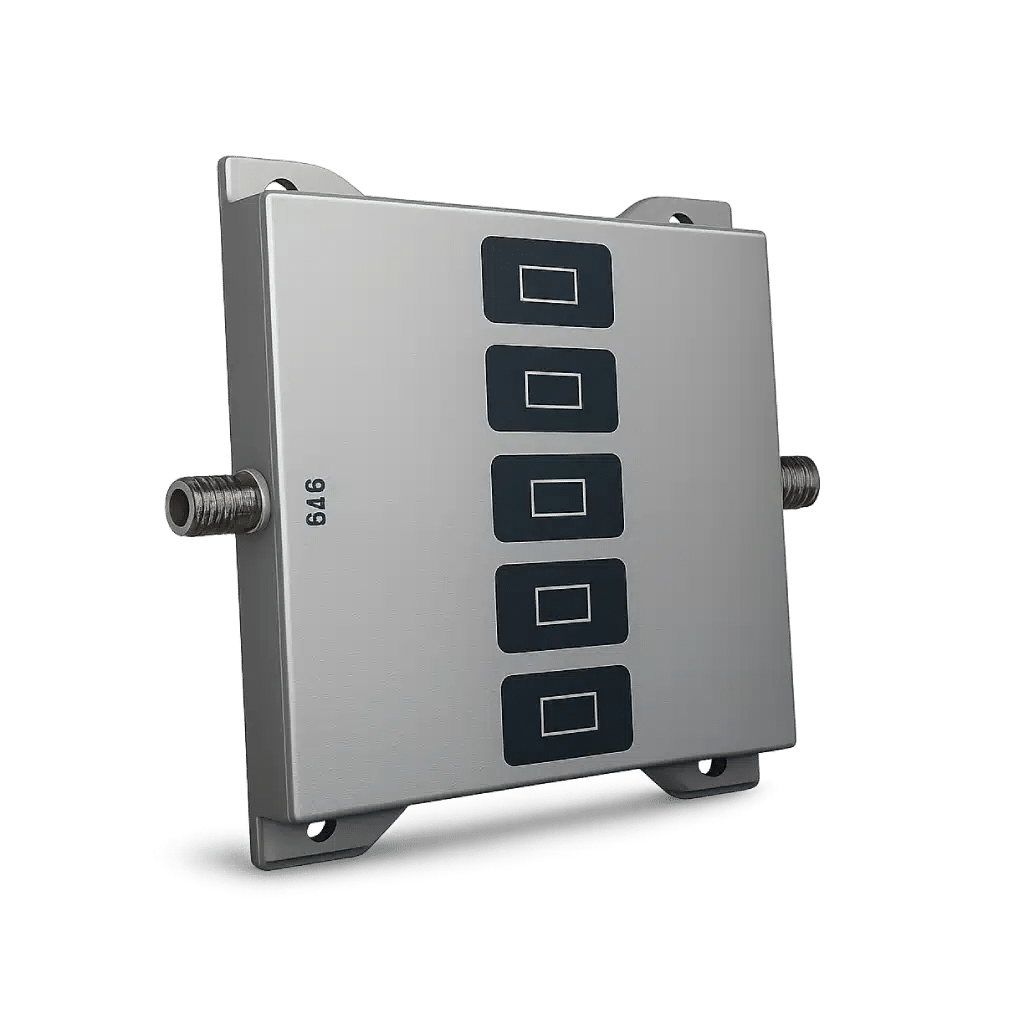
Coverage: 300 SQM
Ideal for: Home

Coverage: 1000 SQM
Ideal for: Hotel

©Copyright 2026 SignalBoosters. All Right Reserved
