Free delivery included · Arrives in 5–7 working days

Shop mobile signal boosters
Get a stronger mobile signal at home or work. Delivery in 5-7 working days. 30-day returns.
How to Adjust Signal Booster Gain for Maximum UK Coverage
Quick Answer: To adjust signal booster gain in the UK, identify if your repeater uses Automatic Gain Control (AGC) or Manual Gain Control (MGC). AGC systems manage power automatically to prevent oscillation; MGC systems require manually setting the uplink and downlink via dials or switches based on your external dBm signal strength to prevent overloading the network.
You’ve installed the outdoor antenna, run the cable, and powered up the amplifier. Now comes the complicated bit: tuning the damn thing. If the boost is too weak, your indoor coverage won’t improve; too strong, and you risk network interference.
This isn’t about setting it and forgetting it. If you want a reliable signal for EE, Vodafone, O2, and Three, you need to understand how gain adjustment dictates performance and legality. In my 12 years as an RF engineer, I can confirm that mastering gain is the difference between five bars and five figures in fines.
Why Gain Control is the Real Fight (AGC vs. MGC)
Signal booster gain is the measure of how much your repeater amplifies the incoming signal before re-broadcasting it indoors. Every legal, licence-exempt static indoor repeater must include systems to manage this gain. These generally fall into two camps.
Automatic Gain Control (AGC)
AGC is the simplest option. It uses internal software to automatically adjust the power level (gain) of the device.
The system continually monitors the signal it receives and boosts it to the maximum safe level for the network environment. If the input signal weakens or gets too strong (which can lead to overload or oscillation), the AGC automatically reduces the gain to compensate.
AGC makes installing boosters quick and easy. The disadvantage is that you cannot manually control how much coverage area you get with the booster.
Manual Gain Control (MGC)
MGC gives you granular control over the amplifier’s power for individual frequency bands. These controls appear as physical dials or dip switches on the unit.
MGC is primarily used by experienced installers for complex commercial installations, like those covering large open-plan offices. This allows you to set asymmetrical gain, meaning you can reduce the uplink (output power to the mast) without sacrificing downlink (indoor coverage).
The maximum legal uplink gain for UK boosters is 17dB. You should only adjust MGC in small steps, power cycling the booster after each adjustment to see the effect. If the controls are simple dials, reducing the gain often reduces the uplink and downlink simultaneously.
| Product Type | Price | Coverage (Approx) | Best For | Verdict |
|---|---|---|---|---|
| Compliant Home Repeater (e.g., HiBoost/Cel-Fi) | typically retails around £650–£1,500 | Up to 1,500 sq m | Self-installers & small businesses | AGC handles the tricky stuff; minimal manual tuning required. |
| Professional Ultra-Max System | typically retails around £850–£1,650+ | Up to 5,000 sq m | Large commercial sites & steel buildings | Often includes MGC for fine-tuning coverage and complexity. |
The dBm Truth: You Can’t Tune Noise
Before you touch the gain settings, you must assess the signal quality coming into the system. A repeater amplifies what it receives, and you can’t tune noise into a stable data connection.
Forget the optimistic lie of signal bars on your phone; they are meaningless for setup. Signal strength is measured accurately in negative decibel-milliwatts (dBm), where a value closer to zero is stronger.
To verify your input signal, you need to put your phone into Field Test Mode.
A reading of -85 dBm or better is considered excellent for fast 4G and 5G data.
For a standard repeater to be effective, your outdoor signal should be generally stronger than -105 dBm.
If your outdoor reading is consistently worse than -110 dBm, the booster is unlikely to amplify what is essentially unusable noise.
A weak signal dictates that you must maximize the input first, usually by precisely aiming a high-gain directional donor antenna at the nearest mast before touching the gain settings.
Preventing Oscillation and Overload
The primary reasons you need to adjust gain are oscillation and overload. Both compromise performance, and oscillation is the main cause of interference that Ofcom takes seriously.
Oscillation (Feedback Loop)
Oscillation happens when the amplified signal from your indoor antenna loops back and is picked up by the outdoor antenna. The result is an unstable feedback loop, often indicated by flashing error lights on your repeater.
The fix is usually physical, not electronic. You must increase the separation between the indoor and outdoor antennas.
Try to maintain at least 50 feet of horizontal distance, or 20 feet of vertical separation (two floors).
If you still see red or yellow flashing lights, reduce the uplink gain settings on the corresponding frequency bands (usually LTE bands) in small steps.
Overload
Overload occurs when the external donor antenna receives too strong a signal, typically because it is too close to a cell tower. Most modern legal boosters have interference protection protocols and built-in controls to prevent this from causing illegal transmissions.
However, if your system warns of overload:
Re-aim your directional antenna slightly off-center from the cell tower rather than pointing directly at it. This pulls in less signal strength.
If manual aiming doesn’t help, an inline attenuator may be needed to physically reduce the signal level entering the amplifier. This is rare for compliant UK static repeaters.
Frequently Asked Questions
What is the maximum legal gain for a UK signal booster?
UK regulations restrict multi-operator static indoor repeaters to a maximum power level of 17 dB uplink gain to prevent illegal broadcasting and network interference.
Is my mobile signal booster legal to use in the UK?
A mobile signal booster is only legal to use in the UK if it is a licence-exempt static indoor repeater that strictly complies with the technical specifications set out by Ofcom in the UK Interface Requirement 2102 (IR2102).
How do I check my signal strength in dBm?
You can check your signal strength in dBm by enabling Field Test Mode on your mobile phone, which provides the precise numerical reading needed to diagnose your signal quality. A value closer to zero (e.g., -80 dBm) indicates a stronger signal.
Which is better, a single-network or a multi-network signal booster?
Most legal, license-exempt static repeaters sold in the UK now amplify signals from multiple mobile operators (EE, Vodafone, O2, Three) simultaneously, provided they meet strict technical standards.
How do I stop the red flashing lights on my signal booster?
Red or yellow flashing lights typically indicate oscillation (a feedback loop). To fix this, increase the physical separation between your outdoor donor antenna and your indoor antenna, or reduce the booster’s gain settings.
The Bottom Line
A well-installed mobile signal booster can turn a low-lying valley croft or concrete office basement into a 5G hotspot. But tuning the amplifier is a necessary step that often separates a working system from one that causes network chaos. For compliance and optimal performance, always prioritise physical isolation to prevent oscillation before resorting to manual gain adjustments. If you are still struggling to tune your device or select the right system to fix your rural signal woes, contact a professional for advice.
Shop mobile signal boosters
Get a stronger mobile signal at home or work. Delivery in 5-7 working days. 30-day returns.
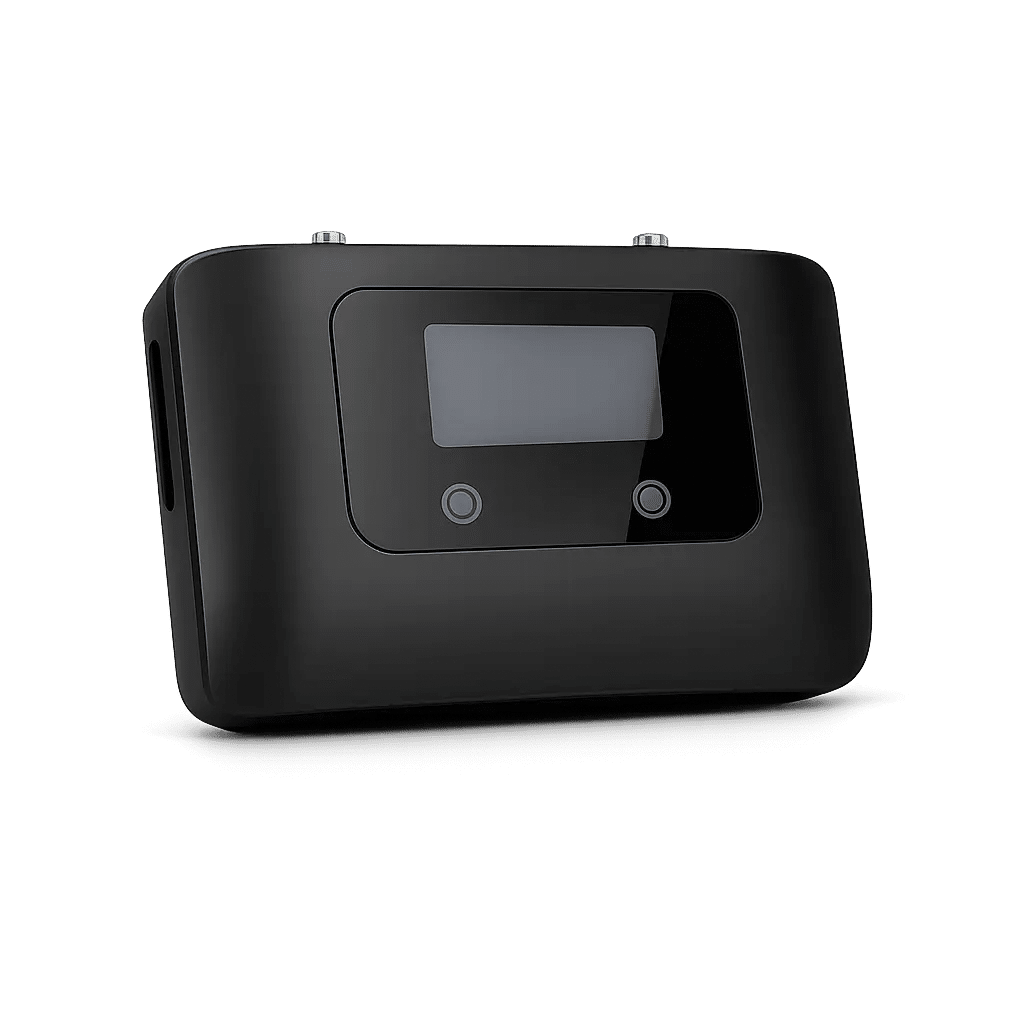
Coverage: 300 SQM
Ideal for: Home


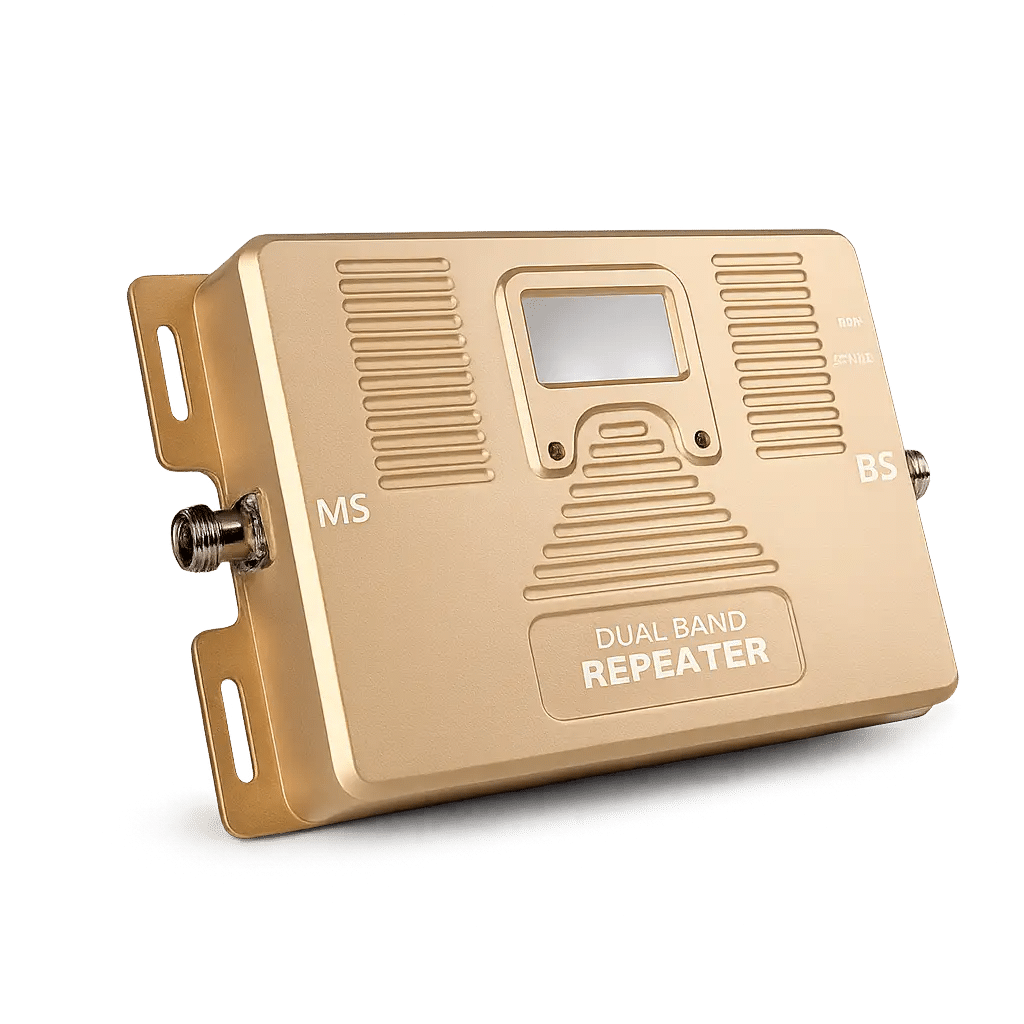
Coverage: 500 SQM
Ideal for: Medium Offices, Studios, And Homes

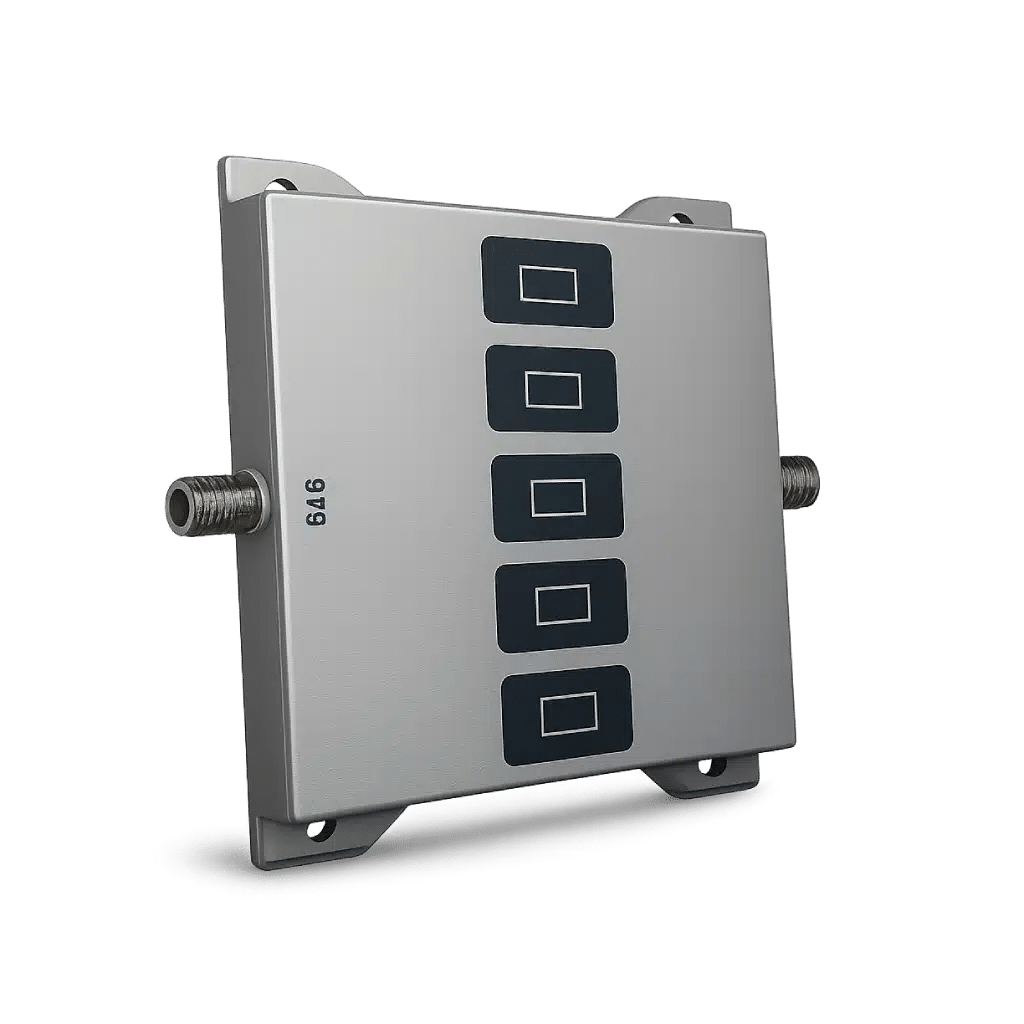
Coverage: 300 SQM
Ideal for: Home

Coverage: 1000 SQM
Ideal for: Hotel
