Free delivery included · Arrives in 5–7 working days

Feedback Loop Hell: How to Deal with Signal Booster Oscillation UK
Quick Answer: To deal with signal booster feedback loop (oscillation), you must increase the physical separation between the external donor antenna and the internal broadcast antenna until the oscillation stops. Compliant UK static indoor repeaters use Automatic Gain Control (AGC) and digital filtering to automatically monitor and prevent this issue, ensuring the device remains network-safe and IR2102-compliant.
That annoying pulsing noise, the flashing red light, or the complete drop-out of service means your booster is fighting itself, not the bad signal. This technical fault, known as oscillation or feedback loop, happens when the internal antenna picks up the signal being broadcast by the external antenna. In my 12 years as an RF engineer, I can confirm that tackling the problem of how to deal with signal booster feedback loop UK requires solving a simple physics problem: achieving sufficient antenna separation.
The Physics of Oscillation and Network Interference
A signal booster works by capturing a weak signal outside, amplifying it, and then rebroadcasting the stronger signal inside your property. A feedback loop occurs when the rebroadcast signal leaks back out and is immediately re-captured by the external donor antenna. This creates a chaotic loop of self-amplification, which rapidly escalates into oscillation.
The primary danger of an oscillating repeater isn’t just your lack of indoor coverage; it is the harmful interference it causes to licensed Mobile Network Operator (MNO) masts. This interference is precisely why Ofcom mandated strict legal standards for repeaters in the UK.
Why Legal Repeaters Rely on Automatic Gain Control
The only effective and legal mobile signal boosters in the UK are license-exempt static indoor repeaters that strictly comply with the UK Interface Requirement 2102 (IR2102).
These legal IR2102 systems are “smart repeaters” because they incorporate Automatic Gain Control (AGC). AGC continuously monitors both the incoming signal quality and the system’s output to prevent the booster from outputting excessive power that could overload nearby cell masts or cause oscillation. If a feedback loop starts, a compliant repeater should immediately reduce its gain or shut down the affected frequency band until separation is achieved.
Step-by-Step: How to Kill the Feedback Loop Permanently
If your repeater is oscillating, the fault lies in poor installation, specifically insufficient isolation between the outdoor and indoor antennas.
The most important step is ensuring the external donor antenna is mounted high up and has a clear line-of-sight path to the nearest mobile mast. The physical separation of the antennas is the fundamental technique for bypassing structural blockage and preventing feedback.
Here is the process to stop oscillation:
Increase Vertical Separation: If your internal antenna is on the top floor, move the external antenna higher up the roofline or chimney. This maximises the distance between the two antennas.
Ensure Horizontal Isolation: Place the indoor antenna as far away horizontally from the nearest wall to the outdoor antenna. For directional outdoor antennas, ensure the indoor antenna is located behind it, within the building’s walls, to maximise the structural shield.
Check Antenna Alignment: If using a high-gain directional antenna (Yagi or Log-Periodic design), confirm it is aimed precisely at the nearest mobile mast. This focused alignment helps ignore potential signal leakage from your indoor unit.
Confirm Compliance and Firmware: Professional-grade IR2102 compliant systems often require software registration and periodic firmware updates to maintain network safety. Ensure your smart repeater’s firmware is up-to-date, which confirms its AGC protocols are functioning optimally.
Don’t Trust the Bars, Trust the dBm
A repeater can only amplify the signal it receives. If your outdoor signal is too weak, the repeater might compensate by increasing its gain, potentially making it more sensitive to feedback.
You must measure your signal strength accurately in negative decibel-milliwatts (dBm).
Weak Signal: If your outdoor reading is consistently worse than -105 dBm, you require a specialist high-gain system to capture a usable feed.
Measurement: iPhone users dial 3001#12345# and press call, while Android users typically find the reading under Settings, About Phone, and then Status or Network.
Legality Check: Compliance is Your First Defence
Using an illegal, generic repeater that lacks mandated safeguards like AGC is the easiest way to cause dangerous oscillation and risk substantial penalties. The law, set out in the Wireless Telegraphy Act 2006, mandates IR2102 compliance. Using a non-compliant device is unlawful and risks fines up to £5,000.
You must invest in hardware designed to overcome structural challenges while remaining network-safe. The grade of equipment you need depends entirely on the severity of your building penetration loss.
| Product | Price | Coverage | Best For | Verdict |
|---|---|---|---|---|
| Entry-Level IR2102 Repeater | typically retails around £275 | 1–2 rooms | Small flats or bungalows with strong outdoor signal | Simple, localised boost, too weak for thick walls. |
| Mid-Range Multi-Band Repeater | typically retails around £450 | Up to 4 rooms | Standard semi-detached houses or small offices | Solid solution for common internal structural issues. |
| High-Gain 5G/MIMO Directional System | typically retails around £600 and up | Multiple floors | Necessary for severe structural loss and fast 5G data. | |
| Professional Ultra-Max System | typically retails around £850–£1,650+ | Up to 5,000 sq m | Provides maximum legal 100 dB gain required to penetrate concrete and steel. |
For large or challenging buildings, like those with high ceilings, the Professional Ultra-Max system provides the maximum legal 100 dB gain required for maximum performance and stability. This ensures the signal propagates cleanly across the full volume of the space, minimising the chance of the internal signal leaking back out to the external antenna.
Frequently Asked Questions
Is a mobile signal booster legal to use in a UK home or business?
Yes, boosting mobile signal is legal in the UK only if the device is a license-exempt static indoor repeater that strictly meets the technical specification outlined by Ofcom in the UK Interface Requirement 2102 (IR2102). Using all other generic mobile signal boosters is unlawful and risks substantial fines up to £5,000.
What is Automatic Gain Control (AGC) and why is it important?
AGC is a critical safeguard incorporated into legal, IR2102-compliant repeaters. It continuously monitors the signal input and output power, automatically reducing the repeater’s gain to prevent oscillation (feedback loops) and ensure the device never causes harmful interference to the mobile network.
How do I check my mobile signal strength (dBm) before buying a booster?
The only reliable method is to measure the signal strength in negative decibel-milliwatts (dBm) by accessing your phone’s Field Test Mode. A value closer to zero means a stronger signal, and a reading of -85 dBm or better is considered excellent for data.
Can one signal booster cover all UK networks, including MVNOs like Smarty or Voxi?
Yes, modern, legally compliant static indoor repeaters are typically multi-band devices engineered to boost signals across the various LTE bands used by all major UK mobile networks: EE, Vodafone, O2, and Three. This multi-band feature ensures one system covers all MVNOs, regardless of the host network.
What is the ideal signal strength (dBm) required for reliable 4G/5G data?
For reliable 4G/5G data speeds and stable calls, a signal strength reading of -85 dBm or better is considered excellent. If your outdoor reading is consistently worse than -110 dBm, the signal is essentially unusable noise.
The Bottom Line
A feedback loop is a sign that the physics of your installation is wrong, meaning the antennas are too close, or you are using a cheap, illegal repeater lacking safeguards. Stop gambling on illegal gadgets or relying on guesswork. The only sensible way to ensure network stability and prevent oscillation is to invest in a professional-grade, Ofcom-compliant IR2102 static repeater system and ensure maximum physical separation between the external donor antenna and the internal antenna.
Find your smart, legal repeater system and directional antenna kits designed to maintain stability today at MySignalBoosters.com.
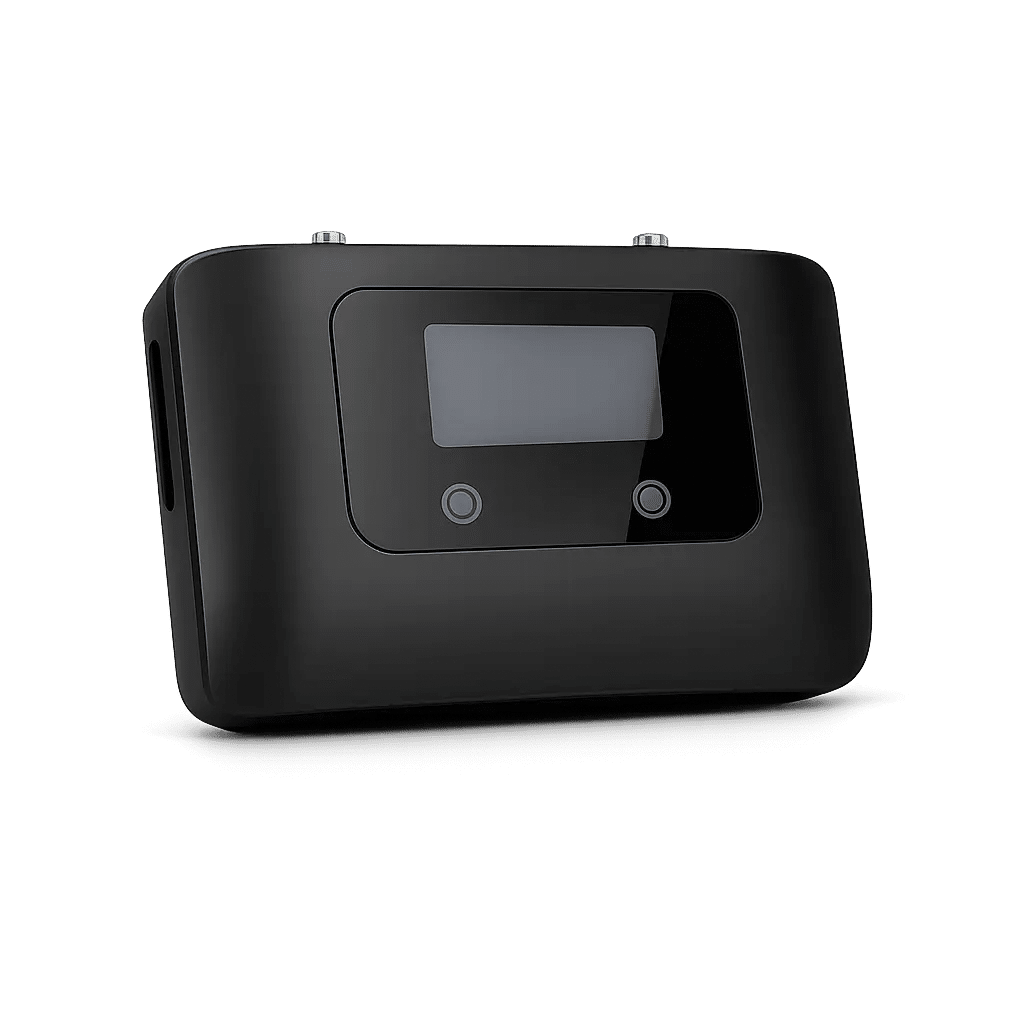
Coverage: 300 SQM
Ideal for: Home


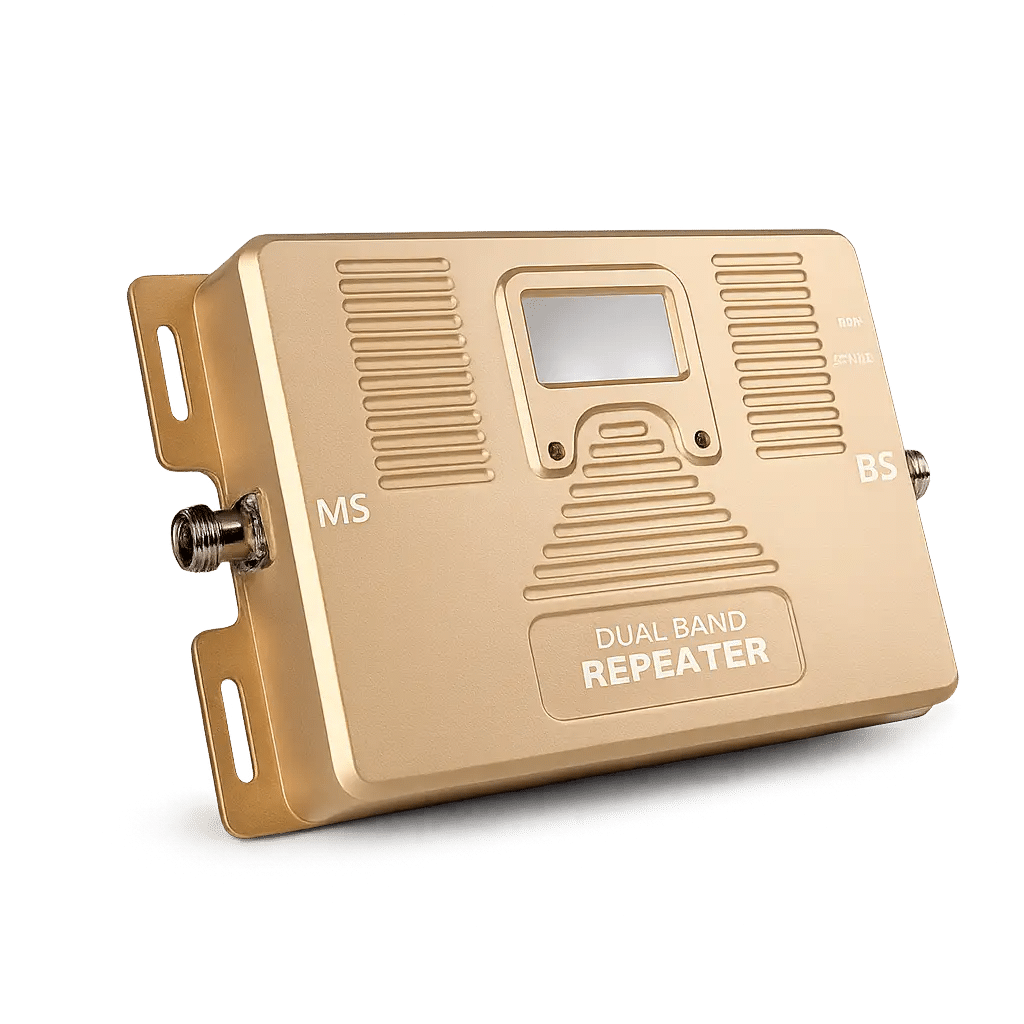
Coverage: 500 SQM
Ideal for: Medium Offices, Studios, And Homes

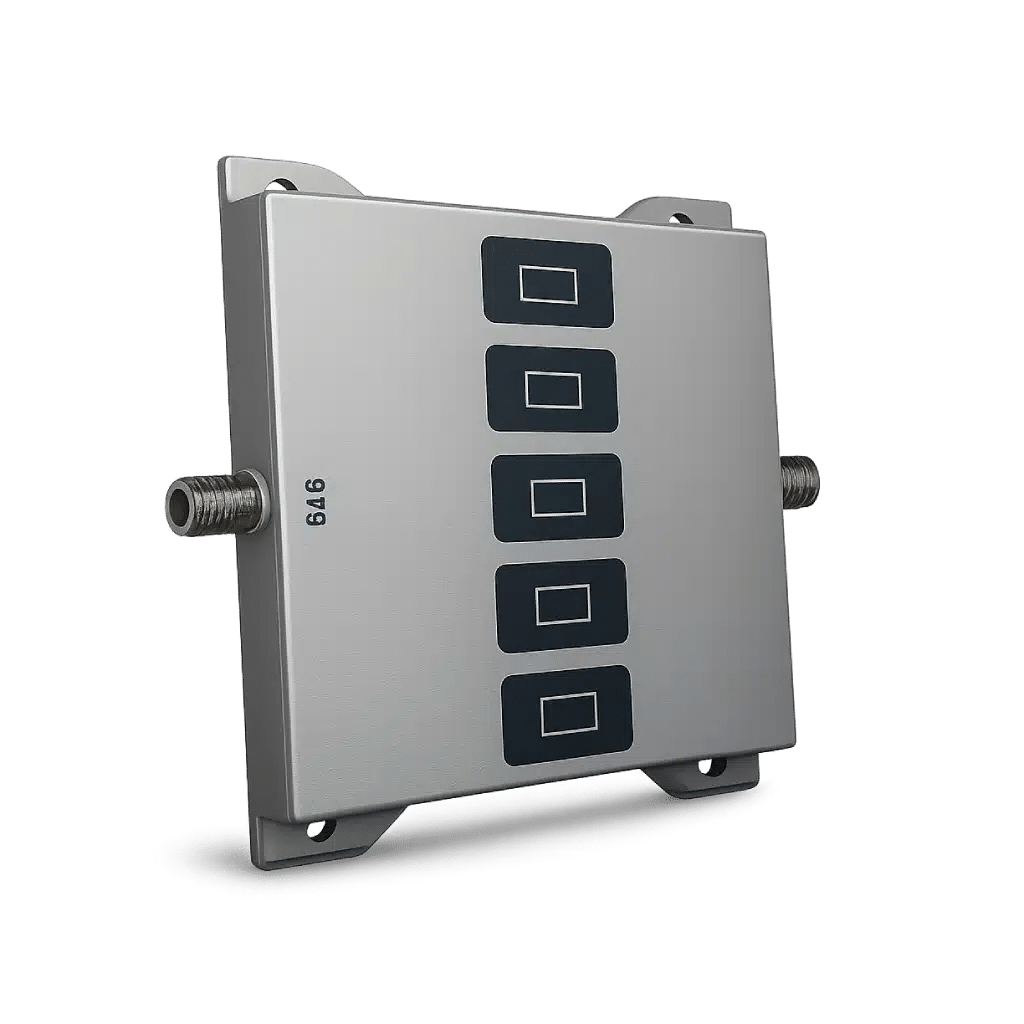
Coverage: 300 SQM
Ideal for: Home

Coverage: 1000 SQM
Ideal for: Hotel
