Free delivery included · Arrives in 5–7 working days
Shop mobile signal boosters
Get a stronger mobile signal at home or work. Delivery in 5-7 working days. 30-day returns.
The Best EE Signal Booster for 4G and 5G in the UK (2026)
Quick Answer: The most reliable and legal solution for improving EE signal in the UK is an Ofcom license-exempt static indoor repeater, such as the Cel-Fi GO X or GO G41. These devices must support EE’s low-frequency bands (700MHz/800MHz) for deep building penetration and should be paired with a directional external antenna to ensure stable 4G and 5G voice and data indoors.
If your EE connection is fast at the traffic lights but dies the moment you step through your office door, you’ve encountered building penetration loss, not a network failure. Trying to fix this with a cheap import is useless and illegal. In my 12 years as an RF engineer, I’ve seen countless people waste money on illegal boxes from overseas that fail to address the specific frequency bands EE relies on.
Choosing a Legal EE Repeater for Maximum Gain
EE operates one of the most geographically covered networks in the UK, yet indoor coverage remains challenging, particularly in older buildings or basements. Since EE utilizes a complex range of high and low frequencies for both 4G and 5G, your booster must be a self-regulating, Network-Safe system.
You must only use an Ofcom license-exempt static indoor repeater. These specialized devices are designed to selectively amplify the EE network, preventing the harmful interference known as oscillation that cheap alternatives cause. Anything non-compliant risks fines up to £5,000.
| Product | Price | Coverage | Best For | Verdict |
|---|---|---|---|---|
| Cel-Fi GO G41 | typically £1,300–£1,600 | Up to 3,000 sq m | Large offices or extreme rural signal loss | The legal powerhouse for deep building penetration, offering 100 dB gain. |
| Cel-Fi GO X | typically £850 – £990 | Up to 1500 sq m | Large homes/medium offices requiring multi-band performance | Excellent balance of power and cost, often the ideal professional choice. |
| Cel-Fi SOLO | typically £600–£850 | Up to 150 sq m | Residential homes and small UK offices | Cost-effective single-network specialist for home EE coverage. |
Understanding EE’s Key Frequencies for Indoor Use
EE’s ability to perform relies heavily on hitting the correct frequency bands for your environment. For tackling building penetration loss (thick walls), you must focus on low-frequency bands. A booster that misses these low bands will only give you fast data near a window, defeating the purpose.
The Coverage vs. Capacity Divide
EE uses a tiered spectrum approach to ensure both reach and speed:
The Coverage Layer (700MHz, 800MHz): These low-frequency bands travel long distances and are essential for rural EE signal and penetrating thick walls. If you have virtually no signal inside, your donor antenna needs to lock onto these low bands outside.
The Capacity Layer (1800MHz, 2100MHz, 2600MHz): These bands handle high-speed data traffic in urban areas. The newer 5G high-capacity layers (3.4GHz–3.6GHz) struggle immensely to pass through solid walls, making a high-quality booster essential for indoor 5G access.
If your booster only targets the 1800MHz band, you risk fast data near the unit but poor reach across the rest of your home or business. Modern multi-band devices address this by boosting both the short-range capacity bands and the long-range penetration bands simultaneously.
Diagnosing Signal Strength with dBm
A booster cannot create a signal; it can only amplify what is already there. Before buying, you need to measure the quality of the incoming signal in negative decibel milliwatts (dBm). Forget the unreliable signal bars on your phone—they lie.
-50 dBm is excellent (full signal).
-95 dBm is usable for mid-range boosters.
-105 dBm is the bare minimum threshold for most standard repeaters to function reliably.
If your outdoor reading is below -110 dBm, which is common in deep urban cores or challenging rural locations, you absolutely require a specialist high-gain system like the Cel-Fi GO G41. These systems offer up to 100 dB gain, transforming a faint flicker into robust indoor coverage.
Frequently Asked Questions
Is it illegal to use a mobile signal booster in the UK?
Using non-compliant mobile signal boosters or repeaters is illegal in the UK, as they can interfere with licensed network frequencies. However, static indoor repeaters that comply with Ofcom’s technical standards (IR 2102), such as the Cel-Fi series, are license-exempt and fully legal to install yourself.
Which UK frequency band is best for deep indoor coverage?
The most crucial frequency band for penetrating thick concrete and walls common in buildings is the low-frequency 800MHz (LTE Band 20), closely followed by the 700MHz band. These low bands travel furthest and penetrate physical barriers much better than high-frequency capacity bands.
How much should I budget for an effective, legal EE signal solution?
For a reliable, high-gain, Ofcom-compliant system capable of boosting EE 4G and 5G throughout a typical UK house or small office, you should budget between £600 and £1,000 for the core hardware and high-gain external antenna. Professional-grade commercial systems can cost up to £1,600.
Can a booster fix my signal if I have absolutely zero signal outside my property?
No. A booster requires an existing external signal to function; it cannot create radio waves from nothing. If your outdoor signal strength is truly non-existent (worse than -120 dBm), even the best booster may not work, requiring you to carefully target the faint signal on the nearest mobile mast using a high-gain directional antenna.
What is the most important technical requirement for a signal booster installation?
Proper physical separation (at least 10m or a solid wall) between the indoor and outdoor antennae is critical to prevent oscillation. Oscillation is a feedback loop that causes harmful interference and forces the repeater to shut down to prevent network pollution.
The Bottom Line
A weak indoor EE signal is a solvable structural problem, but the solution demands specialized, legal technology designed for the job. Throwing money at a cheap, illegal repeater is a risk that offers poor performance and could invite a fine from Ofcom. Invest once in a proper, high-gain, multi-band system like the Cel-Fi GO or SOLO, pair it with a directional donor antenna, and fix your indoor 4G and 5G coverage for good. View our full range of Ofcom-compliant EE signal boosters at MySignalBoosters.com now.
Shop mobile signal boosters
Get a stronger mobile signal at home or work. Delivery in 5-7 working days. 30-day returns.
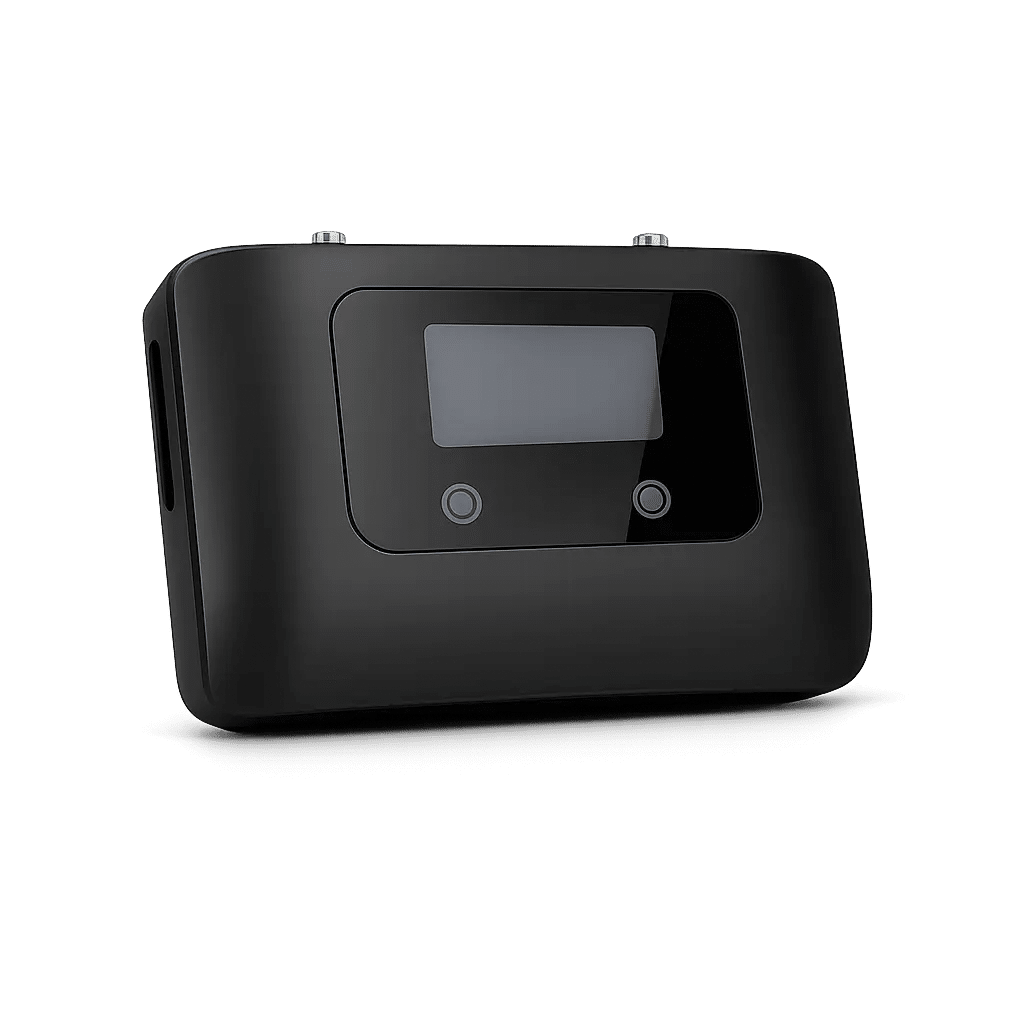
Coverage: 300 SQM
Ideal for: Home


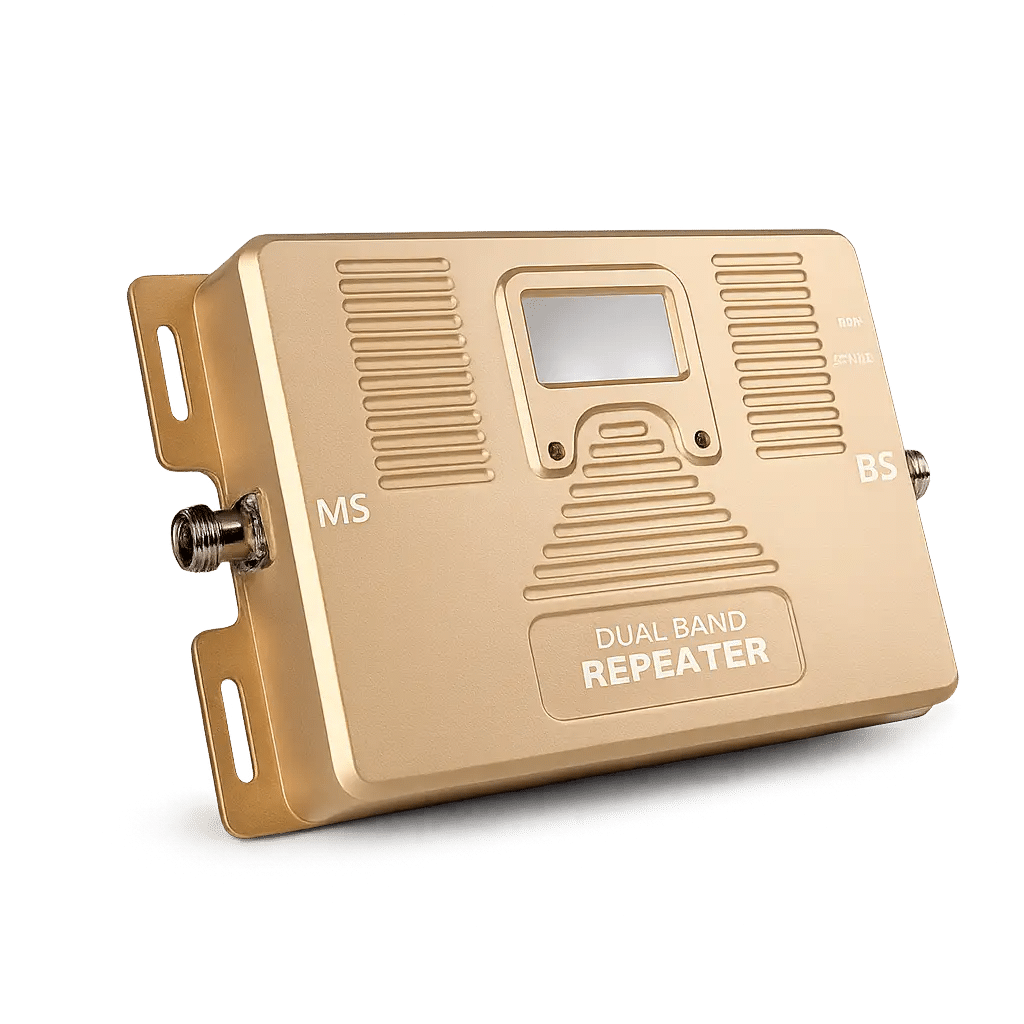
Coverage: 500 SQM
Ideal for: Medium Offices, Studios, And Homes

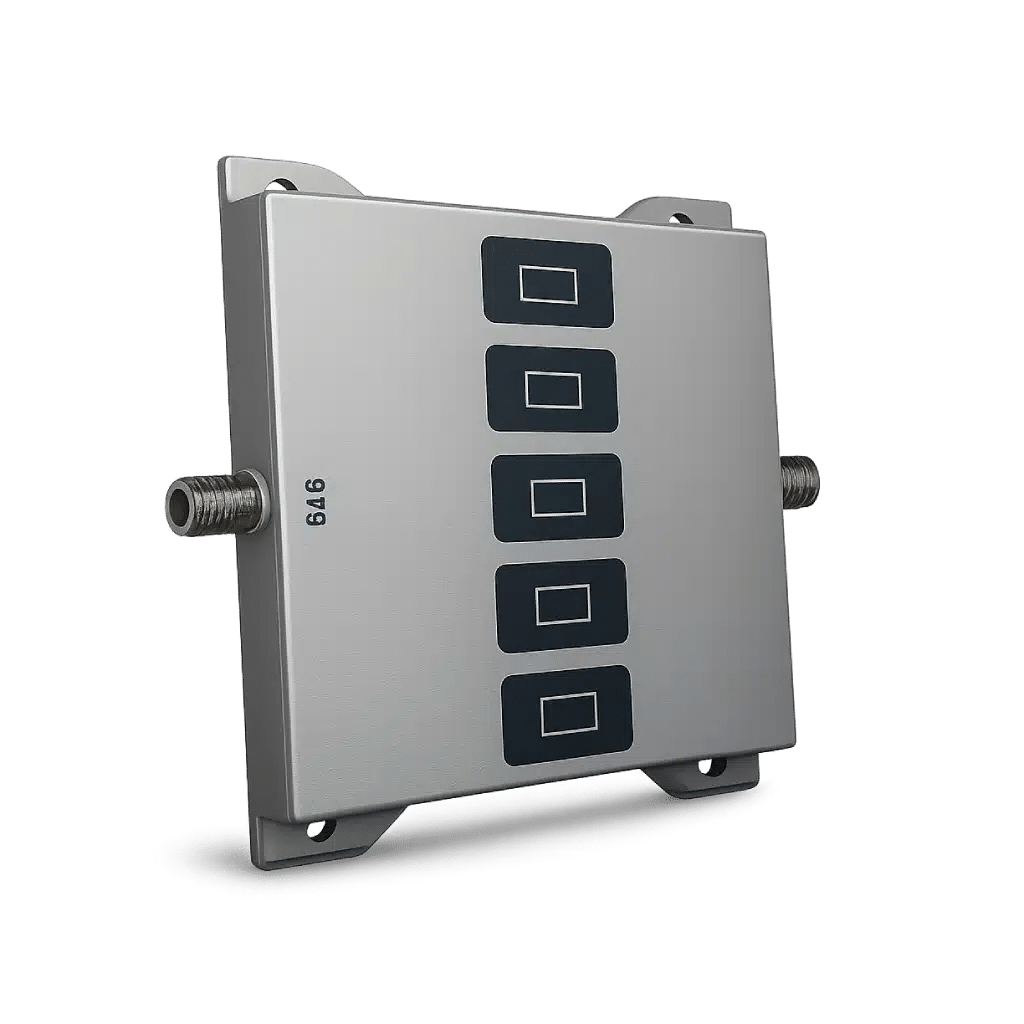
Coverage: 300 SQM
Ideal for: Home

Coverage: 1000 SQM
Ideal for: Hotel
