Free delivery included · Arrives in 5–7 working days

Step 1: Classify Search Intent
The keyword “how to improve mobile signal in chalk hills UK” is Informational. Users are seeking practical, technical, and regulatory guidance on overcoming local environmental interference.
How to Improve Mobile Signal in Chalk Hills UK
Quick Answer: The only legal and effective way to fix mobile reception in chalk hills is to install an Ofcom-compliant, IR2102-certified static indoor repeater. You must pair this with a high-gain directional donor antenna, mounted high and aimed precisely at the nearest mobile mast, to overcome topographical masking and distance attenuation.
Living in the shadow of a chalk escarpment is excellent for scenery but disastrous for your mobile connection. Those rolling hills and ridges, while aesthetically pleasing, act as massive radio-frequency shields. They block the line-of-sight from the nearest mobile mast, leaving you with little more than a paperweight in your pocket. In my 12 years as an RF signal engineer, I have seen every botched DIY attempt to fix this, from aluminium foil wallpaper to the grey-market junk sold on suspect websites. The physics of your radio environment is unforgiving; you cannot wish a signal into existence. You need specialized hardware to force it into your home.
The Geography of Silence: Chalk Hills and Signal Loss
Chalk hills create a double-edged sword for connectivity. First, you face distance attenuation, where the signal weakens as it travels miles from the mast. Second, you have topographical masking. The very slope you call home is physically standing between your device and the carrier’s transmission tower.
When you look at your phone and see “zero bars,” do not trust it. Those bars are an optimistic lie generated by software that is trying not to upset you. Your phone is a low-power device designed for cities, not for coaxing a whisper of 4G from behind a limestone ridge. To understand your true connectivity, you must stop looking at bars and start looking at data.
The dBm Truth: Measuring Your Reality
If you want to fix your signal, you need to measure it in negative decibel-milliwatts (dBm). This is the industry-standard metric for signal strength.
-50 dBm to -85 dBm: Excellent signal.
-85 dBm to -100 dBm: Fair signal; you will likely need a mid-range system.
Worse than -110 dBm: You are fighting a losing battle against noise.
You can find this figure on your phone by accessing Field Test Mode. For iPhone users, dial 3001#12345# and press call. Android users can typically find this under Settings, About Phone, and Status. If your outdoor reading is worse than -110 dBm, you are likely in a dead zone that even the best high-gain systems will struggle to rectify.
The Only Legal Fix: IR2102 Repeaters
Before you spend a single penny, understand that the UK market is saturated with illegal, generic boosters. Using these is a criminal offence under the Wireless Telegraphy Act 2006, and you risk fines of up to £5,000.
The only solution you are permitted to install is a license-exempt static indoor repeater that adheres to Ofcom’s technical specification, known as the UK Interface Requirement 2102 (IR2102). These devices are ‘smart’. They use Automatic Gain Control (AGC) to ensure they boost your signal without interfering with the licensed network masts. If a device does not explicitly claim IR2102 compliance, walk away.
Installation Tactics: Go High, Go Clear, Go Aimed
Even a perfect, legal booster will fail if you mount the antenna behind a shed. The success of your system hinges on your ability to capture the weakest, most usable external signal.
Go High: Mount your donor antenna on the highest possible point of your structure, such as a chimney or roofline. You need to clear the local ground clutter.
Go Clear: Ensure the antenna has a direct, unobstructed line-of-sight path back to the mast. You are trying to bypass the hill, not shoot through it.
Go Aimed: Use a directional antenna, such as a Yagi or log-periodic design. A wide-angle antenna is useless here; you need the focus of a sniper. Point it precisely at the mast. A rotation of just a few degrees can make the difference between a dropped call and perfect 5G data.
Frequently Asked Questions
Can I legally boost my mobile signal in the UK?
Yes, but only if the device is a license-exempt static indoor repeater that strictly meets the Ofcom IR2102 technical standard. Using any other generic booster is unlawful, causes network interference, and carries heavy fines.
How do I check my signal strength (dBm) before buying a booster?
Access your smartphone’s Field Test Mode. iPhone users dial 3001#12345# and press call, while Android users check their dBm value under the ‘Status’ or ‘Network’ section in their phone settings. Aim for -85 dBm or better for reliable performance.
Will a signal booster work for all UK networks?
Yes, modern, legally compliant static indoor repeaters are multi-band devices. This means a single system will amplify signals for EE, Vodafone, O2, and Three simultaneously, covering all users in your home regardless of their carrier.
How much does an Ofcom-compliant signal booster cost?
Entry-level systems for small spaces start around £275. For challenging sites like rural properties in hilly areas, professional high-gain systems typically retail around £600 to £850. Professional commercial setups for larger buildings can exceed £1,650.
Why do I need a directional antenna in the hills?
A directional antenna (Yagi or Log-Periodic) is essential because it focuses its reception power in one specific direction. This is the only way to successfully capture a faint signal from a distant mast while ignoring the interference caused by the surrounding terrain.
The Bottom Line
Connectivity in the chalk hills is not a lottery. It is a predictable engineering challenge. Stop relying on the optimistic lie of signal bars and start dealing with the hard truth of your dBm reading. The only sensible way to bypass building penetration loss and topographical masking permanently is to invest in a professional-grade, Ofcom-compliant IR2102 static repeater system.
Find your smart, legal repeater system and directional antenna kits today at MySignalBoosters.com.
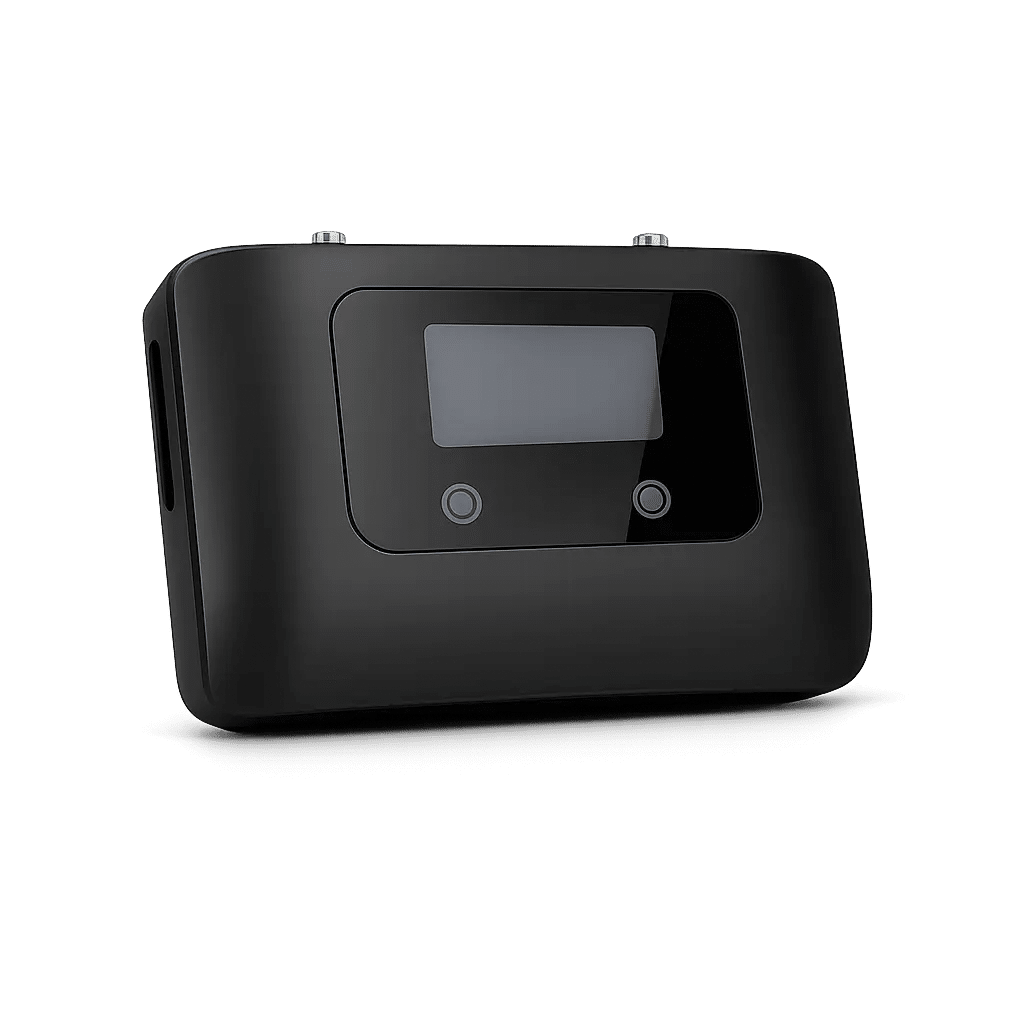
Coverage: 300 SQM
Ideal for: Home


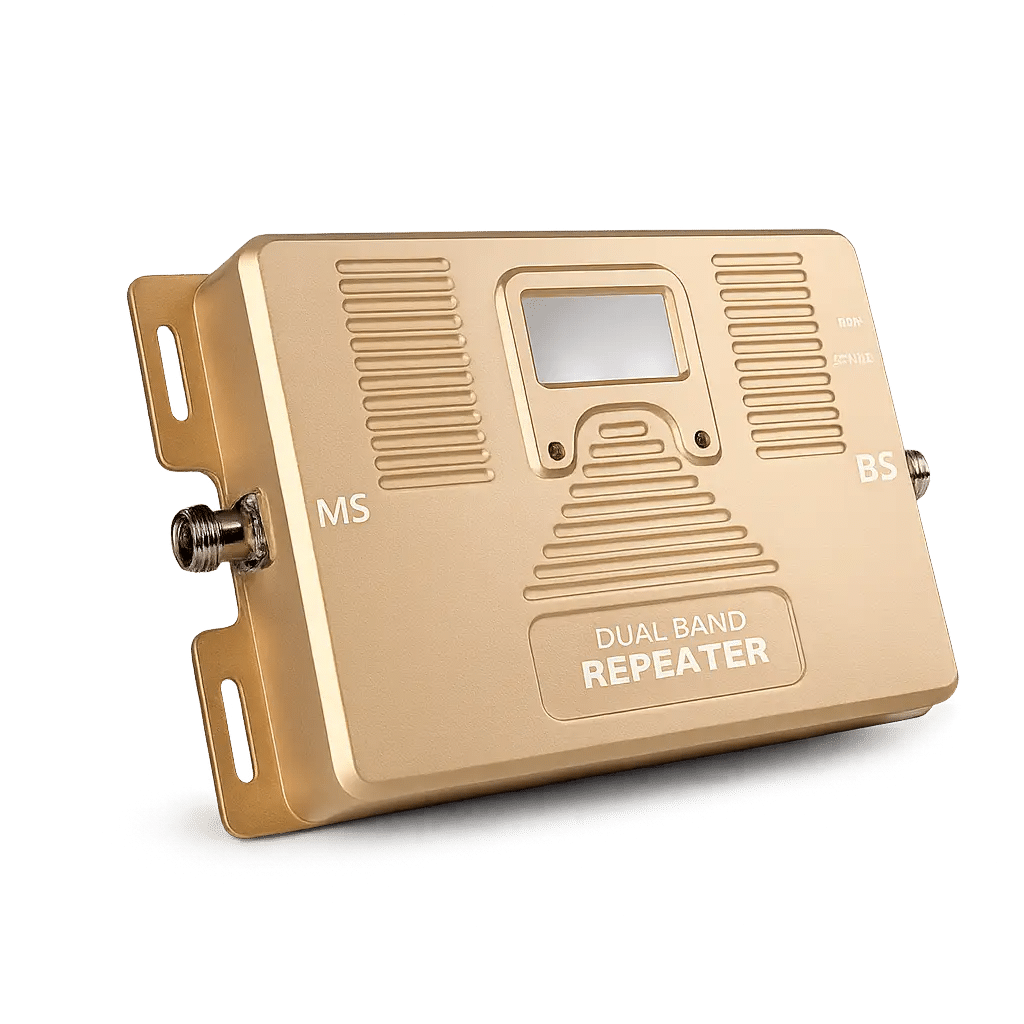
Coverage: 500 SQM
Ideal for: Medium Offices, Studios, And Homes

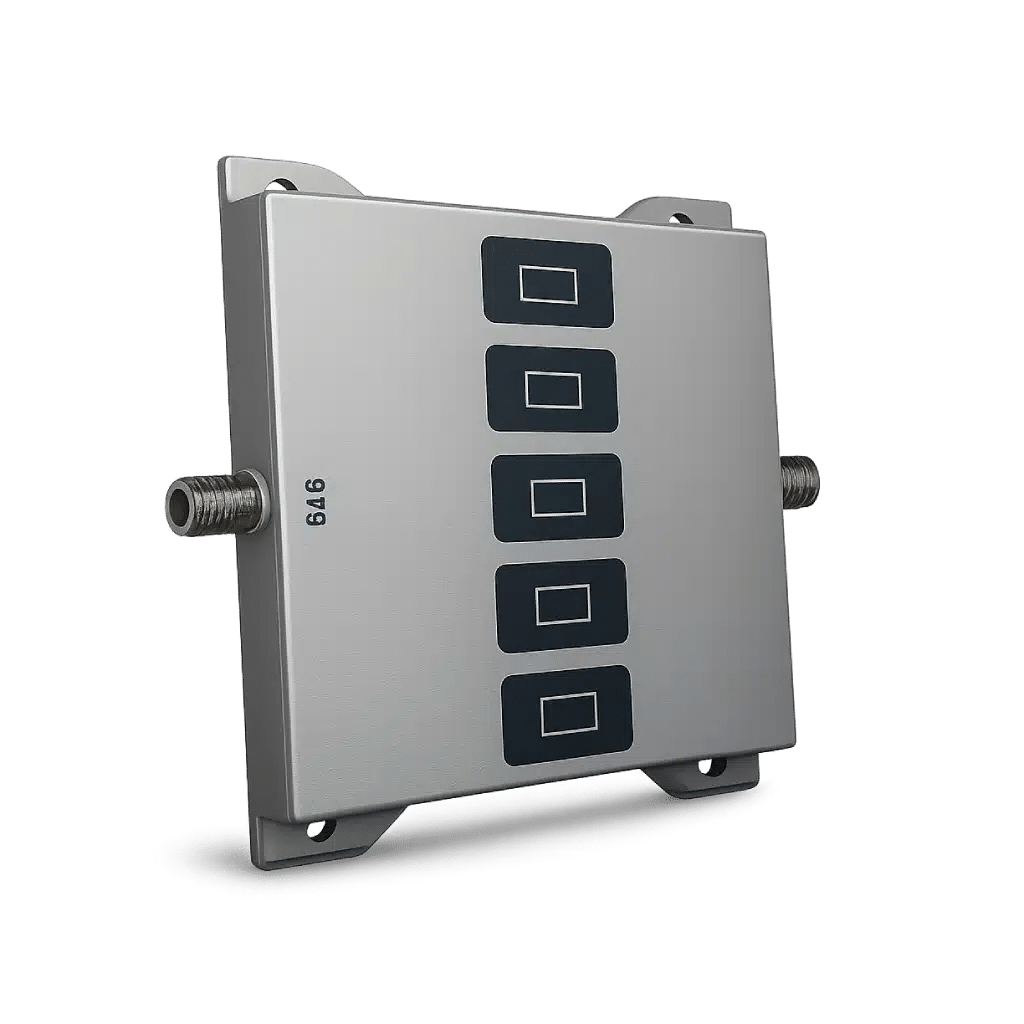
Coverage: 300 SQM
Ideal for: Home

Coverage: 1000 SQM
Ideal for: Hotel
