Free delivery included · Arrives in 5–7 working days
Portable Signal Booster Review UK 2026: Are They Legal to Use?
Quick Answer: Most generic, battery-powered “portable” mobile signal boosters are strictly illegal to operate in the UK as they are non-compliant with the required Ofcom IR2102 technical standard and risk fines up to £5,000. The only legal alternatives are license-exempt static indoor repeaters (for structures like caravans) or specialised low-gain in-vehicle repeaters for cars and vans.
Shop mobile signal boosters
Get a stronger mobile signal at home or work. Delivery in 5-7 working days. 30-day returns.
The search for a portable signal booster often ends in disappointment, dropped calls, or worse, legal trouble. You are looking for a simple gadget that can fix your signal black hole whether you are on a train, in a horsebox, or travelling across the Scottish Highlands. In my 12 years as an RF engineer, I can confirm that fighting physics with cheap, generic hardware is a losing game; the solution is compliance and engineering.
The Legal Reality: Why “Portable” Equals “Problem” in the UK
In the UK, mobile radio spectrum is licensed by Ofcom to networks like EE, Vodafone, O2, and Three. Unlicensed mobile amplification causes harmful interference to these networks, potentially disrupting essential communications, including emergency services. The law, set out in the Wireless Telegraphy Act 2006, is explicit: using non-compliant repeaters is a criminal offence.
The moment a booster becomes truly “portable” and capable of moving between locations or operating at high speeds (e.g., on a train), it becomes extremely difficult to manage uplink interference. This is why most generic consumer devices marketed as portable are illegal.
The only two categories of repeater legally permitted for consumer use without a license in the UK are:
Static Indoor Repeaters: For fixed structures like homes, offices, or static caravans. Must comply with IR2102.
Low-Gain In-Vehicle Repeaters: For use within a car or van.
Reviewing Legal Mobile Signal Booster Alternatives (2026)
Since a general portable booster is not a legal option, we review the two legal alternatives based on their most common “mobile” use cases: static holiday homes and moving vehicles. The key is ensuring the system is IR2102 compliant.
| Product Category | Price | Coverage | Best For | Verdict |
|---|---|---|---|---|
| Legal Low-Gain In-Vehicle Repeater | typically retails around £300–£450 | Vehicle Cab Only | Car/Van drivers, HGVs, Bus Cabs | Legal way to stabilize signal inside a moving Faraday cage |
| Mid-Range Static IR2102 Repeater | typically retails around £450 | Up to 4 rooms | Static Caravans, Motorhome (when parked) | Required power to defeat building penetration loss from metal |
| High-Gain Static IR2102 System | typically retails around £600 and up | Multiple floors/large sites | Remote/Rural properties, glamping sites | Essential for overcoming weak rural signal (dBm < -95) |
Why Moving Boosters are Outlawed (and the Vehicle Exception)
A repeater system needs precise configuration to work correctly. If it moves, its relationship to the nearest mobile mast is constantly changing, causing the device to destabilise the network. This instability is known as oscillation, which a compliant repeater must prevent using Automatic Gain Control (AGC).
The Exception: Legal In-Vehicle Boosters
A specialised, low-gain in-vehicle repeater is approved for use in cars, vans, or HGV cabs. These systems are designed to fix the “Faraday cage effect” of the vehicle’s metal body. They use built-in safeguards like AGC and oscillation shutdown to ensure they remain network-safe even while moving. Crucially, they are low-gain systems, meaning they only provide a small, localised boost necessary to maintain connectivity inside the cabin.
Note that static IR2102 repeaters designed for homes must not be used while in motion.
How to Choose the Right System for Your “Mobile” Site
If your mobile site is a static caravan, canal boat, or remote holiday let, your problem is structural, not mobile. These structures typically suffer from extreme building penetration loss due to metal cladding, thick walls, or foil-backed insulation.
The selection process is governed by two factors: legality and signal strength.
Step 1: Measure Your External dBm
Forget the signal bars; they are useless. You need the numerical reading measured in negative decibel-milliwatts (dBm) to understand the raw signal available outside.
A value closer to zero means a stronger signal. A reading of -85 dBm or better is excellent for reliable calls and fast data. If readings are consistently worse than -110 dBm, data speeds will be unusable and calls will drop.
To find this reading on an iPhone, dial 3001#12345# and press call to enter Field Test Mode. For Android, check the dBm value under Settings, About Phone, and then Status or Network.
Step 2: Match dBm to Hardware Class
If your outdoor reading is in the “Fair” or “Good” range (better than -100 dBm), you need an IR2102 static repeater. For large structures, rural areas, or sites with metal shielding, a High-Gain 5G/MIMO Directional System is often required. This hardware is designed to capture weak rural signal using a powerful directional antenna aimed precisely at the nearest mast.
The Power of Antenna Placement
For any static installation, maximising the signal capture is crucial. The external donor antenna must be mounted on the highest possible point of your structure (Go High) and must have a clear line-of-sight path (Go Clear) to the nearest mobile mast. For weak rural signal, the directional antenna must be precisely aimed (Go Aimed). This external placement is the fundamental technique for bypassing the structural obstacle entirely.
I have seen clients’ signal readings jump from -125 dBm to -95 dBm simply by moving the antenna from a wall bracket to the roofline and angling it correctly.
Frequently Asked Questions
Is a personal, battery-powered mobile signal booster legal in the UK?
No. Most personal, wideband signal boosters are illegal to use in the UK because they interfere with the licensed mobile networks. The only legal option for fixed locations is a static indoor repeater compliant with the Ofcom UK Interface Requirement 2102 (IR2102).
Can one signal booster cover all UK networks like EE, Vodafone, O2, and Three?
Yes. Modern, legally compliant static indoor repeaters are typically multi-band devices engineered to boost signals across the various LTE bands used by all major UK mobile networks simultaneously. This ensures one system covers multiple users and different operators.
How much should I expect to pay for a legal signal repeater?
You should expect to budget at least £275 for an entry-level, legal, Ofcom-compliant repeater for small properties. For a high-gain, commercial-grade system required for a large or remote property, the hardware typically starts at approximately £600.
Which UK network is most reliable for remote travel?
EE is generally considered the most reliable network for overall coverage and speed, delivering the widest geographic 4G coverage. Their use of lower frequency spectrum (like 700MHz) helps the signal penetrate structures and travel further.
What is the minimum outdoor dBm required for a booster to work effectively?
You generally need an external signal reading that is better than -105 dBm for a standard repeater to be effective. Readings worse than -110 dBm mean the booster is unlikely to amplify the signal enough to be usable.
The Bottom Line
The dream of a fully portable signal booster that works everywhere is a myth perpetuated by cheap, illegal imports. Stop gambling on non-compliant gadgets or risking a £5,000 fine; the only sensible solution is certified, legal hardware. For mobile structures like static caravans, you need a high-gain, Ofcom-compliant IR2102 static repeater system matched to your outdoor dBm reading to defeat the building penetration loss. For vehicle connectivity, choose a legal, low-gain in-vehicle repeater.
Find your smart, legal repeater system and directional antenna kits today at MySignalBoosters.com.
Shop mobile signal boosters
Get a stronger mobile signal at home or work. Delivery in 5-7 working days. 30-day returns.
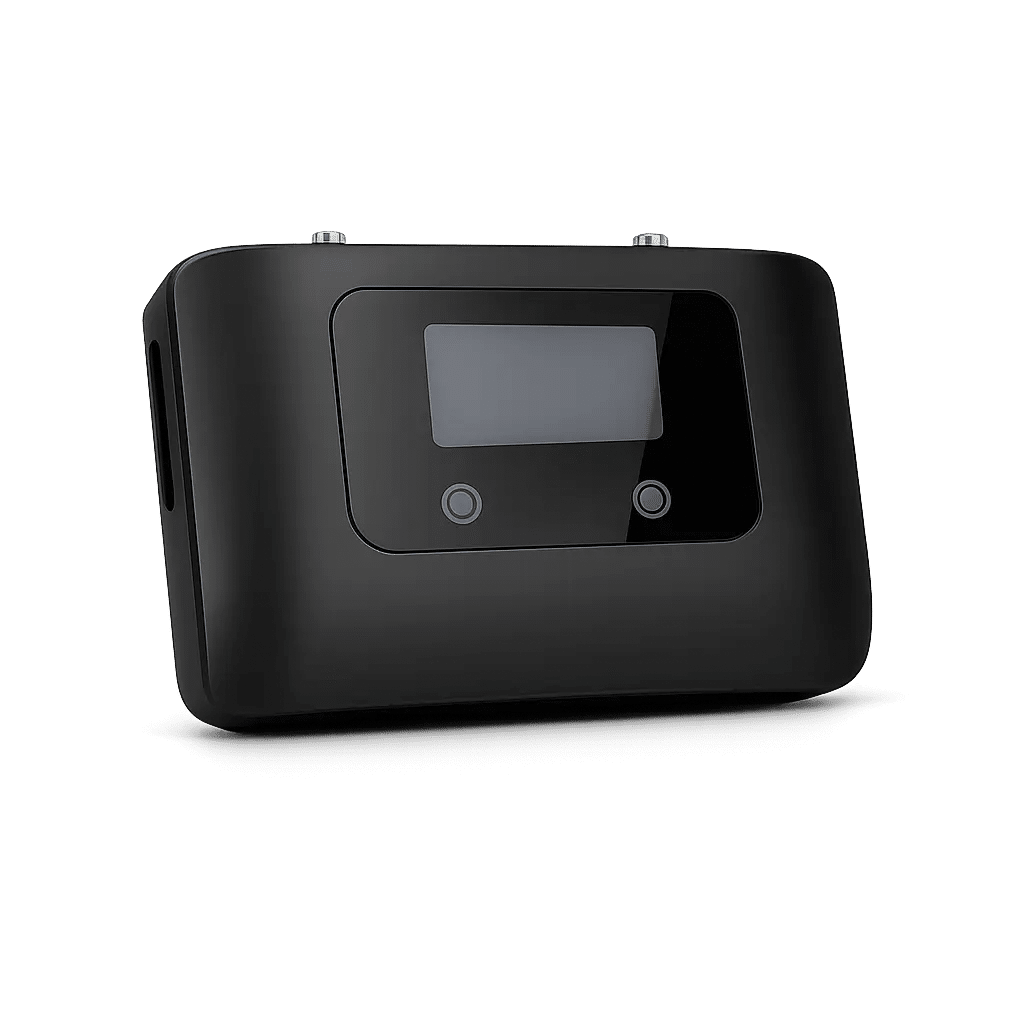
Coverage: 300 SQM
Ideal for: Home


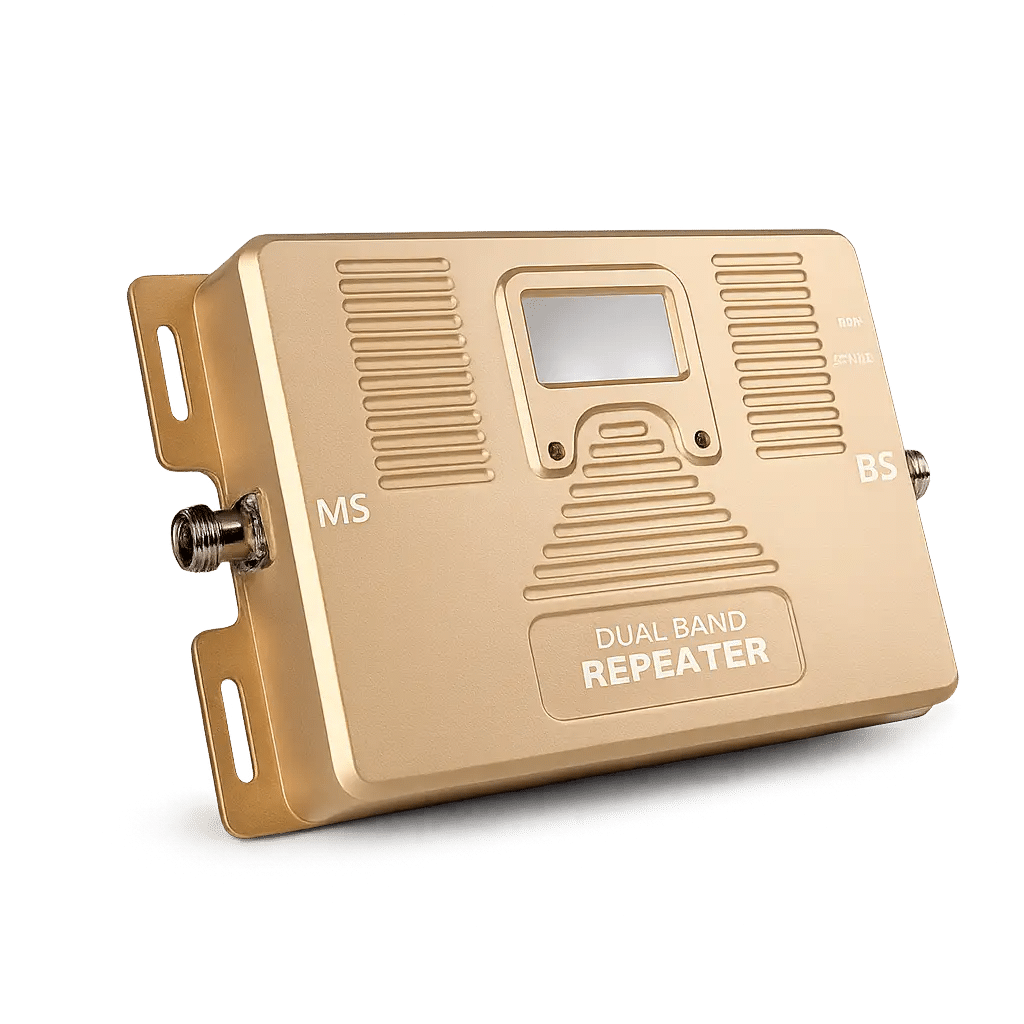
Coverage: 500 SQM
Ideal for: Medium Offices, Studios, And Homes

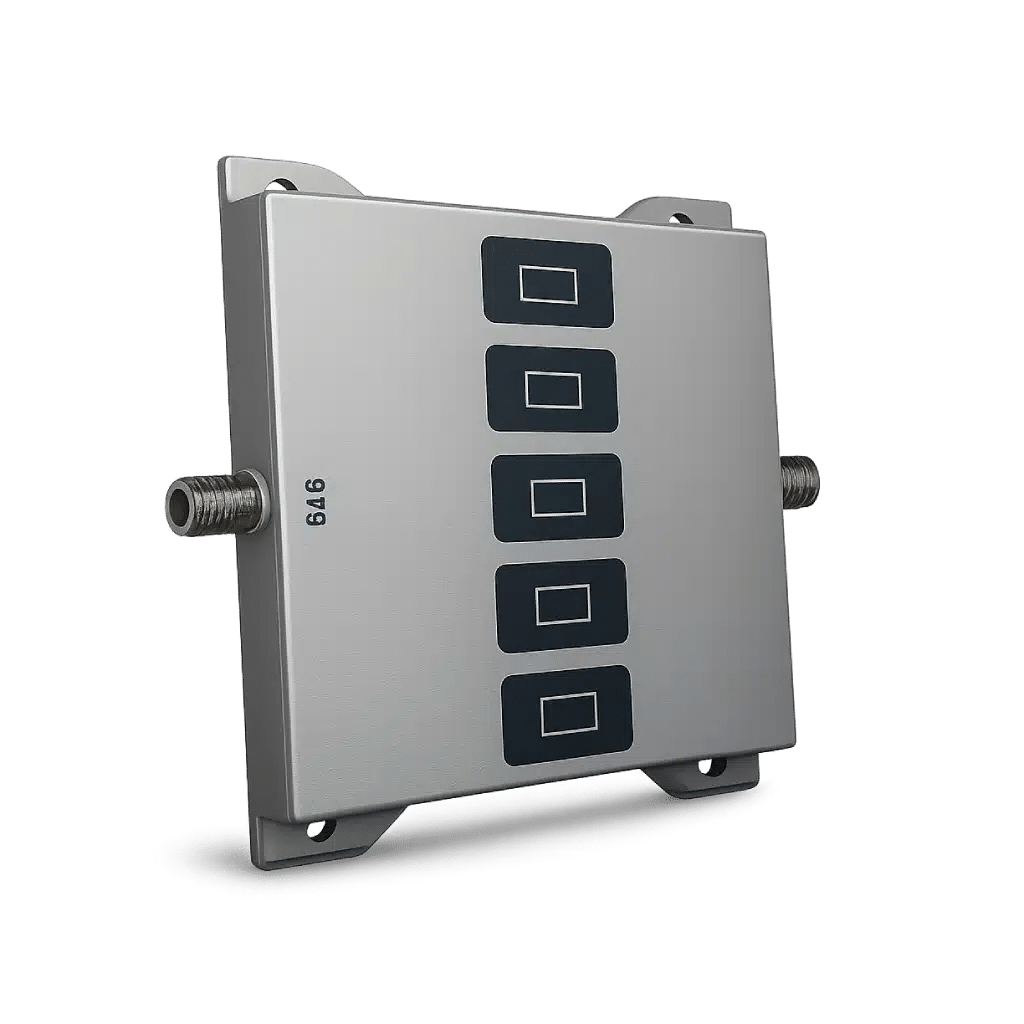
Coverage: 300 SQM
Ideal for: Home

Coverage: 1000 SQM
Ideal for: Hotel
