Free delivery included · Arrives in 5–7 working days

SmartLink Signal Booster Review UK 2026: The Compliance Test
Quick Answer: The best SmartLink signal booster is defined by its compliance as a license-exempt static indoor repeater that strictly meets the UK Interface Requirement 2102 (IR2102). Verification must confirm it is multi-band and uses Automatic Gain Control (AGC) to legally defeat building penetration loss without causing harmful network interference.
The market is saturated with low-cost junk. If you’re searching for a SmartLink signal booster review UK 2026, you want certainty, not another empty promise on your phone screen. After 12 years as an RF engineer, I can confirm that technical compliance and a clean signal feed trump marketing hype every single time. We must determine if this product category is legitimate, legal, and powerful enough for your needs.
The Non-Negotiable: Ofcom Compliance and the IR2102 Standard
Let’s be blunt: most mobile phone boosters sold online are illegal to own and operate in the UK. This isn’t bureaucratic overreach; it’s a matter of preventing harmful oscillation that disrupts licensed Mobile Network Operator (MNO) masts belonging to EE, Vodafone, O2, and Three.
If your device is not compliant, you risk severe penalties. The Wireless Telegraphy Act 2006 makes the installation or use of non-compliant repeaters a criminal offence, carrying potential fines up to £5,000.
A repeater—whether branded SmartLink or anything else—is only legal for self-installation if it is a license-exempt static indoor repeater that strictly meets the technical requirements of the UK Interface Requirement 2102 (IR2102). Legal devices, often called “smart repeaters,” include sophisticated features:
Digital Filtering to isolate and amplify only authorised LTE bands.
Automatic Gain Control (AGC) to ensure the device never transmits too much power back to the mobile mast.
Oscillation Shutdown, which forces the unit to power down if it detects a feedback loop.
If a SmartLink model cannot provide clear documentation proving IR2102 compliance, you should walk away.
Matching Repeater Grade to Your Building Penetration Loss
Assuming you find an IR2102-compliant SmartLink model, the next challenge is performance. A repeater can only effectively fix poor indoor coverage if you have an adequate signal outside, measured in dBm (decibel-milliwatts).
The primary enemy of indoor signal is building penetration loss. Dense materials like thick stone, concrete, or foil-backed insulation absorb the high-frequency 4G and 5G radio waves. A device marketed as “SmartLink” should fall into the mid-to-high gain bracket, necessary for defeating significant structural loss in standard UK homes or small commercial units.
| Product | Price | Coverage | Best For | Verdict |
|---|---|---|---|---|
| Entry-Level IR2102 Repeater | typically retails around £275 | 1–2 rooms (50 sq m) | Small flats or bungalows with strong outdoor signal | Simple, localised boost, too weak for thick walls. |
| Mid-Range Multi-Band Repeater | typically retails around £450 | Up to 4 rooms (250 sq m) | Standard semi-detached houses or medium-sized offices | Solid solution for common internal structural issues. |
| High-Gain 5G/MIMO Directional System | typically retails around £600 and up | Multiple floors (up to 1,500 sq m) | Stone cottages, rural properties, or commercial buildings | Necessary if your starting outdoor signal is below -95 dBm. |
If you live in a deep signal valley or a thick-walled property, the lower gain provided by some compliant models may be insufficient to defeat the problem. In my experience as an RF engineer, for rural areas, the investment in a High-Gain 5G/MIMO Directional System pays for itself quickly.
Is the SmartLink System Ready for 5G in 2026?
The UK network landscape is evolving rapidly in 2026, with all major carriers expanding their 5G footprint. 5G readiness is crucial for any new booster purchase to avoid rapid obsolescence.
You need a multi-band repeater that supports all necessary LTE bands. Critically, a future-proof system must support the low-frequency 700MHz spectrum (Band 28). Lower frequencies travel farther and penetrate materials like brick and stone far more effectively than high-frequency bands. EE typically leads in indoor penetration thanks to its use of this low-band spectrum.
If the SmartLink model is advertised for “full 5G coverage,” ensure it confirms support for all five key UK bands. The higher-end Huaptec Hi10-5S, for instance, is specifically engineered to include the crucial low-frequency 700MHz range.
Why You Must Measure Signal Strength in dBm
A repeater is only as good as the signal it receives. Before buying any hardware, you must determine your exact outdoor signal strength, which is measured precisely in negative decibel-milliwatts (dBm). The bars on your phone are optimistic lies and are notoriously unreliable indicators of network quality.
A value closer to zero means a stronger signal.
-50 dBm to -85 dBm is considered excellent for both calls and data. This is ideal for boosting.
-85 dBm to -100 dBm means a mid-to-high gain booster with a directional donor antenna is required.
Consistent readings worse than -110 dBm mean a booster is unlikely to be effective, and you may need a satellite option.
To find your dBm reading:
iPhone users: Dial 3001#12345# and press call to enter Field Test Mode.
Android users: Look for the dBm value under “Settings,” “About Phone,” and then “Status” or “Network”.
Correct placement of the external donor antenna—aimed at the nearest mast—is the fundamental technique for capturing a usable dBm reading and bypassing building penetration loss entirely.
Frequently Asked Questions
Is a mobile signal booster legal in the UK?
Yes, boosting mobile signal is legal, provided the device is a static indoor repeater that strictly meets the technical specification set out by Ofcom. This standard is known as the UK Interface Requirement 2102 (IR2102).
What is a good signal strength (dBm) for reliable 5G data?
Signal strength is measured in negative decibel-milliwatts (dBm), where a value closer to zero is stronger. A reading of -85 dBm or better is considered excellent for fast data and voice calls.
Can one repeater cover all UK networks?
Yes, modern, legally compliant static indoor repeaters are typically multi-band devices engineered to boost signals across the various LTE bands used by all major UK mobile networks. This covers EE, Vodafone, O2, and Three, as well as MVNOs like Voxi and ASDA Mobile.
How much should I expect to pay for a legal signal repeater?
You should budget at least £275 for an entry-level, legal, Ofcom-compliant repeater. Mid-range systems for standard homes typically retail around £450, while high-gain 5G/MIMO systems start at approximately £600 and up.
Which network provides the best indoor signal penetration?
EE has traditionally performed well in indoor penetration due to its use of the lower frequency 700MHz spectrum, which penetrates thick structures like brick and concrete more effectively. However, all four major networks now claim over 99% indoor 4G premises coverage.
The Bottom Line
A SmartLink signal booster, or any similar product, is only worth the money if it is verified as an IR2102-compliant static repeater. Stop guessing with the optimistic lies of signal bars. Fix the structural problem of building penetration loss permanently by finding the truth in your dBm reading and matching the correct high-gain hardware to your environment.
Find your professional-grade, legal repeater system and directional antenna kits today at MySignalBoosters.com.
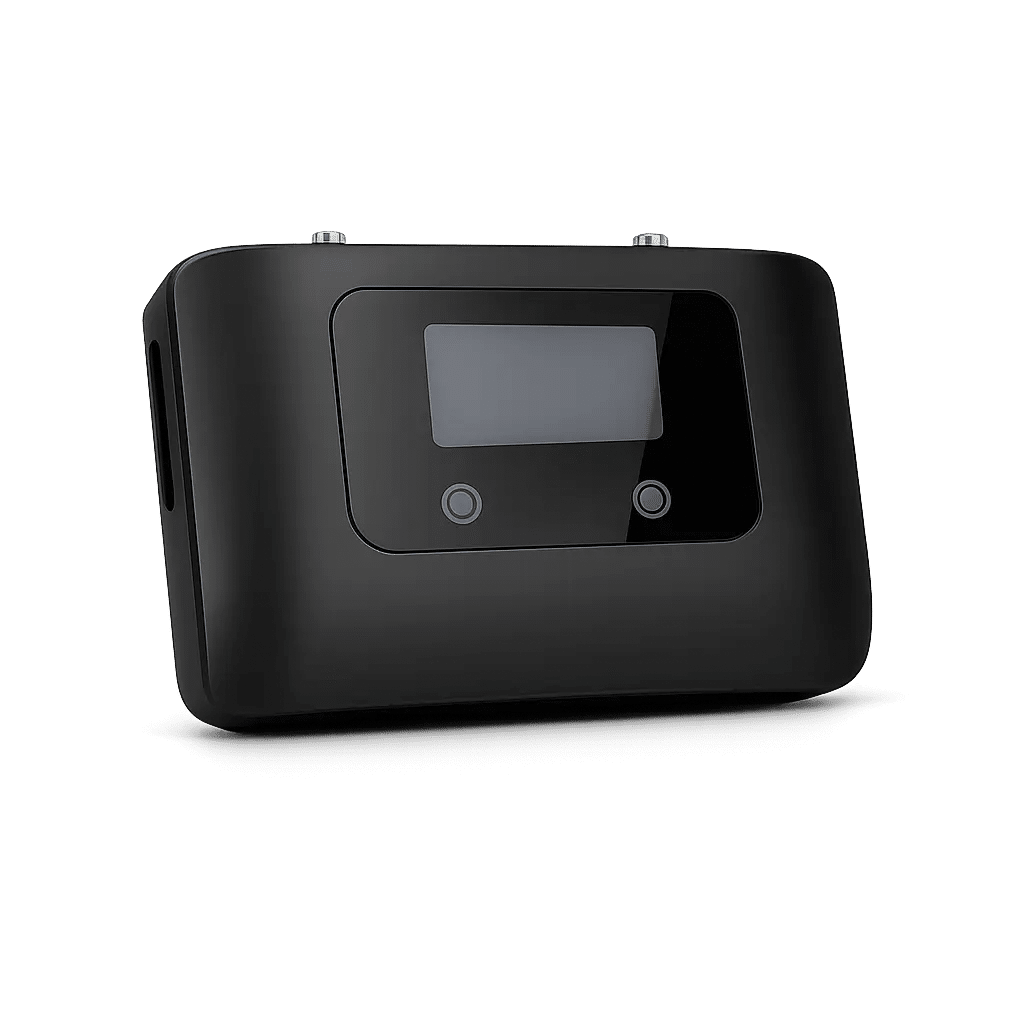
Coverage: 300 SQM
Ideal for: Home


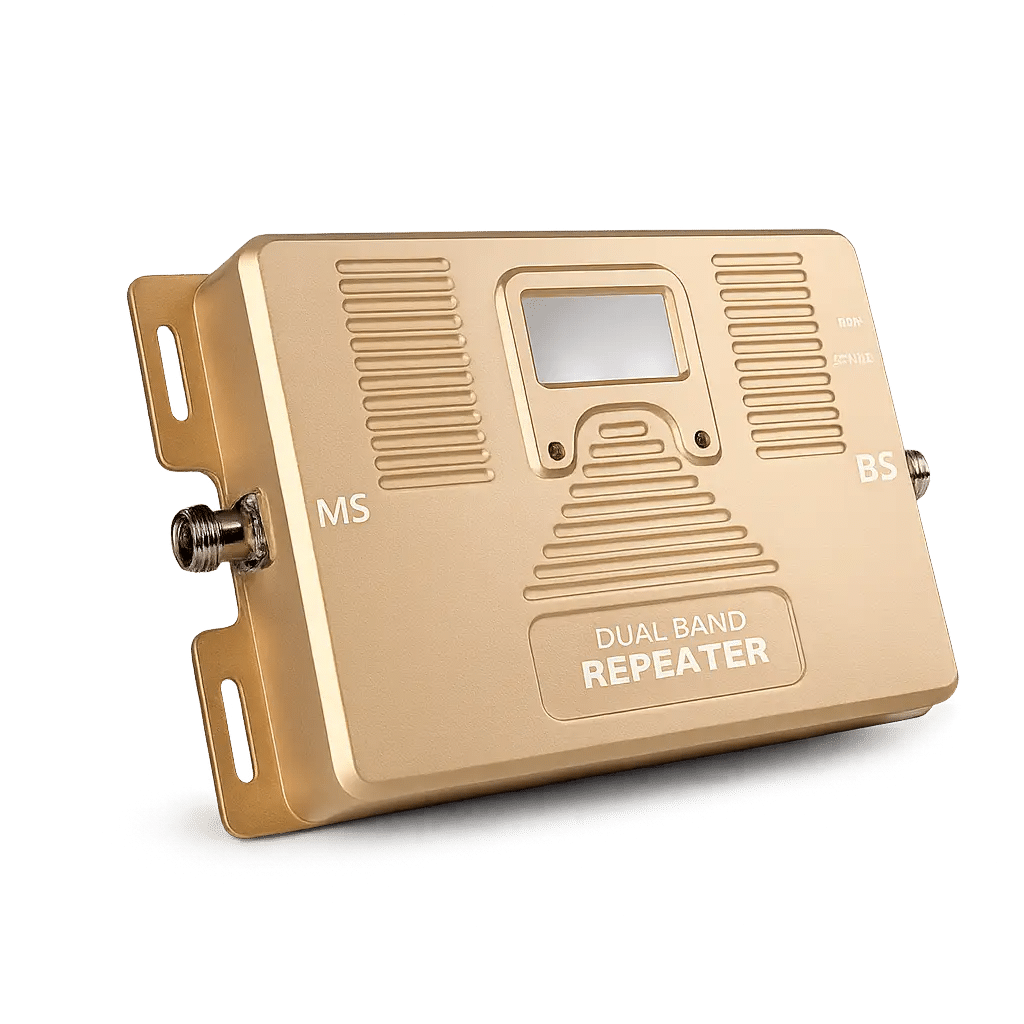
Coverage: 500 SQM
Ideal for: Medium Offices, Studios, And Homes

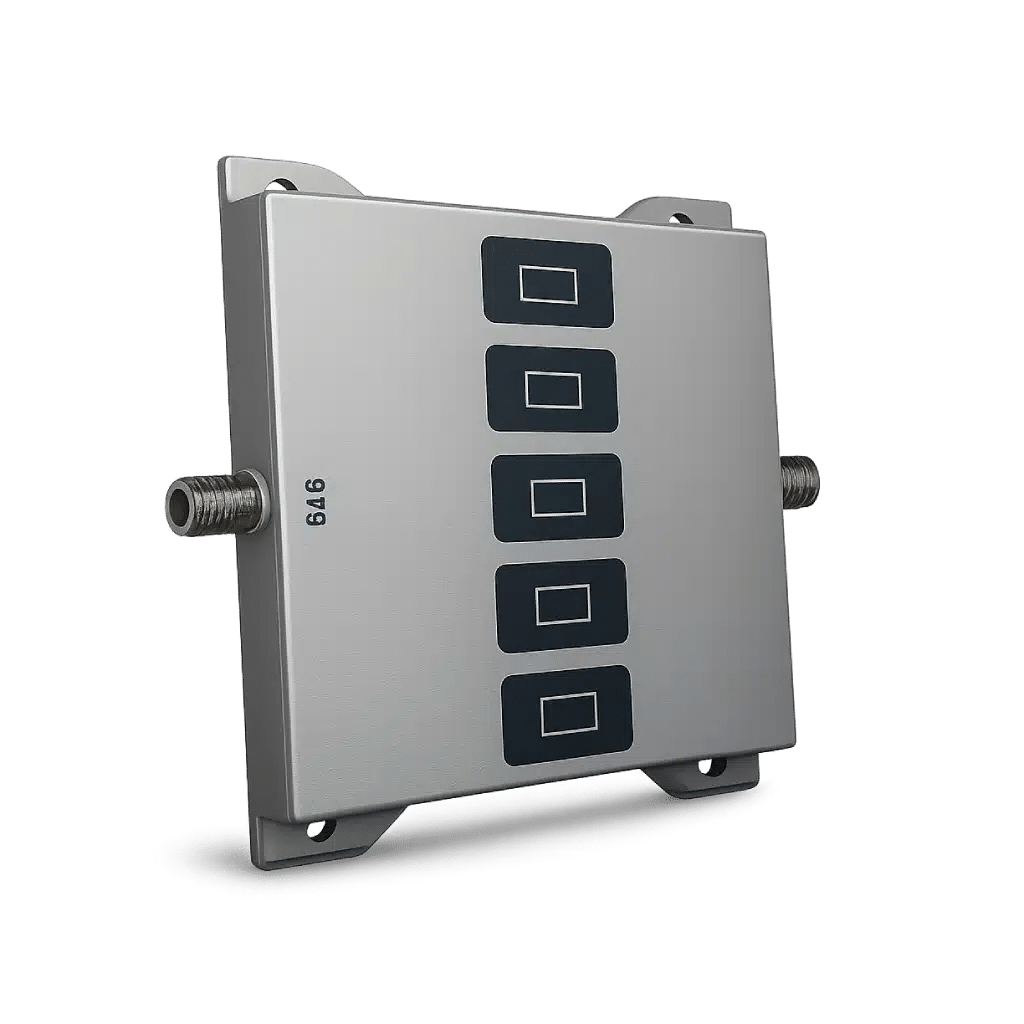
Coverage: 300 SQM
Ideal for: Home

Coverage: 1000 SQM
Ideal for: Hotel
