Specialists in Amplifying Voice & Data Signals for all AU Carriers
Free delivery included · Arrives in 5–7 working days
Australia’s distances make mobile reception a real problem, and not only in the bush. Brick-veneer homes, metal roofs and energy-efficient glazing block signal in the suburbs too. Mobile signal boosters are widely advertised online, but in Australia the rules are strict. Here’s what’s allowed, what works, and what to try first.
The Australian Communications and Media Authority (ACMA) regulates mobile repeaters. Its position is clear:
So the right question isn’t “which booster should I buy?”. It’s “what does my carrier offer or authorise for my address?“
If free fixes don’t solve it, contact your carrier:
Give them your address, the rooms affected, and the signal readings you see.
Knowing your band helps when you talk to your carrier. Australian networks use 700, 850, 900, 1800, 2100, 2300 and 2600 MHz, plus 3500 MHz for some 5G. Low bands (700/850) reach further and get through walls better. Our Australian mobile network frequencies guide explains each one. On Android, a free app like Network Cell Info shows the band.
The same rule applies: a 5G booster needs carrier authorisation. In practice, much 5G in Australia runs on 3500 MHz, which is short-range and weak through walls. For indoor 5G, Wi-Fi from a 5G home modem placed by a window is often a better approach than a repeater.
For farms and remote homes, the options include:
Are mobile signal boosters legal in Australia?
Only with the carrier’s authorisation and a compliant device. Using an unauthorised booster is illegal under ACMA rules.
Is there a Telstra-approved booster?
Telstra offers the Go Repeater to eligible customers. Ask Telstra directly.
Does a 5G booster need permission too?
Yes. The same rules apply to 4G and 5G.
What’s the cheapest way to fix poor reception at home?
Wi-Fi Calling, if you have home internet.
How do I contact you?
Email mysignalboosterteam@gmail.com or use the chat. See the FAQs.

Coverage: 5000 SQM
Ideal for: Hotel


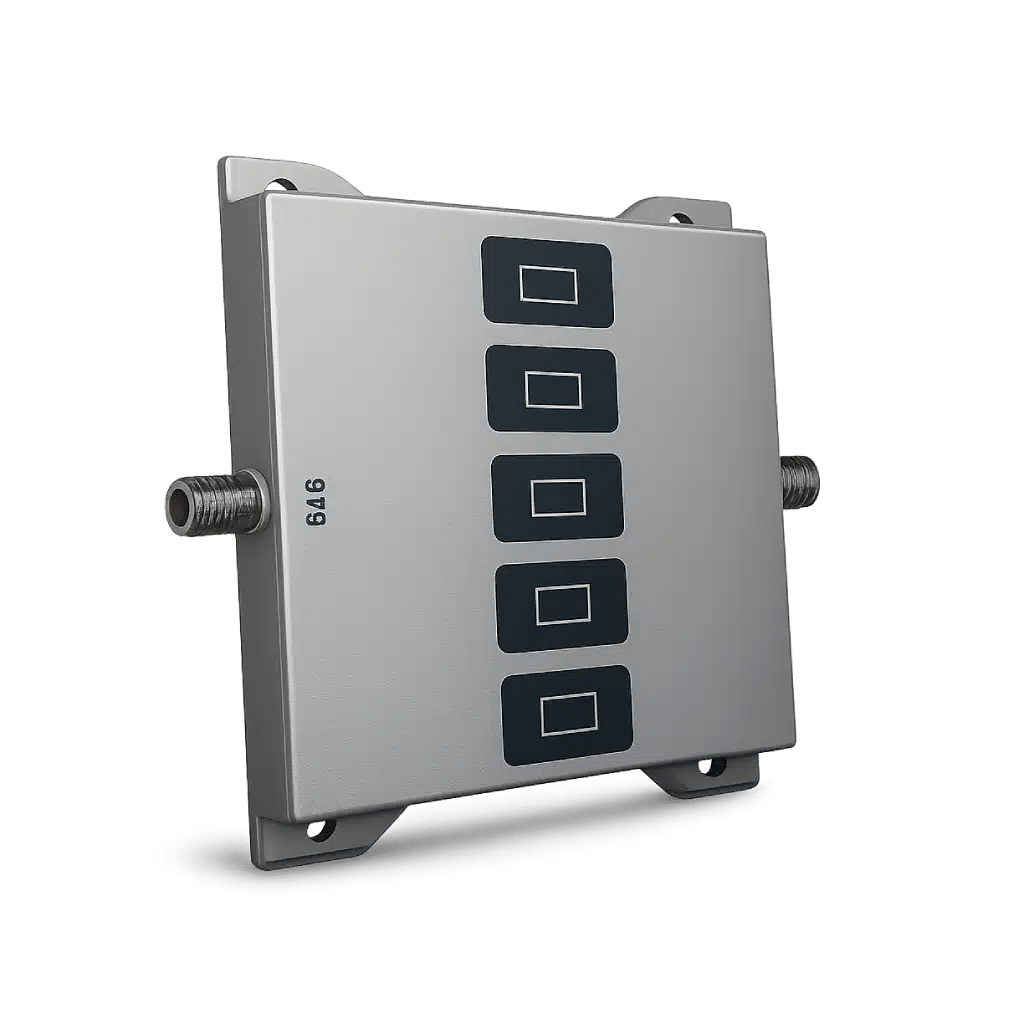
Coverage: 300 SQM
Ideal for: Home

Coverage: 1000 SQM
Ideal for: Large Home

Coverage: 300 SQM
Ideal for: Home

Coverage: 300 SQM
Ideal for: Home
