Free delivery included · Arrives in 5–7 working days

Best Signal Booster With LCD Display UK 2026 Review
Quick Answer: A signal booster with an LCD display is the only way to accurately align your donor antenna. By showing your signal strength in decibel-milliwatts (dBm), these devices remove the guesswork of unreliable phone bars. For UK compliance, only purchase static indoor repeaters certified to the IR2102 standard.
Most modern homes are basically Faraday cages built with thick brick or foil-backed insulation. You are trapped in a signal-dead zone, staring at a phone screen that insists you have one bar of service while your call drops into the abyss. In my 12 years as an RF engineer, I have learned that the phone’s visual “bars” are essentially a polite, optimistic lie. They tell you nothing about the actual network quality.
To fix this, you need hard data. You need a device that shows you the exact signal strength in dBm, not a vague graphic. After testing various repeaters across damp stone cottages and modern office blocks, I can confirm that a unit with a built-in LCD screen is the single most useful tool for a successful, DIY-friendly installation. It turns an hour of frustrated walking into a ten-minute job.
Why an LCD Screen Makes a Difference
The primary reason most DIY installations fail is poor antenna placement. You stick a donor antenna on the wall, plug it in, and hope for the best. When that fails, you blame the hardware. The truth is, that antenna is likely pointed at a brick wall or a tree rather than the nearest mobile mast.
A signal booster with an LCD display acts as your real-time diagnostic tool. It shows you the raw signal gain in decibels. When you twist the antenna towards a mast, you watch the numbers move from a depressing -110 dBm to a healthy -85 dBm. It turns the invisible world of radio waves into something you can actually see and manage.
Without this screen, you are effectively flying blind. You might accidentally induce oscillation, a feedback loop where the boosted signal leaks back into the donor antenna, causing network interference and potentially annoying your local mobile network operator. Most LCD-equipped units include intelligent Automatic Gain Control (AGC), which monitors these levels and prevents you from becoming a menace to the local infrastructure.
Top Rated Signal Boosters with LCD Displays
When shopping for these units, you are looking for specific, Ofcom-compliant hardware. Remember that a unit is only as good as its ability to pass signals cleanly without disruption.
Nikrans LCD-300GD
This is widely regarded as a best-seller for rural properties and standard homes. It covers GSM and 4G signals, making it a solid, multi-purpose choice for anyone suffering from building penetration loss.
Price: Typically retails around £325.
Coverage: Up to 300 m².
Best for: Standard houses or home offices with weak 4G.
Verdict: Reliable, widely tested, and the LCD screen makes aiming the antenna a breeze.
Nikrans LCD250-GSM+4G
If you primarily care about voice calls and 4G data, this is the workhorse of the range. It is compact, easy to mount, and has been the sales hit for many European operators.
Price: Typically retails around £345.
Coverage: Up to 250 m².
Best for: Small flats or bungalows where you just need the basics to work.
Verdict: Simple to set up, minimal fuss, and highly effective for small footprints.
Nikrans LCD-150D
For the budget-conscious, this 4G-specific repeater strips away the extras to focus on data. It includes the essential smart auto-adjustment feature to prevent over-amplification.
Price: Typically retails around £185.
Coverage: Up to 150 m².
Best for: A small home office or a single room with dead zones.
Verdict: The best entry-level choice if you can live without tri-band capabilities.
Nikrans BD-300FW
For those already eyeing the 5G future, this is a cutting-edge amplifier. It focuses on 2100 MHz and 700 MHz bands, which are crucial for indoor 5G penetration.
Price: Typically retails around £345.
Coverage: Up to 300 m².
Best for: Users who want 5G connectivity today rather than waiting for it to arrive naturally.
Verdict: Future-proofed and highly efficient for urban and suburban environments.
Understanding the Legal Landscape (IR2102)
The most important advice I can give you is this: ignore the cheap, non-compliant tat sold on generic marketplaces. These devices often lack the technical filtering required by Ofcom. They operate as “wideband” repeaters, which are essentially signal sledgehammers that disrupt your neighbours’ connection and can land you with a fine of up to £5,000.
Only purchase static indoor repeaters that strictly meet the UK Interface Requirement 2102 (IR2102). This standard ensures the device uses Automatic Gain Control (AGC) and digital filtering to keep the network safe. When you buy from a reputable retailer like MySignalBoosters.com, you are paying for that peace of mind. You are paying for a device that knows when to power down, rather than one that blindly shouts over the legitimate masts.
Antenna Placement: The Real Secret
Even the most expensive, LCD-equipped booster will fail if you bury the donor antenna behind a chimney or under an eave. You must follow the “Go High, Go Clear” rule.
Go High: The donor antenna must be at the highest point of your structure. This keeps it above the clutter of hills, trees, and other buildings.
Go Clear: You need a clear line-of-sight to the mast. If you have to aim the antenna through a wall, you have already lost half your gain.
Go Aimed: Use that LCD screen. Rotate the antenna in 10-degree increments, pause for ten seconds, and check the display. You are looking for the reading closest to zero (e.g., -70 dBm is better than -90 dBm).
Frequently Asked Questions
Can one signal booster cover all UK networks?
Yes, modern, legally compliant static indoor repeaters are typically multi-band devices designed to work across all major UK networks, including EE, Vodafone, O2, and Three. You do not need a separate system for every carrier as long as the hardware supports the frequency bands used by your operator.
Is it legal to buy a cheap booster from an online marketplace?
Almost certainly not if it costs under £200, as these devices often fail to meet the mandatory IR2102 technical standards. Installing non-compliant equipment is a criminal offence that can result in hefty fines and equipment seizure by Ofcom. Stick to trusted UK retailers to ensure your hardware is safe and legal.
How much should I budget for an Ofcom-compliant repeater?
You should expect to budget at least £275 for a basic, entry-level, legal system. Mid-range systems for standard homes typically retail around £450, while professional-grade systems for large properties or commercial buildings start at approximately £600 and go up from there.
Will a booster help if I have zero signal outside?
No, a booster is an amplifier, not a signal generator. If your external dBm reading is consistently worse than -110 or -120 dBm (or you have zero bars), the booster has no usable signal to amplify. You must have at least a weak, usable signal outside for these systems to function.
Why do I need to check dBm instead of bars?
Signal bars are a proprietary, visual graphic that vary by phone brand and manufacturer, meaning they are scientifically meaningless. dBm (decibel-milliwatts) provides an accurate, universal, and numerical measurement of signal strength that allows you to objectively evaluate the performance of your antenna setup.
The Bottom Line
Connectivity in 2026 is no longer a luxury, but you should not have to pay for it with illegal, disruptive hardware. Stop guessing with signal bars and start measuring the truth with a dBm-capable LCD booster. The only sensible path to a stable connection is an Ofcom-compliant, IR2102-certified repeater system, correctly aimed at your nearest mast. If you are struggling with dead zones, head over to MySignalBoosters.com to find a system that actually works, legally.
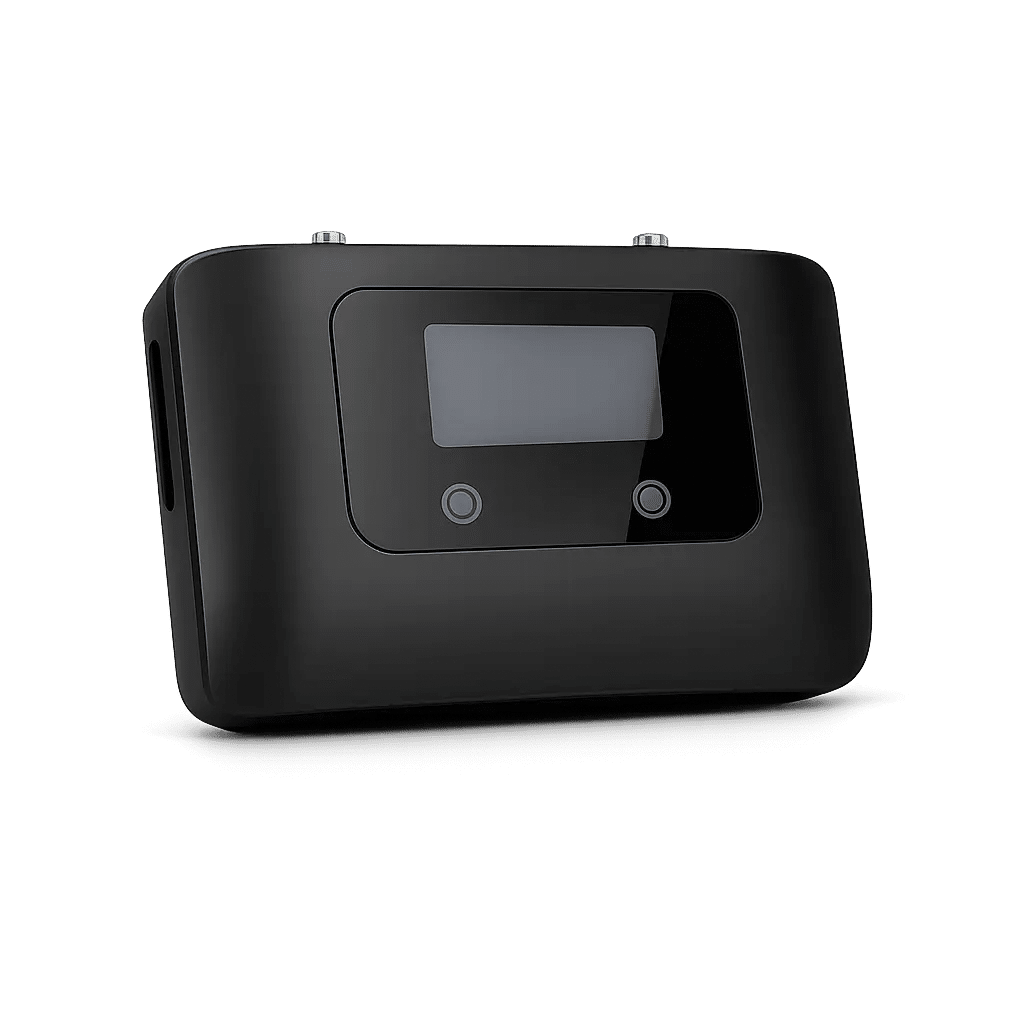
Coverage: 300 SQM
Ideal for: Home


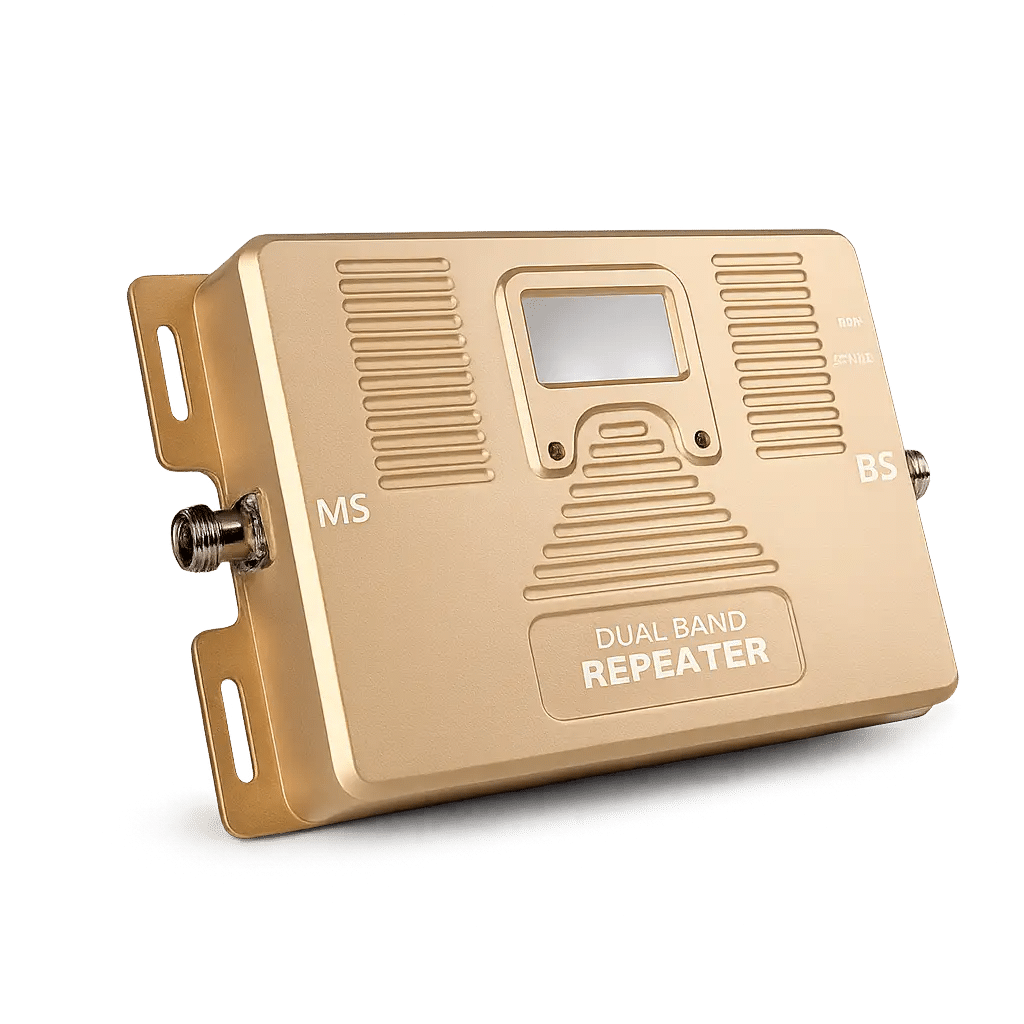
Coverage: 500 SQM
Ideal for: Medium Offices, Studios, And Homes

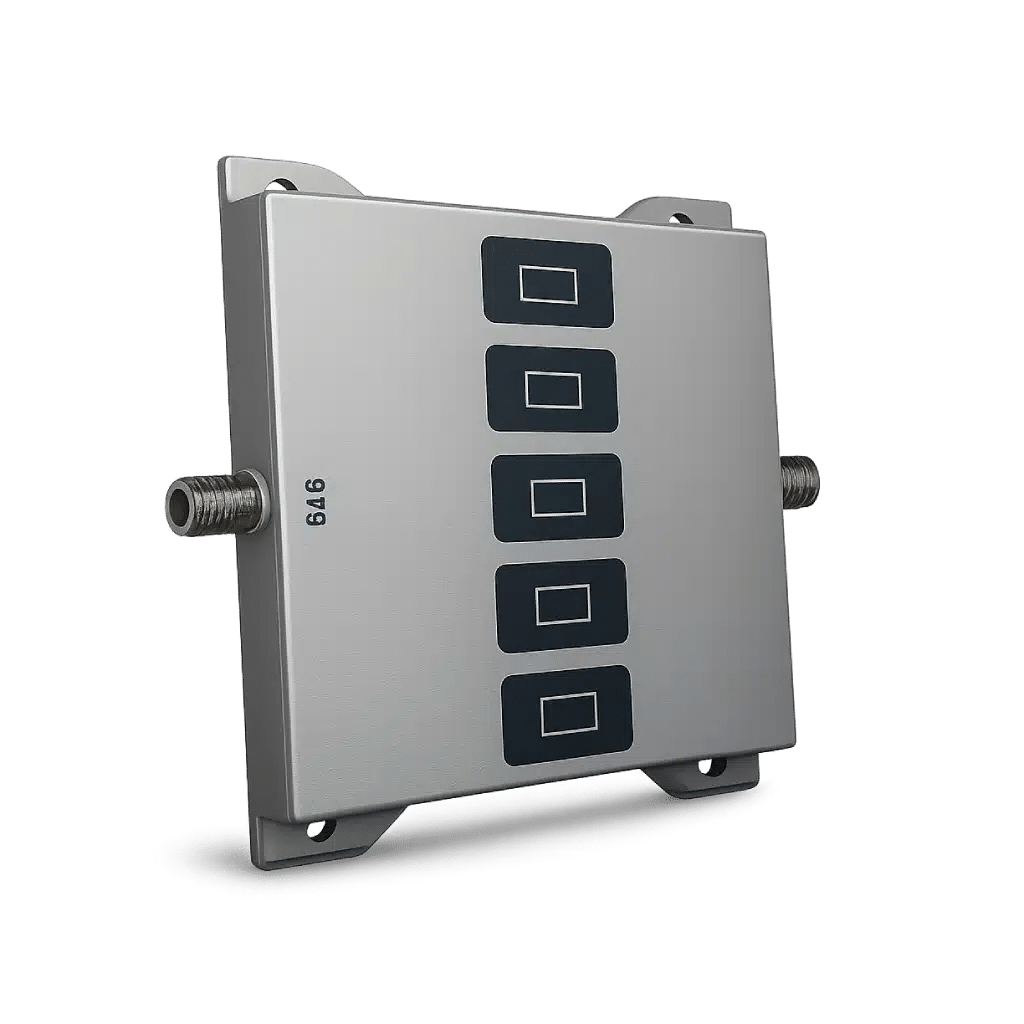
Coverage: 300 SQM
Ideal for: Home

Coverage: 1000 SQM
Ideal for: Hotel
